Anurag Thakur Links DAV's Century to NEP-2020 at Hoshiarpur
Synopsis
BJP MP Anurag Thakur attended DAV College Hoshiarpur's centenary on 14 June 2026 as an alumnus, arguing that the institution's century-old Vedic-modern educational philosophy and PM Modi's NEP-2020 share the same foundational goal of fostering patriotism and cultural pride in students.
Key Takeaways
Anurag Thakur spoke at the DAV College, Hoshiarpur centenary on 14 June 2026 as an alumnus.
He drew a direct parallel between DAV 's founding philosophy — combining Vedic values with modern education — and the objectives of NEP-2020 .
DAV has educated students across five generations since 1926 , contributing to society and nation-building.
NEP-2020 is India's first statutory national framework to explicitly mandate integration of Indian knowledge systems in curricula.
The post situates a pre-independence educational institution within the current government's policy narrative, highlighting civilisational continuity as a policy theme.
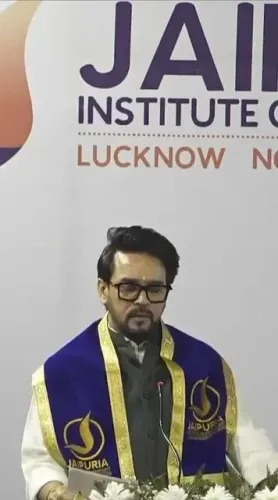
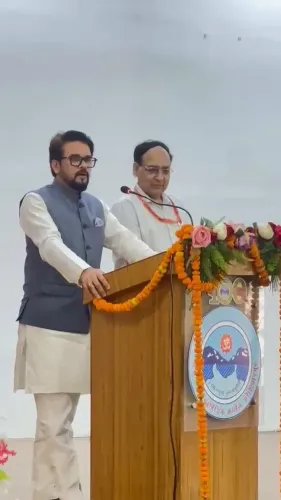
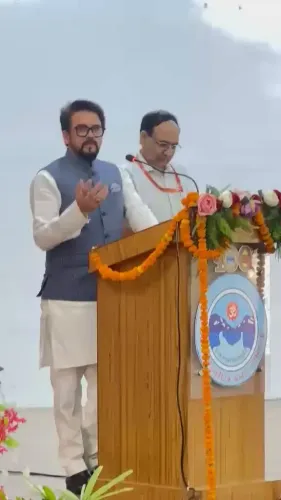
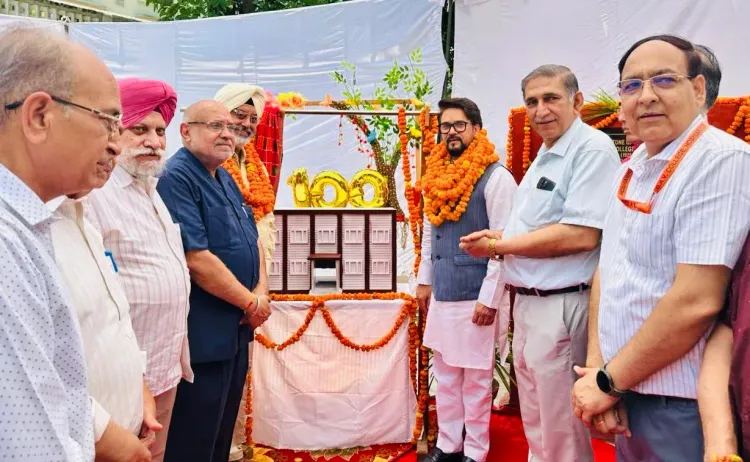
BJP MP Anurag Thakur attended the centenary celebrations of DAV College, Hoshiarpur, in Punjab on Sunday, 14 June 2026, where he spoke as an alumnus and drew a direct parallel between the institution's founding philosophy and Prime Minister Narendra Modi's National Education Policy (NEP) 2020.
Context
Addressing the gathering, Thakur said the educational vision of DAV — rooted in the synthesis of Vedic values and modern learning — and the core spirit of NEP-2020 share an identical purpose: building an education system that fosters patriotism, personality development, and pride in Indian culture among students. In his words, 'दोनों का उद्देश्य ऐसी शिक्षा व्यवस्था का निर्माण करना है' ('the objective of both is to build such an education system') that instils national pride and cultural consciousness.
Thakur also noted that DAV, which began as a small hostel, has grown into one of India's prestigious higher-education institutions, with students across five generations — spanning from 1926 to the present — contributing to society and nation-building.
Policy Backdrop
NEP-2020 replaced the National Policy on Education, 1986, and is the first statutory national framework to explicitly mandate the integration of Indian knowledge systems across curricula, alongside a multidisciplinary approach to higher education. The policy's emphasis on holistic development and cultural rootedness echoes the founding principles of the Dayanand Anglo-Vedic (DAV) movement, which emerged from the Arya Samaj in the late 19th century.
The alignment Thakur draws is not merely rhetorical: both frameworks prioritise character formation alongside academic achievement, positioning educational institutions as vehicles for civilisational continuity as much as skill development.
Stakeholders and Impact
The DAV network is one of India's largest non-governmental educational chains, serving millions of students from primary to postgraduate levels. The centenary of DAV College, Hoshiarpur marks a significant milestone for an institution that has educated generations of students from Punjab and neighbouring states.
For higher-education stakeholders, Thakur's remarks underscore the government's intent to anchor NEP-2020 implementation within a broader narrative of cultural pride — a framing that carries weight in affiliated colleges navigating the transition from older curricula to the new National Curriculum Framework.
What's Next
State-level implementation guidelines for NEP-2020 in affiliated colleges remain a key policy frontier, as does the rollout of the new National Curriculum Framework across institutions like DAV. Parliamentary discussions on the framework's progress are expected to intensify as more universities complete their transition timelines. Thakur's continued engagement with educational institutions signals that the political messaging around NEP-2020 will remain active well beyond its initial announcement.
Point of View
Widely respected institution to NEP-2020, the BJP reinforces the narrative that its education reforms are not a rupture but a restoration of indigenous values long championed by civil society. This framing is strategically significant in Punjab, a state where the BJP has historically sought deeper roots. The move also reflects a broader pattern of the ruling party presenting NEP-2020 not merely as administrative reform but as a civilisational project — one that pre-dates and transcends electoral cycles.
NationPress
13 Sept 2026
Frequently Asked Questions
What is DAV College Hoshiarpur and why is it celebrating 100 years?
DAV College Hoshiarpur is part of the Dayanand Anglo-Vedic chain of institutions founded on Arya Samaj principles blending Vedic values with modern education. The college is marking its centenary in 2026, having served students since 1926 across five generations.
What did Anurag Thakur say at the DAV College centenary?
Thakur, speaking as an alumnus, said that DAV's educational philosophy and PM Modi's NEP-2020 share the same goal of building an education system that instils patriotism, personality development, and pride in Indian culture among students.
What is NEP-2020 and how does it relate to DAV institutions?
The National Education Policy 2020 replaced India's 1986 education policy and is the first statutory framework to explicitly integrate Indian knowledge systems into curricula. DAV institutions have historically combined Vedic values with modern learning, a philosophy the government says mirrors NEP-2020's objectives.
Is Anurag Thakur a former student of DAV College Hoshiarpur?
Yes, Thakur addressed the centenary gathering specifically in his capacity as a former student, or alumnus, of the institution.
Where is DAV College Hoshiarpur located?
DAV College is located in Hoshiarpur, a city in the state of Punjab, India.