Tharoor Addresses Hamburg's Bucerius Summer School on Global Governance
Synopsis
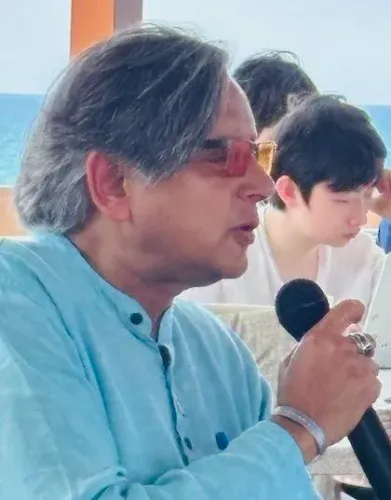
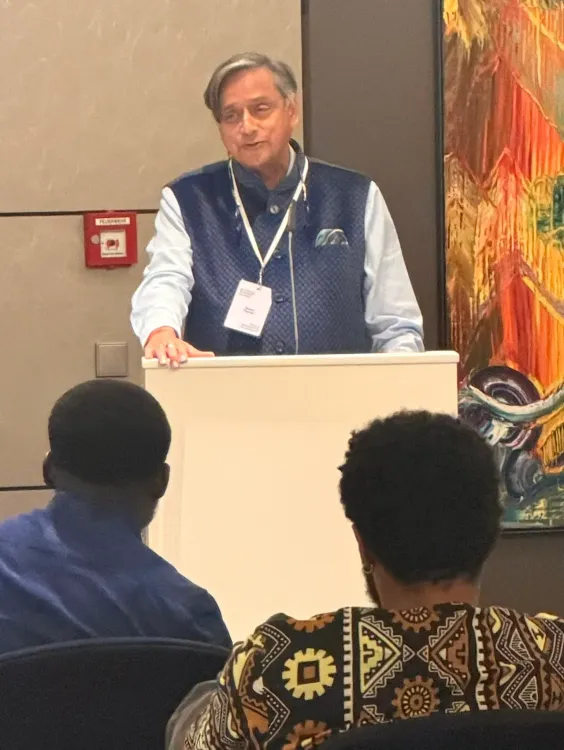
Congress MP Dr. Shashi Tharoor addressed the prestigious Bucerius Summer School in Hamburg on August 16, 2026, delivering his annual lecture on the collapse of post-war global governance — arguing the only international rule today is that there are no rules at all.
Key Takeaways
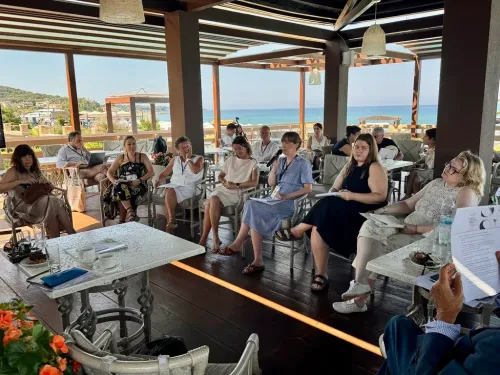
Shashi Tharoor addressed the Bucerius Summer School in Hamburg on Sunday, August 16, 2026 .
The address is part of an annual tradition — Tharoor is a recurring speaker at the forum.
His central argument: global governance is in crisis, with the post- 1945 rules-based order effectively broken down.
The Bucerius Summer School is organised by the ZEIT-Stiftung and convenes emerging global leaders in law, politics, and international affairs.
Tharoor is a former UN Under-Secretary-General and has long advocated for reformed multilateral institutions.
The address reflects India's broader stake in the global debate over who sets — and who enforces — international rules.
In a world where the rulebook of international order appears to have been quietly shredded, Congress MP Dr. Shashi Tharoor took the stage at one of Europe's most respected policy forums on Sunday, August 16, 2026, to diagnose exactly how we got here — and what it means for the rest of us.
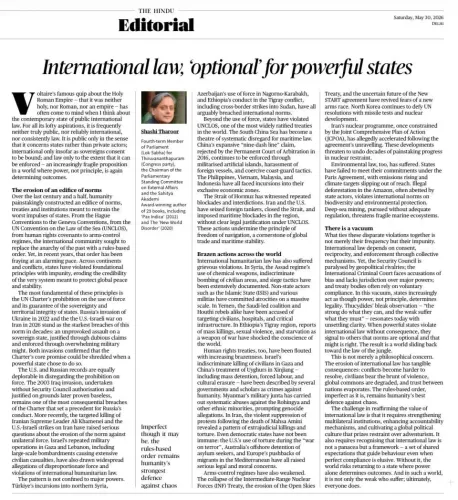
Tharoor addressed the Bucerius Summer School in Hamburg, Germany, a gathering he returns to annually, speaking on what he described as 'the current challenges of global governance in an era where the only international rule appears to be that there are no rules at all.' The post-1945 multilateral order — the architecture of the United Nations, the Bretton Woods institutions, and the web of international treaties built to prevent another world war — is, by his framing, under profound and perhaps unprecedented stress.
A Forum Built for Exactly This Conversation
The Bucerius Summer School, organised by the ZEIT-Stiftung Ebelin und Gerd Bucerius in Hamburg, is a prestigious annual programme that brings together emerging leaders from across the globe for intensive seminars on law, politics, and international affairs. Tharoor's recurring presence as a speaker places him among a select group of global thinkers invited to shape the forum's intellectual agenda year after year.
For a former UN Under-Secretary-General and longtime advocate of reformed multilateralism, the platform is a natural fit. Tharoor has spent decades arguing that the institutions born from the rubble of World War II were designed for a world that no longer exists — one of clear blocs, sovereign consensus, and shared (if imperfect) norms. The erosion of those norms, accelerating through trade wars, contested borders, and the weaponisation of international institutions by great powers, is precisely the terrain his address mapped.
When 'No Rules' Becomes the Only Rule
The phrase Tharoor chose — that the only international rule today is that there are no rules — is a pointed diagnosis, not mere rhetoric. It captures a genuine anxiety running through foreign-policy circles: that the post-war consensus on sovereignty, humanitarian intervention, nuclear restraint, and free trade has fractured into a system where outcomes are determined by raw power rather than agreed principle.
For India, a country that has historically championed the Global South's voice within multilateral bodies and pushed for a permanent seat on the UN Security Council, this conversation carries particular weight. As one of Parliament's most internationally fluent voices, Tharoor's annual Hamburg address has become a quiet but consistent thread in India's broader engagement with the global governance debate.
The post's text cuts off mid-sentence — 'The post-1945 order sought to' — suggesting the full address ranged across territory that a single post cannot contain. What it does contain is a clear signal: the conversation about who writes the rules of the world, and who enforces them, is not abstract. It is the defining question of this decade.
Point of View
Which has long positioned itself as a bridge between the Global South and Western-led institutions, this debate is existential — not academic. Tharoor's voice in Hamburg signals that Indian legislators, not just diplomats, are staking a claim in shaping that conversation.
NationPress
17 Aug 2026
Frequently Asked Questions
What is the Bucerius Summer School in Hamburg?
The Bucerius Summer School is a prestigious annual programme organised by the ZEIT-Stiftung Ebelin und Gerd Bucerius in Hamburg, Germany, bringing together emerging global leaders for intensive seminars on law, politics, and international affairs.
Why does Shashi Tharoor speak at the Bucerius Summer School every year?
Tharoor is a recurring invited speaker at the forum, reflecting his standing as a former UN Under-Secretary-General and one of India's most internationally recognised voices on global governance and multilateralism.
What did Shashi Tharoor say about global governance in Hamburg?
Tharoor argued that the world is in an era where 'the only international rule appears to be that there are no rules at all,' pointing to the breakdown of the post-1945 multilateral order built after World War II.
What is the post-1945 international order Tharoor referred to?
The post-1945 order refers to the system of international institutions and norms established after World War II, including the United Nations, the Bretton Woods financial institutions, and a web of treaties designed to maintain global peace and cooperation.
What is Shashi Tharoor's background in international affairs?
Dr. Shashi Tharoor served as UN Under-Secretary-General before entering Indian politics. He is a Congress MP from Thiruvananthapuram and a former Union Minister, and has written and spoken extensively on global governance and India's foreign policy.