Tharoor backs Kharge's call to consult states on delimitation
Synopsis
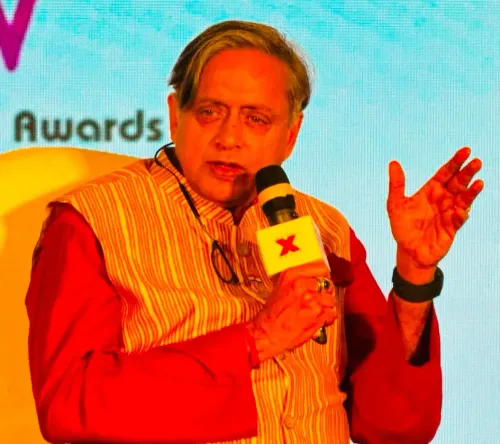
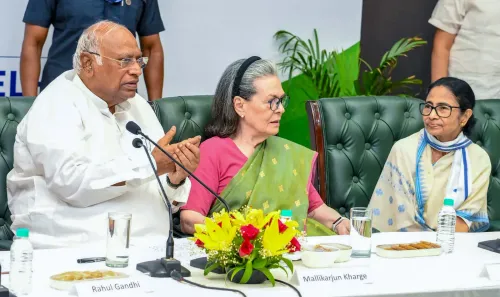
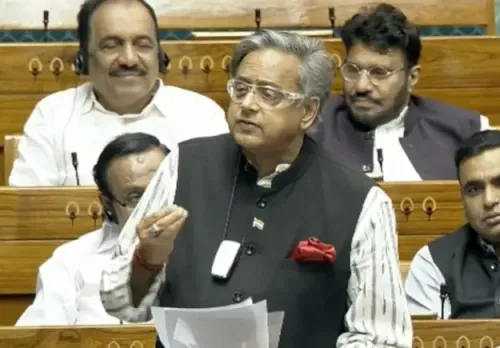
Congress MP Dr. Shashi Tharoor on 27 August 2026 amplified party president Mallikarjun Kharge's formal request that state governments be consulted before any delimitation exercise is proposed, calling states 'vital stakeholders' in a process that could redraw India's parliamentary map.
Key Takeaways
Shashi Tharoor publicly backed Congress President Mallikarjun Kharge's demand on 27 August 2026 that state governments be consulted before any delimitation proposal.
Tharoor described state governments as 'vital stakeholders' and said no delimitation should be proposed without their views.
India's parliamentary seat count has been frozen since the 1971 census , extended by the 84th Constitutional Amendment Act, 2001 until after the first post- 2026 census.
A fresh delimitation based on current population figures could reduce southern states' share of Lok Sabha seats, as they achieved lower population growth.
The Congress is framing mandatory state consultation as a federal safeguard against political imbalance in the Union legislature.
A constitutional redrawing that could reshape India's political map is gathering opposition momentum — and Congress MP Dr. Shashi Tharoor is making sure one demand stays front and centre: no delimitation without the states. On Thursday, 27 August 2026, Tharoor amplified a formal request from Indian National Congress President Mallikarjun Kharge, underlining that state governments are 'vital stakeholders' in any delimitation exercise and must be consulted before any proposal is floated.
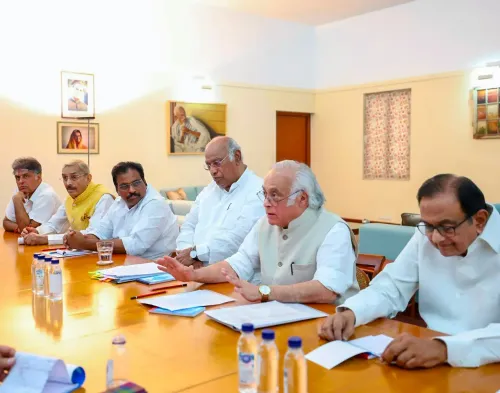
Kharge's request and the federal safeguard demand
Tharoor described Kharge's communication as an 'important request,' flagging one element as especially critical: the insistence that the Centre consult state governments before any delimitation boundaries are drawn. 'The states are vital stakeholders in this exercise,' Tharoor wrote, 'and no delimitation should be proposed without taking their views into account.' He added that he had raised the same point in a formal intervention — the full text of which was cut off — signalling that the Congress is building a coordinated, multi-front position on the issue.
Why delimitation divides India along a north-south fault line
The anxiety driving this push is not abstract. India's parliamentary seat count has been frozen since the 1971 census — a deliberate policy choice, extended by the 84th Constitutional Amendment Act of 2001, to avoid penalising states that successfully controlled population growth. The amendment locked the freeze until after the first census conducted post-2026. That moment is now arriving.
The consequence of a fresh, population-based delimitation is stark: northern states with higher population growth stand to gain seats in the Lok Sabha, while southern states — which invested heavily in family planning and education — could see their share of parliamentary representation shrink. For states like Tamil Nadu, Kerala, Karnataka, Andhra Pradesh and Telangana, this is not a procedural concern. It is an existential question about their voice in the Union legislature.
The Congress strategy: federalism as a firewall
By foregrounding the consultation demand, the Congress is doing something precise: it is framing delimitation not as a technical census exercise but as a federal compact that requires the consent of the units it affects. Opposition parties have long argued that any exercise conducted without state-level buy-in risks being perceived as a demographic power transfer from south to north — and from opposition-governed states to ruling-party heartlands.
Tharoor's post, brief as it is, signals that the party intends to hold this line publicly and loudly. The next trigger will be the release of fresh census figures and any government notification formally initiating the delimitation process. When that happens, the Congress's demand for mandatory state consultation will become the first battlefield.
The map of Indian democracy may be about to be redrawn. Who gets a seat at the table while that happens is already a fight.
Point of View
Regardless of party affiliation, a reason to align with the Congress position. By amplifying Kharge's consultation demand rather than leading with electoral grievance, the party is attempting to build a cross-partisan coalition of states that feel threatened by a population-weighted redraw. This strategy also pre-empts the government from framing delimitation as a neutral, constitutional exercise: if state consultation is denied, the Congress has a ready-made accountability hook. The intervention signals that delimitation will be one of the defining federal fault lines of the post-2026 census political cycle.
NationPress
27 Aug 2026
Frequently Asked Questions
What is delimitation and why does it matter in India?
Delimitation is the constitutional process of redrawing the boundaries of parliamentary and state assembly constituencies based on census data. It matters because it determines how many Lok Sabha seats each state gets, directly affecting political representation at the national level.
Why are southern states worried about delimitation?
Southern states like Kerala, Tamil Nadu, Karnataka and Andhra Pradesh achieved significantly lower population growth than northern states. A fresh delimitation based on current population figures could reduce their share of Lok Sabha seats, diluting their voice in Parliament despite their developmental achievements.
What did Mallikarjun Kharge request regarding delimitation?
According to Dr. Shashi Tharoor's post on 27 August 2026, Congress President Mallikarjun Kharge made a formal request that state governments be consulted before any delimitation is proposed, treating them as vital stakeholders in the exercise.
Why have India's Lok Sabha seats been frozen since 1971?
India's parliamentary seat count was frozen based on the 1971 census to avoid penalising states that successfully reduced population growth. The 84th Constitutional Amendment Act of 2001 extended this freeze until after the first census conducted after 2026.
What happens next in India's delimitation process?
The key triggers to watch are the release of fresh census figures and any government notification formally initiating the delimitation process. The Congress's demand for mandatory state consultation is expected to be a central point of political contestation when that process begins.