Modi's G7 message on seafarer safety wins cross-party praise, Tharoor backs stance
Synopsis
At the G7 in Evian, PM Modi made civilian seafarer safety a centrepiece of India's West Asia diplomacy — and even the opposition is applauding. Congress MP Shashi Tharoor's rare cross-party endorsement signals just how carefully Modi threaded the needle: principled, non-aligned, and impossible to argue with.
Key Takeaways
Congress MP Shashi Tharoor praised PM Modi's G7 messaging on civilian seafarer safety, calling it a universally agreeable position.
Modi raised the issue at the G7 Summit in Evian, France , in both formal sessions and bilateral meetings with world leaders.
Foreign Secretary Vikram Misri confirmed in Paris on Thursday that hundreds of thousands of Indian seafarers serve on global maritime platforms.
Tharoor argued the US-Iran MoU can hold only if both sides feel they have gained — citing the post- Versailles precedent as a cautionary tale.
Under the MoU, Iran has pledged to dilute enriched uranium under IAEA supervision; in return, sanctions and frozen assets are to be lifted.
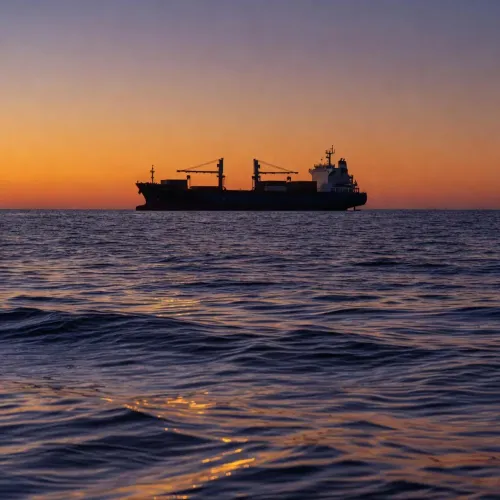
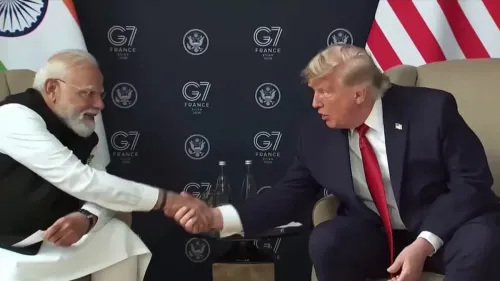
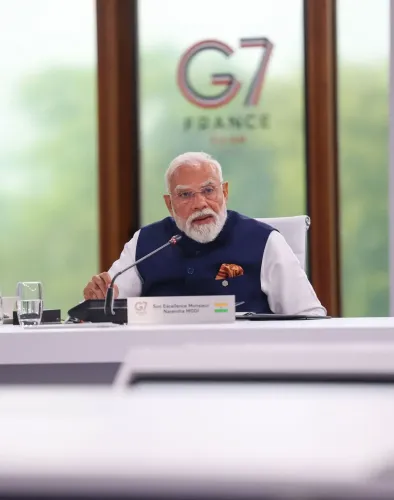
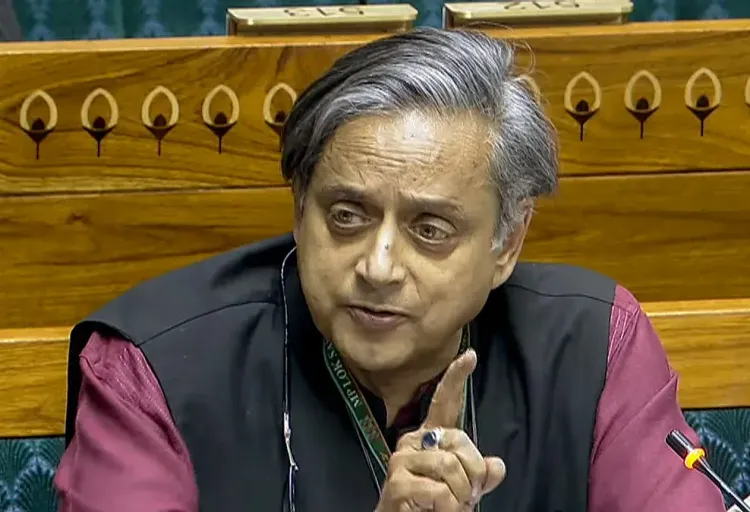
Congress MP Shashi Tharoor on Friday praised Prime Minister Narendra Modi's messaging at the G7 Summit in Evian, France, saying the PM effectively conveyed a universally acceptable position — that civilian commercial shipping must not be targeted in wartime. Modi's intervention, made both during G7 outreach sessions and in bilateral meetings with world leaders, centred on the safety of Indian seafarers and the need to preserve freedom of navigation through international waterways amid the ongoing West Asia crisis.
What Tharoor Said
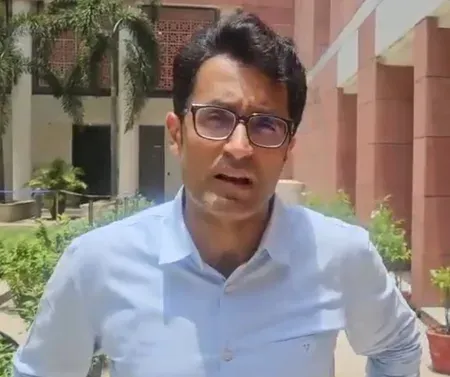
'I think that Prime Minister Narendra Modi was particularly able to convey a message that we would all agree with, namely that commercial shipping should not be targeted in a war. These are civilian sailors, as you know, pretty much every ship, whatever country's flag is flying, has an Indian crew on board,' Tharoor said in an interview.
The Congress MP also took a pointed position on US conduct, saying: 'The Americans may say that they have no idea what crew is in a ship and, if a ship is violating their blockade, they will hit them. But the facts still remain that these are civilian ships and civilian crew and they should have found a non-lethal way of stopping the ship, such as by intercepting it, boarding it, or disabling it.'
Tharoor described Modi's position as a 'fair message', noting that maritime safety is a concern that cuts across geopolitical lines and that ship owners too bear culpability for forcing crews into dangerous routes when a blockade is in force.
Modi's Intervention at G7
At the G7 Summit in Evian this week, PM Modi specifically raised the safety and security of seafarers, calling for a rapid return of peace and stability in West Asia following the signing of an agreement between the US and Iran. He also underscored India's longstanding position on freedom of navigation and unimpeded commerce through international waterways.
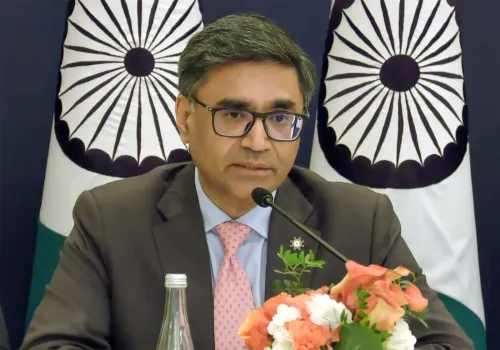
Foreign Secretary Vikram Misri, speaking to reporters in Paris on Thursday, elaborated on the PM's stance: 'Prime Minister specifically emphasised the issue of the safety and security of seafarers. He noted how hundreds of thousands of Indian seafarers essentially provide a global public good by serving on maritime platforms that serve the global community... and why therefore their safety and security should be a common concern of the global community.'
Misri confirmed that Modi raised the issue not only in his formal G7 intervention but also in bilateral meetings with several leaders on the sidelines.
Tharoor on the US-Iran Peace Deal
Commenting on the broader diplomatic picture, Tharoor argued that durable peace requires both sides to feel they have gained something. 'In all peace deals, my friend, everyone has to feel they have won, otherwise a peace will never last. You cannot have a peace deal that essentially involves the surrender of one side, going back to Versailles after the First World War, which led to the Second World War,' he said.
The former diplomat outlined how the current US-Iran Memorandum of Understanding (MoU) could serve that purpose: the US can point to Iran's pledge to stop enriching uranium and dilute existing stockpiles under International Atomic Energy Agency (IAEA) supervision, while Iran can claim the lifting of sanctions and unfreezing of assets held for decades. 'You don't want to create a situation where this peace doesn't last because one side is made to feel humiliated,' he added.
Why It Matters for India
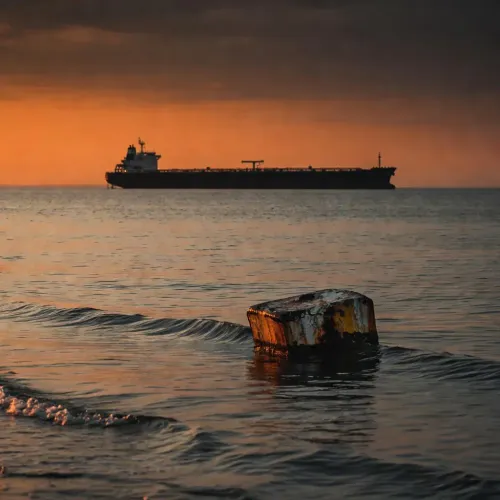
India is home to one of the world's largest pools of merchant seafarers, with hundreds of thousands of Indian nationals serving aboard vessels globally. Disruptions to shipping lanes in the Red Sea and Gulf of Aden — already a concern since late 2023 — have direct consequences for Indian crew safety, trade logistics, and energy import costs. Modi's G7 messaging positions India as a principled stakeholder in maritime security without aligning exclusively with any bloc — a continuation of its strategic autonomy posture. The cross-party backing from Tharoor adds domestic political weight to that diplomatic stance.
With the US-Iran MoU still at an early stage, the durability of the West Asia ceasefire will be closely watched in the weeks ahead.
Point of View
And doing so without caveats. That consensus reflects how effectively Modi has positioned India's seafarer-safety argument: it is humanitarian, non-partisan, and commercially resonant in a way that sidesteps the US-Iran binary. The harder question is whether this diplomatic goodwill translates into concrete protections for Indian crew — or remains a talking point. With the US-Iran MoU still fragile and Red Sea shipping lanes under intermittent threat, the gap between eloquent G7 interventions and enforceable maritime security guarantees remains wide.
NationPress
18 Sept 2026
Frequently Asked Questions
What did PM Modi say about seafarer safety at the G7 Summit?
PM Modi raised the safety and security of seafarers at the G7 Summit in Evian, France, stressing that hundreds of thousands of Indian seafarers provide a global public good and that their protection should be a common international concern. He made the case in both formal G7 sessions and bilateral meetings with world leaders, according to Foreign Secretary Vikram Misri.
Why did Shashi Tharoor praise PM Modi's G7 stance?
Congress MP Shashi Tharoor said Modi 'was particularly able to convey a message that we would all agree with' — that civilian commercial ships and their crews must not be targeted in war. Tharoor described it as a 'fair message' that resonates across political lines because maritime safety affects every country.
What is the US-Iran MoU that Tharoor referenced?
The US-Iran Memorandum of Understanding (MoU) is a recently signed agreement under which Iran has pledged to stop enriching uranium and dilute existing stockpiles under IAEA supervision, while the US is expected to lift sanctions and unfreeze Iranian assets held for decades. Tharoor argued the deal can hold because both sides have something to show their domestic audiences.
How many Indian seafarers work on global shipping vessels?
According to Foreign Secretary Vikram Misri, hundreds of thousands of Indian seafarers serve on maritime platforms globally, effectively providing what he called 'a global public good' for international trade. India is one of the world's largest suppliers of merchant navy crew.
What is India's position on the West Asia conflict and shipping lanes?
India has consistently emphasised freedom of navigation and unimpeded commerce through international waterways, while calling for a rapid return of peace and stability in West Asia. PM Modi's G7 intervention reinforced this stance without aligning India exclusively with any side in the US-Iran dispute.