Modi at G7: India backs West Asia peace, warns sea lanes must stay safe
Synopsis
At the G7 in Evian, Modi didn't just back peace talks — he put maritime security and Indian civilian lives on the table. With the Strait of Hormuz disruption squeezing the global economy and India acutely exposed as a top crude importer, his call to keep sea lanes safe carries strategic weight beyond diplomatic courtesy.
Key Takeaways
PM Narendra Modi addressed the G7 summit in Evian, France on 17 June , welcoming progress in West Asia peace efforts.
Modi warned that disruption of maritime trade through the Strait of Hormuz has damaged the global economy .
He stressed that Indian civilians have lost their lives in the conflict and called for the safety of seafarers worldwide.
Modi argued the world faces a shortage of trust , not resources, and urged rebuilding international solidarity.
India reaffirmed its commitment to resolving global tensions through dialogue, diplomacy, and multilateral cooperation .
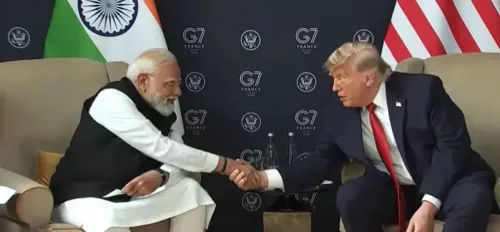
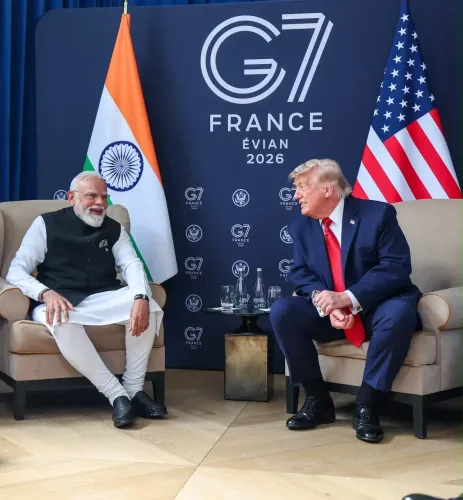
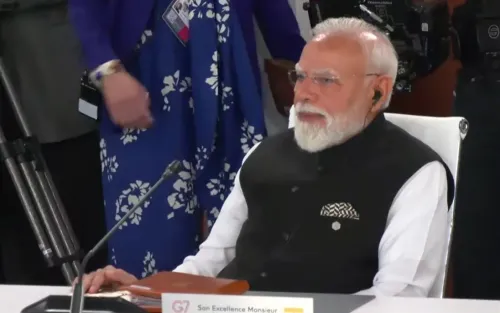
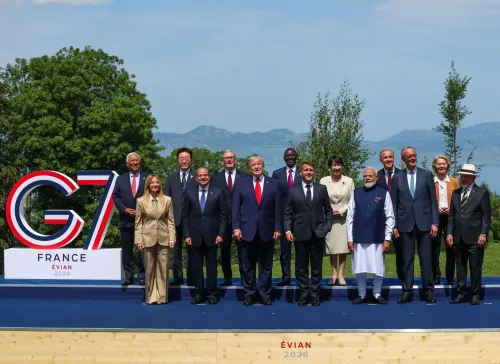
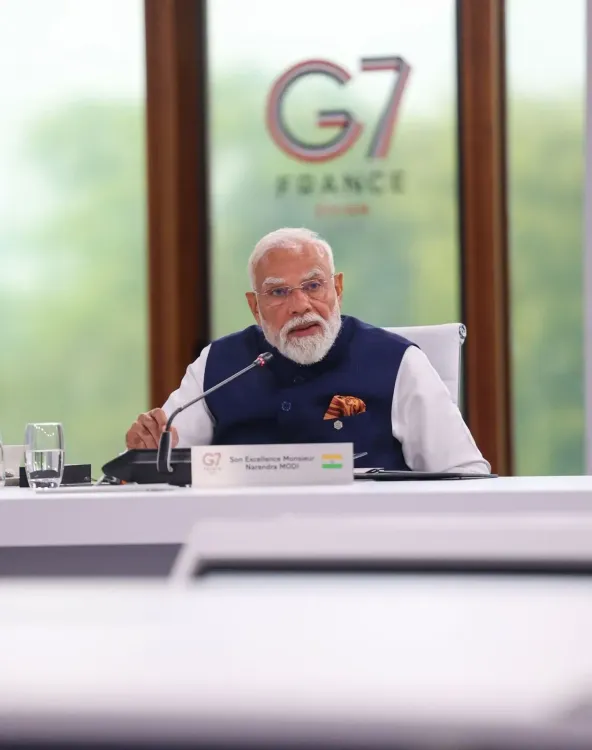
Prime Minister Narendra Modi on Tuesday, 17 June called for the protection of global maritime trade routes and welcomed progress in West Asia peace efforts, speaking at the G7 summit in Evian, France, during a session titled 'Forging New Partnerships and Rebuilding International Solidarity'. The remarks, confirmed by the Prime Minister's Office (PMO), underscored India's growing stake in Middle East stability and open sea lanes.
On West Asia Peace and Maritime Safety
'We welcome the progress made in peace efforts in West Asia. This conflict has caused loss of life and property for our friendly countries in West Asia. The disruption of maritime trade in the Strait of Hormuz has harmed the global economy,' Modi said, according to the PMO.
He went further, flagging the human cost borne by Indian nationals in the region. 'Many Indian civilians have lost their lives. The safety of seafarers, who connect all countries through global maritime trade, is our responsibility. We must ensure that sea lanes remain safe, and seafarers can carry out their work without fear,' the Prime Minister stressed.
India's Diplomatic Stance: Dialogue Over Confrontation
Modi reaffirmed India's foundational foreign-policy position — that lasting resolution of global tensions is achievable only through dialogue, diplomacy, and multilateral cooperation. He stated that India is 'fully prepared to work together with all partners on these issues.'
This comes amid an extended period of instability across West Asia, where disruptions to shipping through the Strait of Hormuz and the Red Sea have driven up freight costs and complicated energy supply chains globally. India, one of the world's largest importers of crude oil, is disproportionately exposed to such disruptions.
The Trust Deficit in Global Partnerships
Modi also raised a broader concern about the erosion of international trust, arguing that trade and technology are increasingly being weaponised for narrow national interests. 'Mutual trust is the most important strategic asset today. But, sadly, today, the world does not suffer from a shortage of resources… it suffers from a shortage of trust. And the future of our partnerships depends on rebuilding this trust,' he said.
Notably, the remarks arrive at a moment when multilateral institutions face mounting credibility questions, and G7 solidarity itself has been tested by diverging positions on trade tariffs and geopolitical alignments.
Vasudhaiva Kutumbakam: India's Guiding Framework
Invoking the Sanskrit principle of Vasudhaiva Kutumbakam — 'the world as one family' — Modi positioned India's engagement as people-centred and development-driven. He said India has always followed the principle of 'humanity first', adding that 'development is most effective when it is connected to the aspirations of people.'
The address positions India as a constructive voice at the G7 table — a status reinforced by New Delhi's active diplomatic outreach across both the Global South and Western capitals in recent years. Whether these calls translate into coordinated multilateral action on maritime security remains to be seen.
Point of View
Firm enough for the Global South. But the pointed reference to Indian civilian deaths and seafarer safety signals that India's diplomatic patience has limits. The Strait of Hormuz framing is also telling: New Delhi is increasingly willing to name economic damage from West Asia instability in multilateral forums, not just bilateral ones. The trust-deficit argument, while philosophically resonant, sidesteps the harder question of what concrete mechanisms India is prepared to back — or fund — to actually rebuild it.
NationPress
15 Sept 2026
Frequently Asked Questions
What did PM Modi say at the G7 summit about West Asia?
PM Modi welcomed the progress made in West Asia peace efforts and said the conflict had caused loss of life and economic harm to friendly nations. He specifically flagged the disruption of maritime trade through the Strait of Hormuz as damaging to the global economy.
Why did Modi raise the issue of sea lane safety at the G7?
Modi stressed that many Indian civilians have lost their lives in the West Asia conflict and that seafarers — who underpin global maritime trade — must be able to work without fear. India, as one of the world's largest crude oil importers, is heavily exposed to shipping disruptions in the region.
What is India's stated position on resolving global conflicts?
India's position, as articulated by Modi at the G7, is that lasting solutions to global tensions are possible only through dialogue, diplomacy, and international cooperation. Modi said India is fully prepared to work with all partners on these issues.
What did Modi mean by a 'shortage of trust'?
Modi argued that the world's core problem today is not a lack of resources but a deficit of mutual trust, with trade and technology increasingly being misused for narrow national interests. He called rebuilding trust the most important strategic priority for global partnerships.
What is Vasudhaiva Kutumbakam and why did Modi invoke it at the G7?
Vasudhaiva Kutumbakam is a Sanskrit phrase meaning 'the world is one family' and is a recurring anchor of India's foreign policy messaging. Modi used it at the G7 to frame India's development and diplomatic engagement as people-centred and rooted in shared human aspirations rather than narrow self-interest.