Tharoor backs SC order: protest rights over Delhi curbs
Synopsis
The Supreme Court told the Centre it cannot completely halt Delhi's trains and Metro ahead of the October 10 protest. Congress MP Dr. Shashi Tharoor backed the court's ruling, arguing that regulation cannot become prohibition and that a confident government respects dissent rather than inconveniencing millions to suppress it.
Key Takeaways
The Supreme Court directed the Centre to allow Delhi train and Metro services in a regulated manner ahead of the October 10, 2026 protest, rejecting a blanket shutdown.
The Chief Justice stated: 'Law and order is your responsibility.
It's not state property only.' Congress MP Dr.
Shashi Tharoor cited the ruling to argue that the Modi government had overstepped from regulation into prohibition of citizens' rights.
Tharoor framed peaceful protest as a fundamental right guaranteed under the Constitution, not a threat to be suppressed.
The episode highlights the recurring tension in India between state powers for public order and citizens' rights to free movement and assembly.
The Centre's compliance with the court's direction — and the conduct of the October 10 demonstration — will be the immediate test of the ruling's impact.
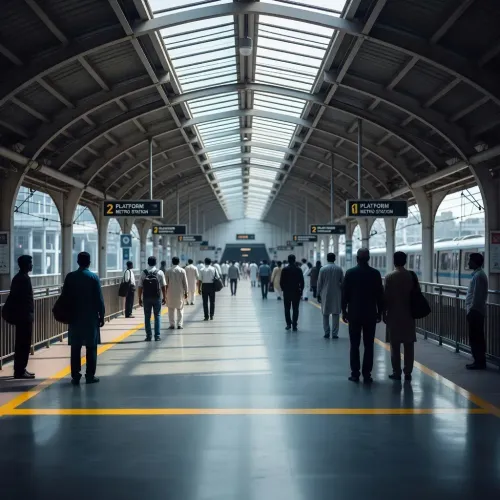
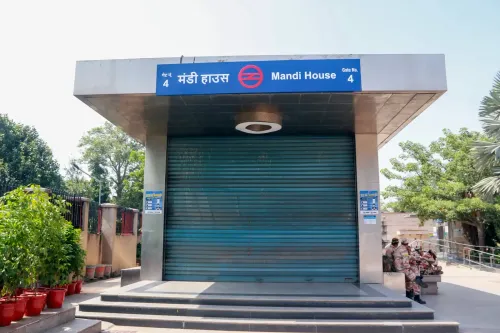
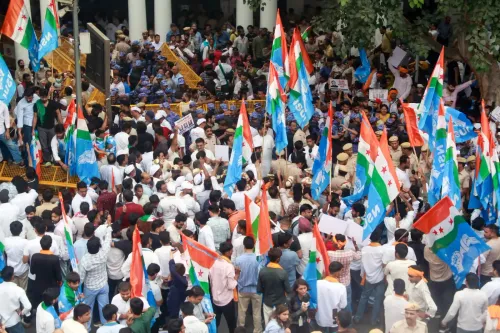
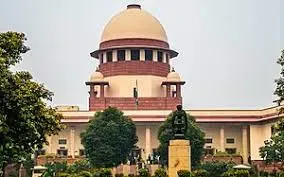
The Supreme Court of India drew a firm constitutional line on Friday, October 9, 2026 — telling the Centre it cannot shut down Delhi's trains and Metro to choke off a planned mass protest the following day. Congress MP Dr. Shashi Tharoor amplified that judicial rebuke, arguing that the Modi government had crossed from regulation into prohibition, and that millions of ordinary commuters were being made to pay the price for a political calculation.
What the Chief Justice actually said
At the heart of the Supreme Court's intervention was a pointed observation from the Chief Justice: 'Law and order is your responsibility. It's not state property only.' The bench's direction was unambiguous — services on Delhi's trains and Metro must continue in a regulated manner; a blanket shutdown was constitutionally untenable. The distinction matters: governments hold wide powers to manage public order around large demonstrations, but those powers stop at the point where they effectively nullify the right to assemble and move freely.
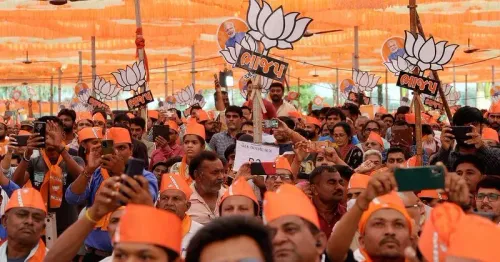
The protest in question was scheduled for October 10, 2026. Authorities had moved to restrict rail and Metro services ahead of it — a pre-emptive measure critics immediately framed as an attempt to strangle participation before a single slogan was raised.
Tharoor's argument: dissent is not a threat
Dr. Tharoor's post, shared on behalf of the Indian National Congress, weaves the court's ruling into a broader democratic argument. 'A confident government respects dissent; it does not inconvenience millions to suppress it,' he wrote — a formulation that reframes the debate from public-order logistics to the character of governance itself.
The Congress position is that peaceful protest is a fundamental right under the Constitution, not a privilege the state may suspend at convenience. By invoking the Supreme Court's language directly, Tharoor grounds a political argument in judicial authority — a rhetorical move that is harder to dismiss as partisan point-scoring.
The commuter cost of a political standoff
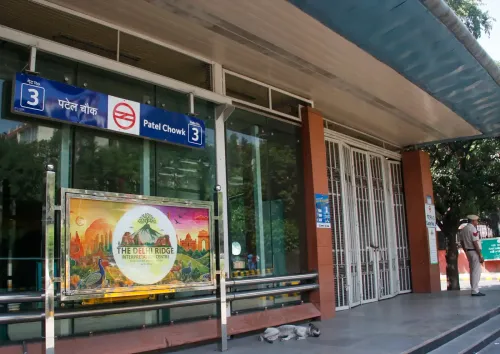
Whatever the legal outcome, the episode underlines a recurring tension in Indian democracy: the state's obligation to maintain order versus citizens' right to move freely and speak collectively. When Metro lines go dark and train schedules collapse in a city of Delhi's scale, the disruption falls hardest on daily-wage workers, students, and patients — people with no stake in the political contest being waged above them.
The Supreme Court's insistence on 'regulated, not prohibited' service is, in that sense, as much a practical verdict as a constitutional one. It protects the protest. It also protects the commute.
Whether the Centre complies fully — and whether the October 10 demonstration proceeds without incident — will test, in real time, how seriously the government takes the court's reminder that public infrastructure belongs to the public.
Point of View
Tharoor attempts to elevate Congress's position from opposition noise to constitutional principle. The 'regulated, not prohibited' standard the court has now articulated could set a precedent that constrains future governments — of any stripe — from using infrastructure shutdowns as a pre-emptive protest-management tool. How the Centre responds, and whether October 10 unfolds without escalation, will define whether this judicial moment translates into lasting democratic guardrails.
NationPress
9 Oct 2026
Frequently Asked Questions
What did the Supreme Court say about Delhi Metro and trains ahead of the October 10 protest?
The Supreme Court told the Centre not to completely stop train and Metro services in Delhi, directing that they must be allowed to run in a regulated manner. The Chief Justice observed that law and order is the government's responsibility, not an excuse to deny citizens access to public infrastructure.
Why did Shashi Tharoor comment on the Supreme Court's October 10 protest ruling?
Dr. Shashi Tharoor, Congress MP from Thiruvananthapuram, used the Supreme Court's intervention to argue that the Modi government had crossed the line from regulating a protest to effectively prohibiting it, inconveniencing millions of commuters in the process.
What is the right to protest in India?
The right to peaceful protest in India is protected under Article 19 of the Constitution, which guarantees freedom of speech, assembly, and movement. The Supreme Court has consistently held that while reasonable restrictions are permissible for public order, authorities cannot use those powers to eliminate the right entirely.
What was planned for October 10, 2026 protest in Delhi?
A mass protest was scheduled in Delhi on October 10, 2026. Ahead of it, authorities moved to restrict Delhi's train and Metro services, a decision the Supreme Court intervened on, directing that services continue in a regulated rather than completely suspended manner.
What does 'regulation cannot become prohibition' mean in the context of Delhi protests?
The phrase, used by Dr. Shashi Tharoor citing the Supreme Court's reasoning, means that while the government can place reasonable conditions on public services and assemblies for safety, it cannot use those regulatory powers to effectively ban a protest by making it impossible for people to travel to participate.