Tharoor in Belfast for JLF Island of Ireland Festival
Synopsis
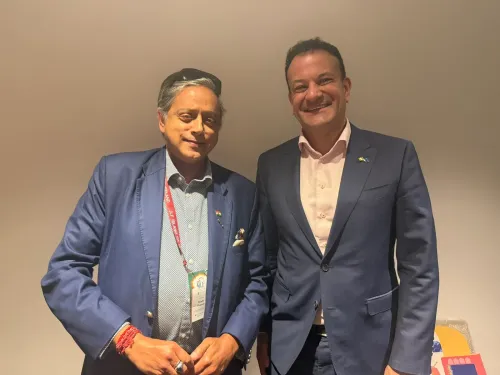
Congress MP Dr. Shashi Tharoor arrived in Belfast for the Jaipur Literature Festival's Island of Ireland edition, drawing parallels between the British-led partitions of India and Ireland and calling the cross-cultural event 'a terrific idea.'
Key Takeaways
Shashi Tharoor arrived in Belfast on Friday, 23 May 2026 for the JLF Island of Ireland festival.
He described both India and Ireland as 'former British colonies, both victims of a British-led Partition.' Tharoor has drawn the India-Ireland colonial parallel publicly since at least 2015 , including in his 2016 book An Era of Darkness .
The Jaipur Literature Festival , founded in 2006 , has run international editions since 2011 , using literary exchange as cultural diplomacy.
India and Ireland have maintained diplomatic relations since 1947 , anchored partly in their shared anti-colonial histories.
Outcomes including any new bilateral literary exchange programmes from the Belfast sessions remain to be announced.
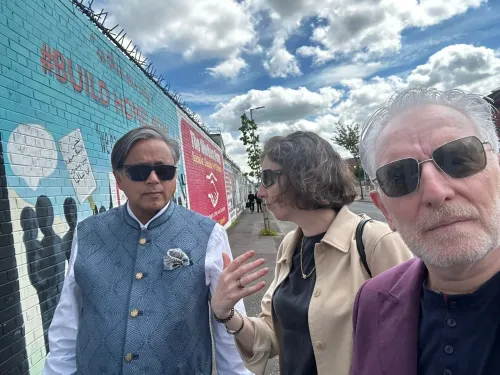
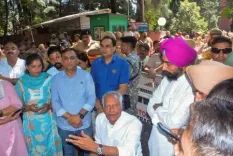
Congress MP Dr. Shashi Tharoor arrived in Belfast on Friday, 23 May 2026, to participate in the Jaipur Literature Festival's Island of Ireland edition, describing the event as a celebration of shared histories between two nations shaped by British colonial rule and partition.
Context
Posting on Sunday, 24 May, Tharoor called the festival concept 'a terrific idea,' highlighting what he described as the 'many commonalities between these two former British colonies, both victims of a British-led Partition, both lively and loquacious.' The remark draws a direct line between the 1947 Partition of India and the 1921 Partition of Ireland — a comparison Tharoor has made repeatedly in speeches and writing over the past decade.
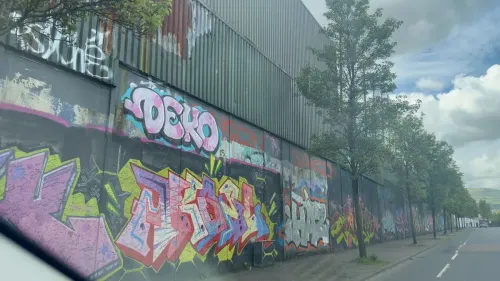
Belfast, the capital of Northern Ireland, sits at the geographic and symbolic heart of Ireland's own partition story, making it a pointed choice of venue for this cross-cultural dialogue.
Policy Backdrop
Tharoor's intellectual engagement with British colonialism is well documented. His 2015 Oxford Union speech drew global attention by cataloguing the economic and social damage inflicted on India under British rule, and his 2016 book An Era of Darkness systematically compared British policies in India with those applied in Ireland. The Belfast visit extends that argument from the page to the public square.
The Jaipur Literature Festival, founded in 2006, launched its first overseas edition in the United Kingdom in 2011 and has since expanded to multiple countries. Its Ireland edition represents a deliberate effort to use literary exchange as a vehicle for people-to-people engagement, a model consistent with India's broader use of cultural diplomacy in Europe.
India and Ireland established formal diplomatic relations in 1947, immediately after Indian independence, with both nations referencing their anti-colonial histories in bilateral contexts. That foundational alignment gives events like the JLF Island of Ireland a resonance beyond the literary.
Stakeholders and Impact
The festival brings together literary communities, members of the Indian diaspora in Ireland, and postcolonial scholars for whom the India-Ireland parallel is both an academic framework and a lived identity. For Irish audiences, the presence of a figure of Tharoor's profile — former UN Under-Secretary-General, sitting Member of Parliament, and prolific author — lends the event considerable weight.
India's growing economic ties with Ireland, particularly in technology and education, provide a practical backdrop to the cultural conversation. Literary and diaspora networks increasingly function as soft-power infrastructure alongside these economic links.
What's Next
Attention will turn to the panels, discussions, and attendance figures emerging from the JLF Island of Ireland sessions in Belfast. Any announcements of sustained India-Ireland literary exchange programmes or reciprocal festival initiatives would mark a concrete institutional outcome from the gathering. Tharoor's participation ensures the event carries political as well as cultural visibility, potentially prompting further dialogue between the two countries' governments on cultural cooperation.
Point of View
He keeps the argument in the realm of ideas and culture rather than formal diplomacy, which allows for bolder comparisons than official bilateral channels would permit. The JLF's expanding international footprint reflects a broader Indian soft-power strategy that uses diaspora networks and cultural events to sustain historical narratives alongside growing economic ties. Whether this translates into durable institutional India-Ireland cultural programming will be the real measure of the visit's impact.
NationPress
8 Oct 2026
Frequently Asked Questions
Why is Shashi Tharoor in Belfast?
Tharoor travelled to Belfast for the Jaipur Literature Festival's Island of Ireland edition, an event he described as a celebration of the shared colonial and partition histories of India and Ireland.
What is the JLF Island of Ireland?
It is an international edition of the Jaipur Literature Festival held in Ireland, designed to facilitate dialogue between Indian and Irish literary and cultural communities.
How are India and Ireland's partitions similar?
Both countries were divided under British authority — India in 1947 and Ireland following the 1921 Anglo-Irish Treaty — resulting in lasting political and communal divisions that Tharoor and postcolonial scholars have long compared.
What has Tharoor written about British colonialism and Ireland?
His 2016 book An Era of Darkness systematically compared British colonial policies in India with those applied in Ireland, building on arguments he first made publicly in a widely shared 2015 Oxford Union speech.
When did India and Ireland establish diplomatic relations?
India and Ireland established formal diplomatic relations in 1947 , immediately after Indian independence, with both nations citing their anti-colonial histories as a foundation for bilateral ties.