Tharoor in Belfast: Heaney's Words on a Divided City's Murals
Synopsis
Congress MP Dr. Shashi Tharoor visited Belfast and shared reflections on the city's divided spaces, invoking Nobel laureate Seamus Heaney's poetry — lines of which appear on a city mural — as a symbol of the city's resilient determination to move beyond its conflict-scarred past.
Key Takeaways
Shashi Tharoor posted reflections from Belfast, Northern Ireland , on 24 May 2026 .
He described encountering a mural bearing lines from Seamus Heaney , the 1995 Nobel laureate in Literature .
Tharoor noted a 'palpable, resilient determination to move forward' despite the city's divided spaces.
Belfast's mural culture has roots in the Troubles , which claimed over 3,500 lives before the Good Friday Agreement of 1998 .
Since 1998 , many Belfast murals have evolved from paramilitary markers to sites of artistic and reconciliatory expression.
Indian political figures have periodically studied Northern Ireland's reconciliation model for comparative lessons on divided societies.
Congress MP Dr. Shashi Tharoor shared reflections from a visit to Belfast, Northern Ireland, on Sunday, 24 May 2026, invoking the poetry of Nobel laureate Seamus Heaney as he described the city's struggle to move beyond its conflict-riven past.
Context
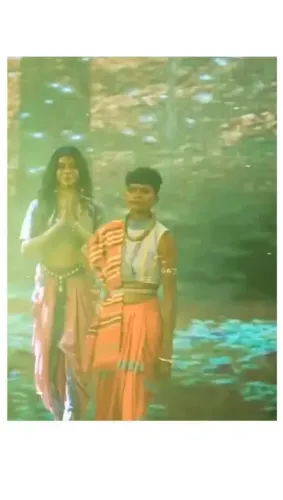
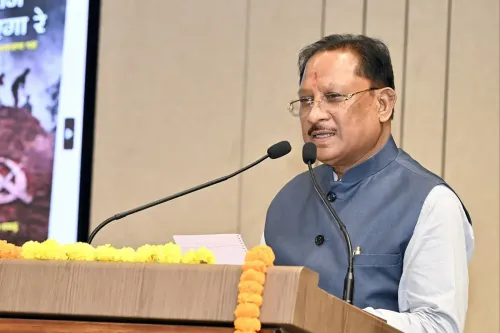
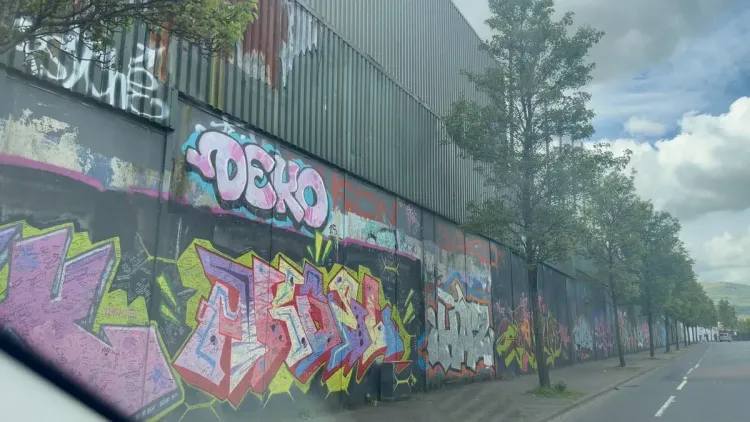
In his post — the second of a two-part thread — Tharoor described navigating Belfast's 'divided spaces' and encountering a mural bearing the closing lines of a Seamus Heaney poem. He wrote that while the city is not 'just trapped in its past,' there is a 'palpable, resilient determination to move forward.' The post was accompanied by three images and a video, offering a visual record of the mural and its surroundings.
Seamus Heaney, who was born in County Derry and died in 2013, is widely regarded as one of the defining voices of Irish literature. He was awarded the Nobel Prize in Literature in 1995, with the Swedish Academy citing 'his works of lyrical beauty and ethical depth, which exalt everyday miracles and the living past.'
Policy Backdrop
Belfast's landscape of political murals has its roots in the Troubles, the three-decade period of sectarian violence between broadly unionist and nationalist communities that claimed more than 3,500 lives before the Good Friday Agreement of 1998 created a power-sharing framework and set the terms for disarmament and reconciliation.
Since the Good Friday Agreement, many murals in Belfast — particularly in the Falls Road and Shankill Road areas — have been reinterpreted or replaced as part of community-led efforts to shift the city's visual identity from paramilitary symbolism toward artistic and reconciliatory expression. Heaney's poetry, with its meditations on memory, land, and communal grief, has become a touchstone in that cultural transition.
Stakeholders and Impact
Tharoor's engagement with Belfast's post-conflict narrative carries a comparative dimension that resonates beyond Ireland. Indian political figures have periodically looked to Northern Ireland's reconciliation experience as a reference point when discussing divided societies, peace-building, and the role of cultural memory in healing communal wounds.
For residents of Northern Ireland and cultural organisations working to preserve and evolve the mural tradition, international attention from visiting parliamentarians and public intellectuals reinforces the significance of that ongoing work. Heaney's lines, rendered on a public wall, serve as both a literary monument and a civic statement about the city's aspirations.
What's Next
Tharoor's thread — shared with accompanying visuals — is likely to prompt wider discussion in Indian public discourse about the relevance of Northern Ireland's peace process as a comparative model. Any follow-up parliamentary or cultural exchanges between Indian and Irish institutions, particularly those referencing shared literary heritage or post-conflict reconciliation frameworks, will be worth watching in the months ahead.
Point of View
And its public documentation, may foreshadow deeper Indian parliamentary engagement with Irish peace-building institutions.
NationPress
10 Oct 2026
Frequently Asked Questions
Why did Shashi Tharoor visit Belfast?
The specific purpose of Dr. Shashi Tharoor's 2026 visit to Belfast has not been officially confirmed, but his posts describe a personal engagement with the city's divided spaces and its post-conflict cultural landscape, including murals referencing the poetry of Seamus Heaney.
Who is Seamus Heaney and why is he significant in Belfast?
Seamus Heaney was an Irish poet born in County Derry who won the Nobel Prize in Literature in 1995. His work addressed Irish identity, memory, and conflict, and his poetry has become closely associated with Northern Ireland's cultural efforts to process and move beyond the Troubles.
What are the Belfast murals that Tharoor referred to?
Belfast's murals are large-scale paintings on the walls of residential and commercial buildings, historically used by both unionist and nationalist communities during the Troubles to mark territory and commemorate events. Since the 1998 Good Friday Agreement, many have been reworked as artistic or reconciliatory expressions, and some now feature literary quotations.
What is the Good Friday Agreement and how does it relate to Belfast's murals?
The Good Friday Agreement, signed in 1998, ended three decades of sectarian violence in Northern Ireland known as the Troubles. It created power-sharing institutions and set conditions for disarmament, enabling the cultural and civic regeneration of Belfast, including the evolution of its mural tradition.
Has Shashi Tharoor spoken about Northern Ireland before?
No specific prior statements by Dr. Shashi Tharoor on Northern Ireland are on record, but he is known for drawing on international literary and political history in his public commentary, and this visit continues that pattern of engaging with global post-conflict experiences.