Tharoor demands answers after CJI flags Form 6 was never approved

Synopsis
Chief Justice Soorya Kant's declaration that the Supreme Court never approved a modified Form 6 has prompted Congress MP Dr. Shashi Tharoor to demand transparent, public answers on who altered the voter registration form, why, and under whose authority.
Key Takeaways
CJI Soorya Kant stated in court on 6 October 2026 : 'Modified Form 6 has not been approved by us.' The Supreme Court indicated it will examine 'who made what amendments' once records are produced.
The Election Commission of India had previously claimed its amended Form 6 carried Supreme Court sanction, citing a May 2026 ruling.
Form 6 is the voter-enrollment application; any unauthorised modification directly affects citizens' franchise rights.
Shashi Tharoor is demanding clear public answers on who changed the form, on whose orders, and on what legal basis.
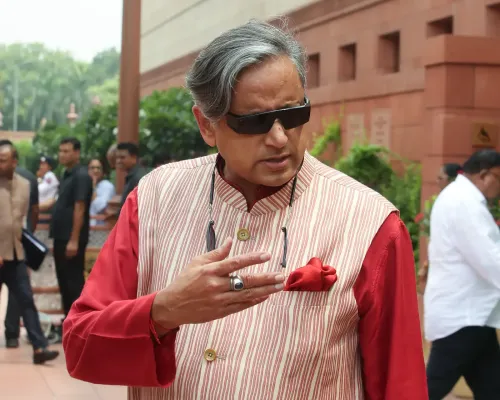
Three questions — who changed it, on whose orders, and under what authority — have cut through India's electoral debate after Chief Justice of India Soorya Kant said in open court on Tuesday, 6 October 2026: 'Modified Form 6 has not been approved by us.' Congress MP Dr. Shashi Tharoor seized on the remark to demand clear, public answers from the Election Commission of India, calling the voter registration form a document 'linked to every citizen's democratic right and franchise.'
Opening his post with an Urdu couplet — 'जो तुमने आँख मूँदी है, अँधेरा हो गया गहरा' ('The darkness deepened the moment you shut your eyes') — Tharoor framed the controversy as a test of democratic accountability, before turning sharply to the legal and procedural facts.CJI's words that started the fire
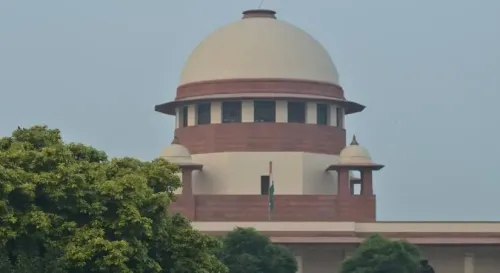
The Chief Justice's statement was unambiguous: the Supreme Court had not approved any modified version of Form 6, the standard application form through which Indian citizens register as voters on the electoral rolls. The court added that once records are produced, it will examine 'who made what amendments.' That single line transforms a bureaucratic dispute into a matter of judicial scrutiny.
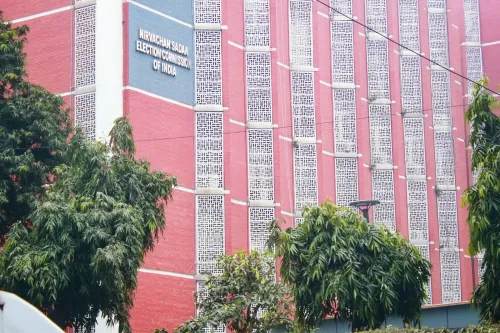
The Election Commission of India had earlier cited a May 2026 Supreme Court ruling as the basis for the additional declaration incorporated into the revised Form 6, describing it as court-sanctioned. The CJI's observations today directly contest that framing, raising the question of whether the Commission mischaracterised judicial backing for a unilateral administrative change.
Why Form 6 is not a 'routine piece of paper'
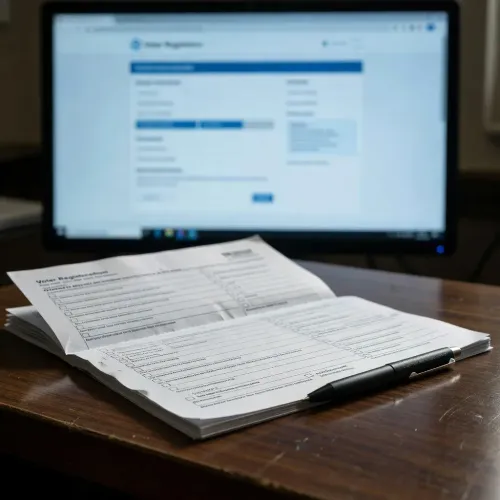
Form 6 is the gateway to the electoral roll — the document every first-time voter or relocated citizen must submit to enroll or re-enroll. Any modification to its content, particularly the addition of new declarations or disclosures, carries legal and practical weight: it can affect who is included in the voter list and who is effectively excluded through procedural barriers. Tharoor made this explicit: 'The voter list is not a laboratory. Form 6 is not a trivial piece of paper.'
The concern is structural. If the form was altered without Supreme Court authorisation — and without a transparent executive or legislative order — the change bypassed the safeguards that ordinarily govern the integrity of India's voter registration system.
Tharoor's four-point demand for the Election Commission
Dr. Tharoor's post lays out the accountability questions plainly: Who changed Form 6? Why was it changed? On whose permission was it changed? And on what basis did the Election Commission claim Supreme Court approval for the change? He insists the answers must be 'clear and public' — साफ़ और सार्वजनिक जवाब.
As a former UN Under-Secretary-General and a sitting Lok Sabha MP from Thiruvananthapuram, Tharoor carries the institutional memory to understand that electoral processes derive legitimacy not just from outcomes but from the transparency of the rules governing participation. A form that determines who votes is, as he puts it, every citizen's democratic document.
The Supreme Court's next move — once records are placed before it — will determine whether this remains a political controversy or escalates into a constitutional one. The Election Commission's silence will not last long.
Point of View
It would represent a serious procedural overreach that could invite deeper judicial supervision of the Commission's rule-making powers. The episode feeds into a longer arc of contestation over the independence and transparency of India's electoral machinery.
NationPress
6 Oct 2026
Frequently Asked Questions
What is Form 6 in India's voter registration process?
Form 6 is the official application form that Indian citizens must submit to enroll as a voter or transfer their voter registration to a new constituency — it is the foundational document governing access to the electoral roll.
What did CJI Soorya Kant say about modified Form 6?
On 6 October 2026 , Chief Justice Soorya Kant stated in court that 'Modified Form 6 has not been approved by us,' and said the Supreme Court would examine who made amendments to the form once records are produced.
Why is Shashi Tharoor questioning the Election Commission over Form 6?
Tharoor is demanding that the Election Commission publicly explain who changed Form 6, why, and under whose permission — particularly because the Commission had previously claimed the change was backed by a May 2026 Supreme Court ruling, a claim the CJI's remarks now directly challenge.
Did the Supreme Court approve the changes to Form 6?
According to CJI Soorya Kant's statement on 6 October 2026 , the Supreme Court did not approve the modified Form 6, contradicting the Election Commission's earlier assertion that the change was court-sanctioned.
What are the implications of an unauthorised change to Form 6?
An unauthorised modification to Form 6 could affect the integrity of voter enrollment across India, potentially creating procedural barriers to registration and raising constitutional questions about the Election Commission's authority to alter the process without judicial or legislative backing.