Tharoor doubts Orban can secure 9 UNSC non-permanent votes
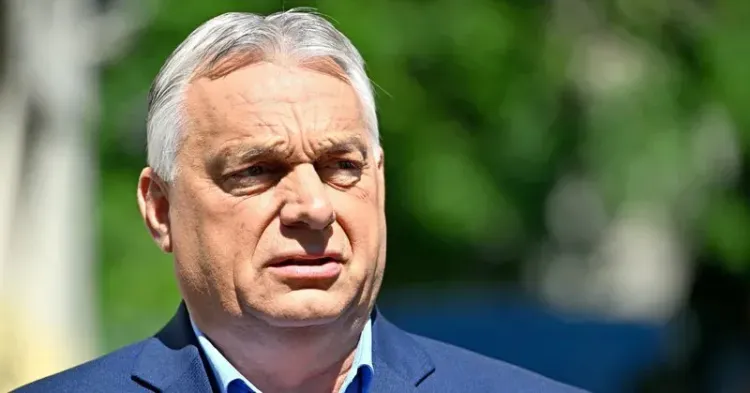
Synopsis
Congress MP and former UN Under-Secretary-General Dr. Shashi Tharoor has publicly questioned whether Hungarian PM Viktor Orban can secure the nine non-permanent UNSC votes required — rating the odds 'not too highly' given Orban's history of multilateral isolation.
Key Takeaways
Shashi Tharoor posted on 26 October 2026 questioning Viktor Orban's ability to secure nine non-permanent UNSC votes.
Any substantive UN Security Council resolution requires nine affirmative votes , including from non-permanent members, for passage.
Hungary under Orban has repeatedly defied EU and NATO consensus, limiting its multilateral alignment credentials.
Non-permanent UNSC members are elected regionally and are sensitive to collective diplomatic sentiment — making near-unanimous support difficult to engineer.
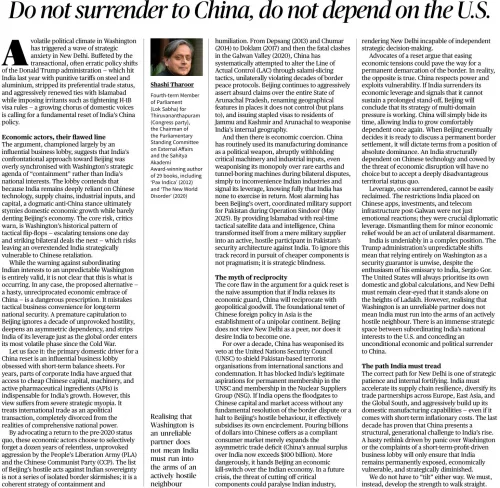
Tharoor's comment carries institutional weight: he is a former UN Under-Secretary-General with direct Security Council experience.
The remark signals broader diplomatic scepticism about Hungary's standing in multilateral forums ahead of any upcoming UNSC-related manoeuvre.
A single sharp question — and a sharper answer — from Congress MP Dr. Shashi Tharoor on Monday, 26 October 2026 cut to the heart of a looming UN arithmetic problem: can Hungarian Prime Minister Viktor Orban actually muster the minimum nine votes from non-permanent members of the United Nations Security Council?
Posting on X, Tharoor asked pointedly: 'What are the odds of Viktor Orban actually getting the minimum nine votes required from non-permanent members of the UN Security Council? I wouldn't rate them too highly!' The former UN Under-Secretary-General was not making a casual observation — he was doing the maths, and finding them unforgiving.Why nine votes is the magic — and brutal — number
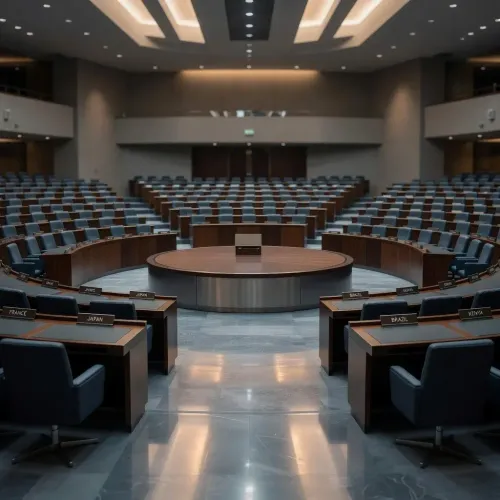
The UN Security Council operates on a clear procedural rule: any substantive resolution requires nine affirmative votes to pass, provided none of the five permanent members exercise their veto. With the P5 — the United States, the United Kingdom, France, Russia, and China — holding veto power, the real battleground is often the ten elected non-permanent seats. Winning over nine of those ten is, in diplomatic terms, a coalition-building test of the highest order.
Non-permanent members are elected by the UN General Assembly for two-year terms on a regional rotation, making them acutely sensitive to multilateral sentiment and the prevailing mood in their respective regional blocs. Securing nine of ten requires near-unanimous buy-in — a tall order for any government, and a particularly steep climb for one with Orban's track record in multilateral forums.
Orban's isolation in multilateral spaces
Viktor Orban, Prime Minister of Hungary since 2010, has built his political identity partly on defying consensus — within the European Union, within NATO, and increasingly within Western diplomatic circuits. His government's independent stances on Russia, migration policy, and institutional reform have made Hungary a frequent outlier in bloc-wide votes and a target of EU institutional friction.
That pattern of limited multilateral alignment is precisely what Tharoor's question foregrounds. Orban has historically sought leverage through bilateral channels and alternative forums when broader institutional backing proved elusive. Replicating that approach inside the Security Council's non-permanent cohort — geographically and politically diverse, elected on regional credibility — is a fundamentally different challenge.
Tharoor's standing on UN procedural questions
The observation carries particular weight given who is making it. Dr. Tharoor served as UN Under-Secretary-General for Communications and Public Information, bringing firsthand institutional knowledge of how UNSC coalition-building actually works behind the scenes. His scepticism is not rhetorical flourish; it is the judgement of someone who has watched bloc negotiations play out in real time inside Turtle Bay.
The broader signal: when a diplomat with Tharoor's Security Council fluency publicly questions whether a sitting European head of government can reach the nine-vote threshold, it is worth watching how non-permanent members — and their regional groupings — position themselves in the weeks ahead.
Point of View
And that Orban's multilateral credibility deficit makes that bar especially hard to clear. The comment also reflects a broader Indian foreign-policy instinct: procedural rigour at the UN matters, and bloc-building requires genuine multilateral standing, not just bilateral deal-making. For India, which itself navigates UNSC reform debates carefully, the observation is as much about institutional architecture as it is about Hungary. It is worth watching whether this signals a coordinated diplomatic pushback or simply one legislator reading the room — accurately.
NationPress
26 Oct 2026
Frequently Asked Questions
Why does Viktor Orban need nine votes from UNSC non-permanent members?
Any substantive resolution at the UN Security Council requires nine affirmative votes out of fifteen members to pass. With only five permanent members, a resolution typically needs support from most or all of the ten elected non-permanent members, making their votes decisive.
What did Shashi Tharoor say about Viktor Orban and the UN Security Council?
Dr. Shashi Tharoor posted on X questioning whether Orban could realistically secure the minimum nine non-permanent UNSC votes, adding that he 'wouldn't rate them too highly' — a pointed assessment from a former UN Under-Secretary-General.
Why is Hungary's UN position considered weak under Orban?
Orban's government has repeatedly broken with EU and NATO consensus on issues including Russia and migration, earning Hungary a reputation as a multilateral outlier. Non-permanent UNSC members elected on regional credibility are unlikely to align easily with a government seen as institutionally isolated.
Who are the non-permanent members of the UN Security Council?
The UN Security Council has ten non-permanent members elected by the UN General Assembly for two-year terms on a regional rotation basis. Their composition changes regularly, and they hold no veto power but are crucial for reaching the nine-vote threshold on resolutions.
What is Shashi Tharoor's background in the United Nations?
Dr. Shashi Tharoor served as UN Under-Secretary-General for Communications and Public Information before entering Indian politics. He is currently a Congress MP from Thiruvananthapuram and a recognised voice on international affairs and UN institutional matters.