Tharoor flags AI actors displacing real talent in China
Synopsis
Congress MP Dr. Shashi Tharoor has flagged how China's micro-drama industry replaced human actors, technicians and make-up artists with AI-generated performers — raising urgent ethical questions about automation, consent and workforce displacement in global entertainment.
Key Takeaways
Shashi Tharoor raised concerns on October 25, 2026 about AI-generated actors displacing real performers.
China's micro-drama sector — a high-volume, low-cost short-form drama industry — saw AI performers replace human actors, technicians and make-up artists.
The displacement is not limited to on-screen talent; behind-the-camera crew including make-up artists are also affected.
Similar AI-driven displacement trends have emerged in animation, visual effects and stock media globally.
Key unresolved questions include consent rights for performers and mandatory AI-labelling rules — issues film unions worldwide are now pushing.
India, with one of the world's largest entertainment workforces, faces particular exposure if no regulatory framework emerges.
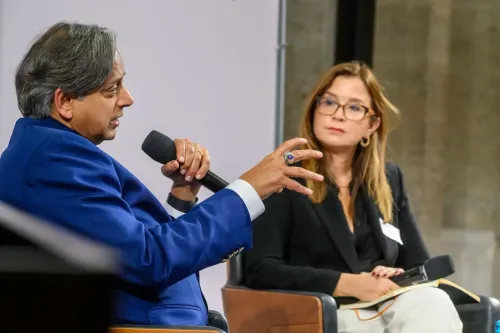
When an entire industry replaces its human cast with software, the ethical alarm bells are no longer theoretical — they are urgent. Congress MP Dr. Shashi Tharoor raised this concern on Sunday, October 25, 2026, pointing to China's micro-drama sector as a live case study in what happens when AI-generated performers displace the real ones at scale.
China's micro-drama boom — and the workforce it wiped out
Tharoor highlighted how China's short-form digital drama industry — once a rapidly growing employment engine for actors, technicians, and make-up artists — has seen AI-generated performers move in and human workers move out. The pattern is striking: a format built on high-volume, low-cost production discovered that synthetic performers could deliver content even faster and at even lower cost, making the human labour equation difficult to sustain.
The micro-drama format, characterised by serialised episodes of just a few minutes each, scaled ferociously across Chinese streaming platforms in recent years. Its very economics — speed, volume, low per-episode budget — made it a natural early target for generative AI tools that can now produce credible on-screen 'performances' without a single actor on set.
A displacement pattern already visible across entertainment
This is not an isolated event. Across global entertainment, AI tools have been steadily automating roles once considered irreducibly human: animation clean-up, visual-effects compositing, background-crowd generation, stock-media creation. What China's micro-drama sector illustrates is the speed at which that displacement can accelerate when an industry's economics already favour low cost above all else.
The consequences extend well beyond the star performers. Tharoor specifically named technicians and make-up artists among those thrown out of work — the invisible backbone of any production — underscoring that AI disruption in entertainment is a supply-chain problem, not just a headline-actor problem.
The consent and labelling question now reaching legislatures
The broader question Tharoor frames is an ethical one: do AI-generated performers require disclosure to audiences? Do the performers whose likenesses or vocal styles informed training data hold any rights? These questions are beginning to land in legislative chambers. Film industry unions and guilds globally have pushed for mandatory AI labelling and consent frameworks, and India's own entertainment industry — one of the world's largest by output — is watching closely whether Parliament or a regulatory body moves on generative AI in media.
For a country with millions employed across Bollywood, regional film industries, OTT productions, and an enormous below-the-line workforce, the China precedent is less a distant warning and more an incoming weather system.
Point of View
He grounds an abstract ethical debate in a concrete, documented displacement event — a rhetorical move that sharpens the urgency for Indian policymakers who might otherwise treat the issue as a distant Western tech story. The omission of any proposed Indian regulatory response underlines a policy vacuum: India has the world's largest film workforce and no AI-in-media framework yet. If that gap persists, the China precedent becomes less a cautionary tale and more a roadmap for disruption.
NationPress
25 Oct 2026
Frequently Asked Questions
What did Shashi Tharoor say about AI actors?
Tharoor warned that AI-generated actors raise serious ethical questions, pointing to China's micro-drama industry where AI performers have displaced real actors, technicians and make-up artists from work.
What are China's micro-dramas and why does AI matter there?
Micro-dramas are short serialised digital episodes, often just a few minutes long, that scaled rapidly in China as a low-cost content format. Their economics — high volume, low per-episode budgets — made them an early and rapid target for AI-generated performers.
How does AI affect behind-the-camera workers in entertainment?
AI disruption in entertainment is not limited to on-screen talent. Technicians, make-up artists and other crew members are also losing work as production pipelines increasingly automate or eliminate roles that require human presence on set.
Is India at risk of AI actor displacement in Bollywood or OTT?
India has one of the world's largest entertainment workforces spanning Bollywood, regional film industries and OTT platforms. As of October 2026, India has no specific regulatory framework for generative AI in media, leaving the sector exposed to the displacement patterns already visible in China.
What rules exist to protect actors from AI replacing them?
Globally, film industry unions and guilds have been pushing for mandatory AI labelling, performer consent frameworks and residual-payment rules for AI-trained likenesses. No comprehensive international standard exists yet, and India has not legislated on the issue.