Tharoor Meets German Party Foreign Affairs Spokesperson
Synopsis
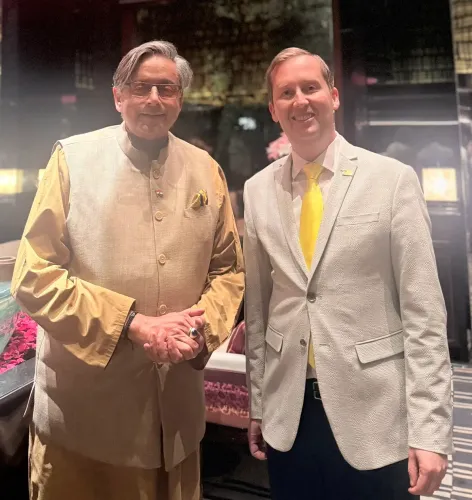
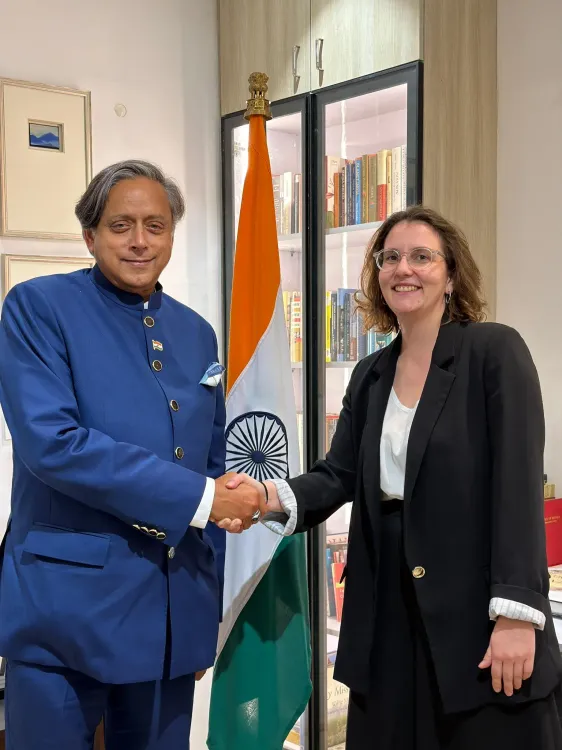
Congress MP Dr. Shashi Tharoor met the foreign affairs spokesperson of a major German political party on 25 October 2026, calling it 'a very interesting discussion' — reflecting a broader pattern of Indian opposition lawmakers maintaining active European diplomatic contacts.
Key Takeaways
Shashi Tharoor , Congress MP and former UN Under-Secretary-General, met the foreign affairs spokesperson of a major German party on 25 October 2026 .
He described the exchange as 'a very interesting discussion'; the specific party, spokesperson, and topics were not disclosed.
India and Germany have maintained a formal Strategic Partnership since the early 2000s covering trade, science, technology, and defence.
Indian opposition MPs, particularly those with foreign affairs credentials, have a documented pattern of informal party-to-party contacts with European political figures.
Any follow-up parliamentary or public references to the discussion in coming weeks will indicate its substantive significance.
Diplomacy rarely waits for official delegations. On Sunday, 25 October 2026, Congress MP Dr. Shashi Tharoor shared that he had held what he described as 'a very interesting discussion' with the foreign affairs spokesperson of one of Germany's major political parties — a quiet but telling signal of how Indian opposition lawmakers are keeping India's global conversations alive beyond the corridors of South Block.
Why an Indian MP's Berlin chat matters
Dr. Tharoor's diplomatic instincts are well-documented. As a former UN Under-Secretary-General and former Union Minister of State for External Affairs, he brings an unusually rich multilateral lens to party-to-party foreign engagement. His Thiruvananthapuram constituency may be in Kerala, but his conversations have long ranged from New York to Geneva — and, evidently, to Germany.
India and Germany share one of South Asia's most substantive bilateral relationships. The two countries formalised a Strategic Partnership in the early 2000s, covering trade, science and technology, and defence cooperation. In recent years, Berlin has deepened its Indo-Pacific engagement, making Indian parliamentary interlocutors — especially those with diplomatic credentials — increasingly sought-after conversation partners for European political parties mapping the subcontinent.
Opposition diplomacy and the pattern it reflects
Dr. Tharoor is not alone in this practice. Indian opposition MPs, particularly those with committee assignments in foreign affairs or defence, have maintained a steady cadence of informal contacts with European counterparts. These exchanges typically run parallel to — not in competition with — the government's own bilateral channels, and often surface in parliamentary committee discussions in the weeks that follow.
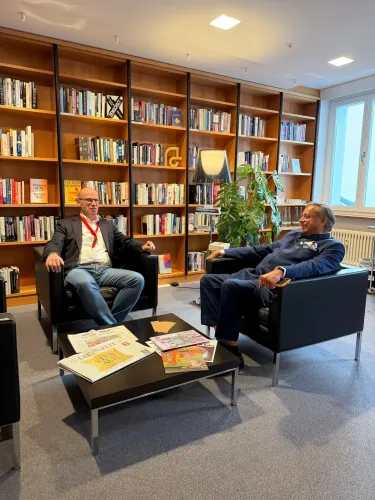
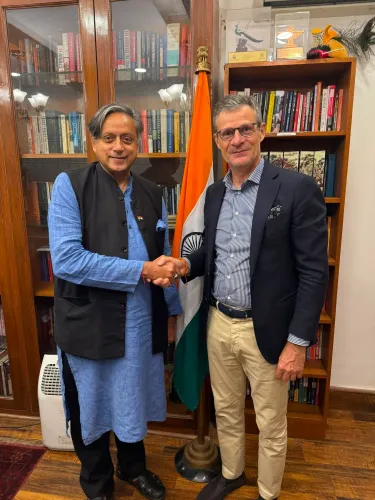
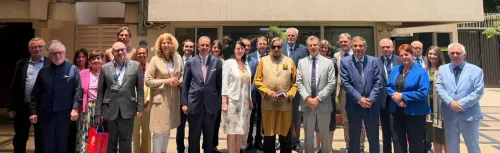
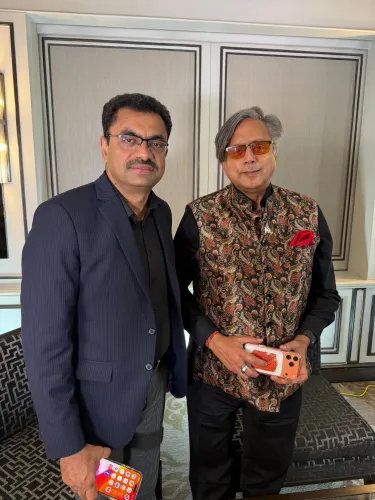
The specific German party, the name of the spokesperson, and the precise topics on the table have not been disclosed — four images accompanied the post, but identifying details remain undisclosed. What the exchange underscores is a broader reality: as India's global footprint grows, its legislators, not just its ministers, are becoming nodes in a widening web of international political dialogue.
Watch for whether Dr. Tharoor references this conversation in a parliamentary committee session or a public foreign-policy forum in the coming weeks — that will be the real signal of its weight.
Point of View
Particularly as Germany recalibrates its Indo-Pacific strategy. Such party-to-party contacts, while unofficial, often seed positions that later surface in parliamentary debates or policy papers. For New Delhi watchers, the more telling question is whether this exchange reflects German interest in understanding India's domestic political landscape ahead of any major bilateral initiative. Opposition diplomacy of this kind rarely makes headlines — but it shapes the texture of how democracies understand each other.
NationPress
25 Oct 2026
Frequently Asked Questions
Who did Shashi Tharoor meet in Germany?
Dr. Shashi Tharoor met the foreign affairs spokesperson of one of Germany's major political parties, though the specific party and spokesperson were not identified in his post.
What is Shashi Tharoor's foreign policy background?
Dr. Tharoor served as a UN Under-Secretary-General for over a decade and later as Union Minister of State for External Affairs in India, giving him one of the most extensive international affairs résumés in Indian Parliament.
Why do Indian opposition MPs meet European political leaders?
Indian opposition MPs, especially those on foreign affairs committees, maintain informal contacts with European parties to exchange views on bilateral issues and global policy — a practice that runs alongside the government's official diplomatic channels.
What is the India-Germany Strategic Partnership?
India and Germany formalised a Strategic Partnership in the early 2000s covering trade, science and technology, defence cooperation, and people-to-people ties, making Germany one of India's most important European partners.
Is Shashi Tharoor on any parliamentary foreign affairs committee?
Dr. Tharoor has been associated with parliamentary standing committees related to external affairs and has been a prominent voice on India's foreign policy positions across multiple terms in the Lok Sabha.