Tharoor meets Sri Lanka PM Amarasuriya, drapes Kerala shawl
Synopsis
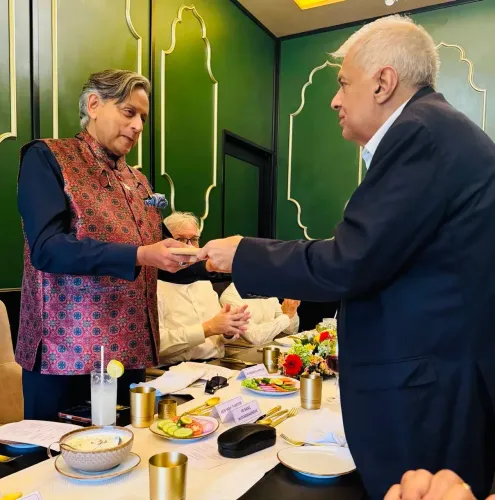
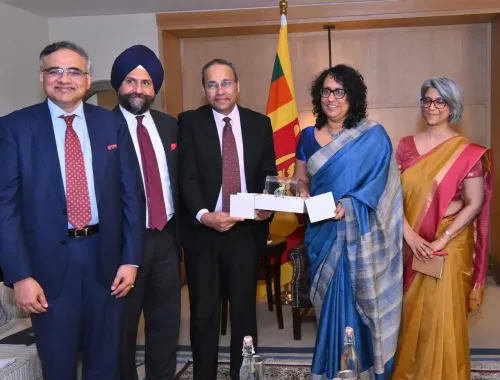
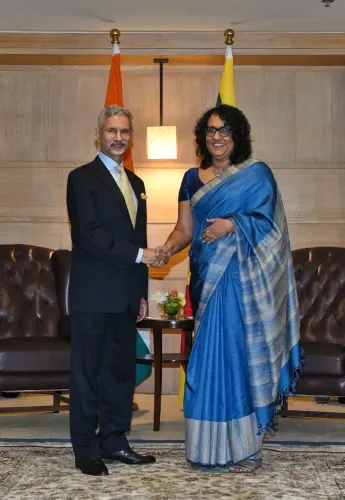
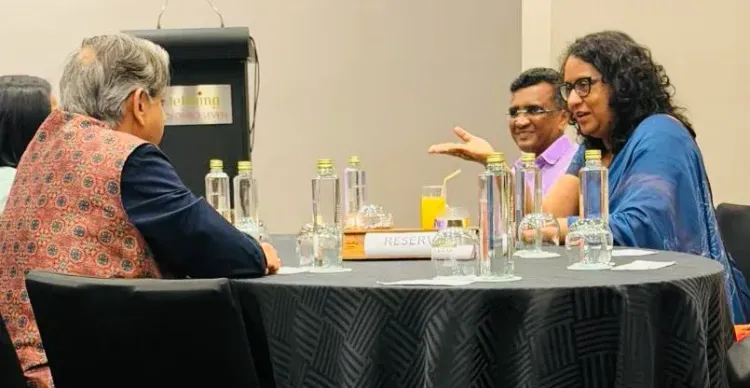
Congress MP Dr. Shashi Tharoor met Sri Lanka Prime Minister Dr. Harini Amarasuriya on 27 July 2026, exchanging views on bilateral issues. Tharoor highlighted her University of Delhi alumni connection and draped a traditional Kerala shawl on her in a cultural gesture.
Key Takeaways
Shashi Tharoor met Sri Lanka Prime Minister Dr.
Harini Amarasuriya on 27 July 2026 .
Tharoor described the conversation as covering 'a wide range of issues of mutual interest.' Dr.
Amarasuriya is an alumna of Hindu College, University of Delhi , a connection Tharoor specifically highlighted.
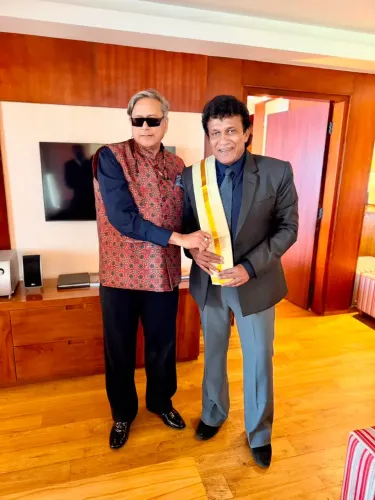
Tharoor draped a traditional Kerala shawl on the Sri Lankan Prime Minister as a cultural gesture.
Tharoor previously served as Minister of State for External Affairs (2009-2010) with a portfolio that included India's neighbourhood policy.
The meeting reflects the broader India-Sri Lanka people-to-people and parliamentary diplomacy track that complements official bilateral channels.
Congress MP Dr. Shashi Tharoor met Sri Lanka Prime Minister Dr. Harini Amarasuriya on Sunday, 27 July 2026, describing the exchange as a 'delightful conversation' covering a wide range of bilateral issues. Tharoor, who represents Thiruvananthapuram in the Lok Sabha and is a former Minister of State for External Affairs, also draped a traditional Kerala shawl on the Sri Lankan Prime Minister as a cultural gesture.
Context
Tharoor shared the meeting on social media, noting that Dr. Amarasuriya is an alumna of Hindu College, a constituent college of the University of Delhi. He described her as 'a warmly approachable government leader,' underscoring the personal rapport that often accompanies India-Sri Lanka people-to-people ties. The two exchanged views on 'a wide range of issues of mutual interest,' according to Tharoor's post.
The draping of a Kerala shawl — a traditional mark of honour in South Indian diplomatic and ceremonial culture — added a regional cultural dimension to what appeared to be an informal but substantive bilateral engagement.
Policy Backdrop
India and Sri Lanka share one of South Asia's most layered bilateral relationships, anchored by geography, trade, and deep cultural links. The two countries have maintained formal economic engagement since the India-Sri Lanka Free Trade Agreement of 1998, with subsequent discussions on connectivity, fisheries, and energy cooperation shaping the modern relationship.
Tharoor himself has a direct institutional connection to this bilateral track: as Minister of State for External Affairs (2009-2010) under the United Progressive Alliance government, he handled aspects of India's neighbourhood policy including Sri Lankan engagement. His educational-alumni angle — highlighting that the Sri Lankan Prime Minister studied at a premier Indian university — reflects a broader pattern of Indian policymakers emphasising shared academic heritage as a foundation for diplomatic warmth.
Stakeholders and Impact
Indian parliamentarians and former diplomats conducting informal outreach with South Asian counterparts serve as an important complement to official Ministry of External Affairs channels. Such meetings allow for candid exchanges outside the formal diplomatic calendar and can help shape the agenda for subsequent official-level talks.
The cultural gesture of the Kerala shawl also carries symbolic weight: it signals Thiruvananthapuram's proximity to Sri Lanka and the particular stake that Kerala — home to a large Tamil-speaking community and significant trade links with the island nation — has in the bilateral relationship. For Sri Lanka's leadership, maintaining warm ties with influential Indian parliamentarians across party lines remains a diplomatic priority.
What's Next
Observers will watch for any follow-up statement from the Ministry of External Affairs or a scheduled meeting of the India-Sri Lanka Joint Commission, which oversees economic and connectivity cooperation between the two countries. Tharoor's engagement, while informal, may add momentum to people-to-people and parliamentary diplomacy tracks ahead of any formal bilateral summit. The shared University of Delhi alumni connection between Indian political figures and South Asian leaders continues to serve as a soft-power asset for India's neighbourhood-first policy.
Point of View
Tharoor is deploying a well-worn but effective soft-power frame — one that positions Indian higher education as a generator of regional goodwill. The Kerala shawl gesture adds a sub-national layer, reminding observers that coastal Kerala has its own distinct stake in India-Sri Lanka ties beyond New Delhi's official calculus. At a time when India's neighbourhood-first policy faces scrutiny over its depth and consistency, such informal parliamentary outreach can quietly reinforce bilateral warmth ahead of formal diplomatic engagements.
NationPress
26 Jul 2026
Frequently Asked Questions
Who is Sri Lanka Prime Minister Harini Amarasuriya?
Dr. Harini Amarasuriya is the Prime Minister of Sri Lanka. She is an alumna of Hindu College, University of Delhi, a connection highlighted by Congress MP Dr. Shashi Tharoor during their meeting on 27 July 2026.
Why did Shashi Tharoor meet the Sri Lanka Prime Minister?
Dr. Shashi Tharoor met Sri Lanka Prime Minister Dr. Harini Amarasuriya for a conversation covering a wide range of issues of mutual interest between India and Sri Lanka. Tharoor described the exchange as 'delightful' and also draped a traditional Kerala shawl on her as a cultural gesture.
What is the significance of draping a Kerala shawl in Indian diplomacy?
Draping a regional shawl is an established cultural gesture in Indian diplomatic etiquette, used to honour guests and signal warmth. A Kerala shawl specifically reflects the close geographical and cultural ties between Kerala and Sri Lanka.
What is Shashi Tharoor's connection to Indian foreign policy?
Dr. Shashi Tharoor served as Minister of State for External Affairs from 2009 to 2010, handling aspects of India's neighbourhood policy including engagement with Sri Lanka. He is also a former UN Under-Secretary-General and currently serves as Congress MP from Thiruvananthapuram.
What is the current state of India-Sri Lanka relations?
India and Sri Lanka share a longstanding bilateral relationship anchored by the 1998 India-Sri Lanka Free Trade Agreement and ongoing cooperation on trade, connectivity, fisheries and energy. High-level exchanges and people-to-people ties, including shared educational alumni networks, continue to underpin the relationship.