Tharoor Shares Committee Tour Pause at Scenic Heritage Site
Synopsis
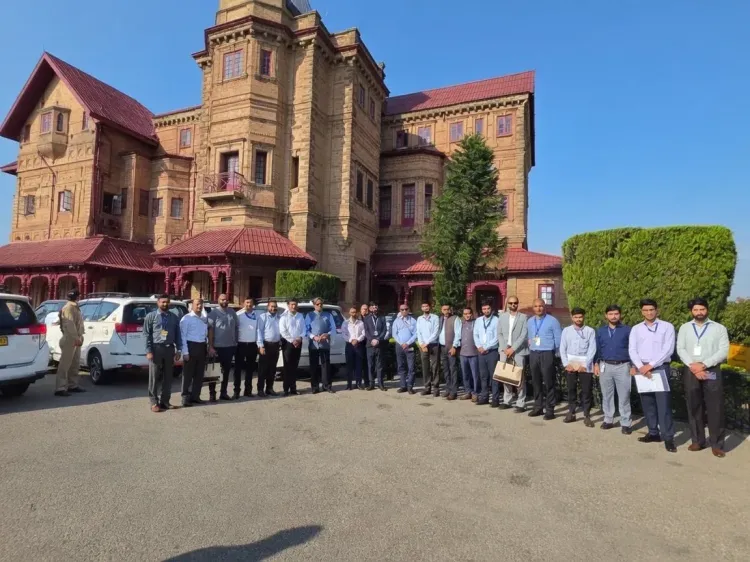
Congress MP Dr. Shashi Tharoor on 27 June 2026 shared a reflective post on X describing a parliamentary committee's grateful interlude at a site of remarkable architecture during an official study tour, accompanied by three images of the setting.
Key Takeaways
Shashi Tharoor , Congress MP from Thiruvananthapuram , posted on 27 June 2026 about a parliamentary committee visit to an architecturally notable location.
The post described 'remarkable architecture amid an idyllic setting' that gave the committee a welcome interlude during their trip.
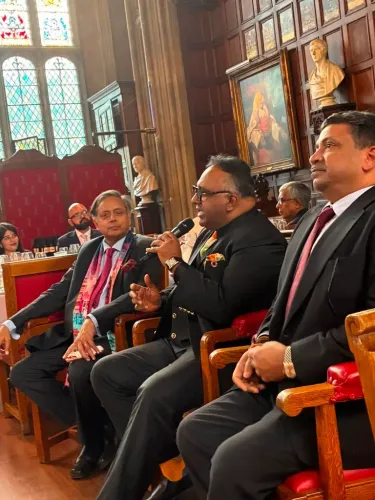
Three images were shared alongside the post, providing visual documentation of the site.
Parliamentary committees in India regularly conduct study tours as part of their oversight functions, with findings feeding into formal reports tabled in Parliament.
The specific committee and location referenced in the post have not been independently verified.
Congress MP Dr. Shashi Tharoor on Saturday, 27 June 2026, shared a note on X about a parliamentary committee's brief respite at a location of remarkable architecture set within an idyllic natural landscape, describing the interlude as one the committee would remain grateful for across the remainder of their trip.
Context
Tharoor's post, a reply on his own thread, noted that 'the remarkable architecture amid an idyllic setting gave the Committee a brief interlude for which it would be grateful over the rest of the trip.' The remark was accompanied by three images, offering visual context for the setting visited. The comment reflects the kind of candid, descriptive social media engagement for which the Thiruvananthapuram MP is widely known.
The specific committee and location referenced in the post have not been independently confirmed. However, the tone and framing are consistent with documentation of official parliamentary study tours, which frequently include visits to sites of cultural, historical, or architectural significance.
Policy Backdrop
Parliamentary committees in India routinely undertake study tours and field visits as part of their oversight and fact-finding mandates. These engagements allow members to gather on-ground evidence relevant to legislation, policy review, or departmental scrutiny.
Such tours are sanctioned under the rules of procedure of both the Lok Sabha and the Rajya Sabha, and their findings often feed into committee reports tabled before Parliament. Members from across party lines participate, making these tours among the more bipartisan activities in Indian legislative life.
Stakeholders and Impact
Parliamentary committees draw members from multiple parties, and their study tours carry institutional weight beyond any individual MP's participation. When findings are compiled, they can shape recommendations on governance, infrastructure, heritage conservation, or whichever domain the committee oversees.
Dr. Tharoor, who brings experience as a former UN Under-Secretary-General and former Union Minister of State for External Affairs and Human Resource Development, has long used social media to document legislative and diplomatic engagements, giving the public a window into parliamentary functioning that is rarely visible through official channels alone.
What's Next
The committee's work is expected to continue beyond this site visit, with any formal outputs likely to take the shape of a report tabled in Parliament. Such reports, once submitted, may be taken up for discussion in the relevant House or referred for further action by the concerned ministry.
Observers of parliamentary proceedings will watch for the committee's eventual findings, which could carry policy or administrative recommendations depending on the committee's remit and the nature of the tour.
Point of View
Offering glimpses of committee work that rarely surfaces in formal records. The note of collective gratitude — 'the Committee would be grateful over the rest of the trip' — subtly underscores the demanding nature of parliamentary study tours, which can span multiple days and locations. In a broader context, such posts also serve to remind the public that cross-party committee work, often overshadowed by adversarial floor debates, remains a functioning pillar of Indian parliamentary oversight. Whether the committee's eventual report produces actionable recommendations will be the more substantive measure of this tour's significance.
NationPress
26 Sept 2026
Frequently Asked Questions
What did Shashi Tharoor post on X on 27 June 2026?
Dr. Shashi Tharoor shared a note describing a parliamentary committee's brief and welcome pause at a site of remarkable architecture set in an idyllic landscape during an official study tour, along with three images of the location.
Which parliamentary committee was Shashi Tharoor referring to?
The specific committee has not been independently confirmed. The post was a reply on Tharoor's own thread and did not name the committee explicitly.
Why do Indian MPs go on study tours?
Parliamentary committees conduct study tours and site visits under the rules of procedure of the Lok Sabha and Rajya Sabha to gather on-ground evidence for oversight, fact-finding, or policy review, with findings compiled into reports tabled before Parliament.
What is Shashi Tharoor's role in Parliament?
Dr. Shashi Tharoor is the Indian National Congress MP from Thiruvananthapuram, Kerala, and a former Union Minister of State. He previously served as UN Under-Secretary-General before entering Indian electoral politics.
What happens after a parliamentary committee study tour?
After completing a study tour, the committee typically compiles its observations into a formal report that is tabled in the relevant House of Parliament, and may be taken up for debate or referred to the concerned ministry for action.