Tharoor Pays Tribute to Oommen Chandy on His Birthday
Synopsis
Congress MP Dr. Shashi Tharoor honoured late Kerala Chief Minister Oommen Chandy on his birthday, remembering the two-time CM as a 'tireless democrat' who defined his tenures by making governance directly accessible to ordinary citizens.
Key Takeaways
Shashi Tharoor published a personal tribute to late Kerala Chief Minister Oommen Chandy on 31 October 2026 , Chandy's birthday.
Tharoor described Chandy as a 'tireless democrat who built a culture of accessible governance.' Oommen Chandy served as Kerala CM during 2004–2006 and again during 2011–2016 , both terms under the Indian National Congress .
Chandy was widely known for a governing style that emphasised direct citizen access to the chief minister's office.
The tribute is part of a broader Congress tradition of marking the birth anniversaries of departed leaders to reinforce party identity and governance values in Kerala .
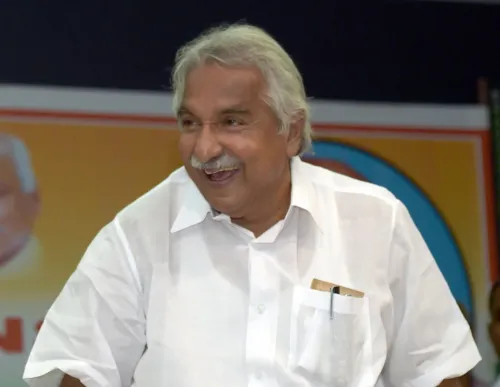
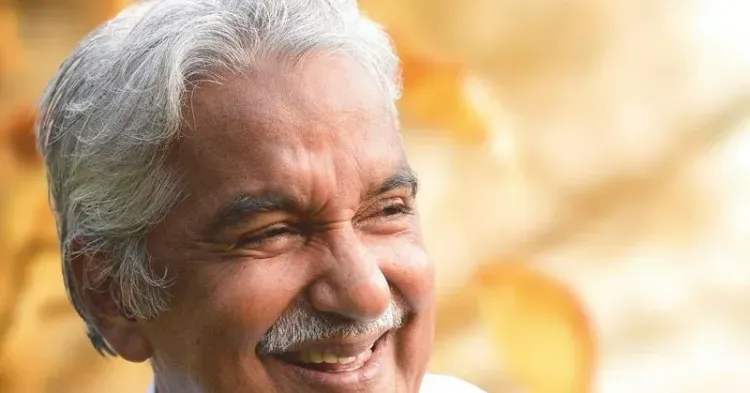
On what would have been his birthday, Congress MP Dr. Shashi Tharoor paused to remember a man he describes as a 'tireless democrat' — late Kerala Chief Minister Oommen Chandy — honouring his legacy of accessible governance in a tribute published on Saturday, 31 October 2026.
A leader remembered for opening his door
Oommen Chandy served as Chief Minister of Kerala across two tenures — 2004 to 2006 and again from 2011 to 2016 — both under the Indian National Congress banner. What distinguished him in the public memory was less any single landmark scheme and more a governing temperament: an insistence that ordinary citizens could reach their chief minister directly. That culture of accessibility became his signature, spoken of warmly across party lines in Kerala.
Tharoor's tribute, written in his own voice, calls Chandy 'the tireless democrat who built a culture of accessible governance' — a phrase that encapsulates what his admirers most frequently cite. For a state with a highly politically literate electorate, a leader who made himself reachable carried real symbolic and practical weight.
Tharoor and Chandy: Congress colleagues in Kerala's political fabric
Dr. Tharoor, MP from Thiruvananthapuram and a former UN Under-Secretary-General, has long been a prominent Congress voice in the same state Chandy led. Their political lives overlapped in the Congress ecosystem of Kerala, giving Tharoor's tribute the weight of a colleague's recollection rather than a formal party statement. The piece is part of a broader tradition within Indian politics of birth-anniversary tributes that keep the legacies of departed leaders alive in the public conversation — and within a party's own sense of continuity and identity.
Why Chandy's legacy still resonates in Kerala politics
Kerala's political cycles remain fiercely competitive, and Congress — through its United Democratic Front alliance — draws on the goodwill Chandy accumulated over decades of ground-level outreach. Commemorating him publicly on his birthday is also a reminder, directed at Congress workers and Kerala voters alike, of the kind of leadership the party aims to represent. In a state where governance credibility matters deeply, the memory of a chief minister who was known to personally address citizens' grievances is a useful, living reference point.
Tharoor's tribute keeps that reference point fresh — and signals that Chandy's model of democratic accessibility remains the standard his party intends to uphold.
Point of View
But Tharoor's framing — centred on accessibility as a democratic virtue — is pointed in the current Kerala context, where Congress is working to reclaim governance credibility. By anchoring Chandy's legacy in a specific governing culture rather than a list of schemes, Tharoor is making an implicit argument about what Congress-style leadership looks like. It is also a quiet consolidation move: keeping Chandy's memory prominent reinforces the UDF's emotional capital ahead of Kerala's competitive political cycles. The tribute ultimately does double duty — personal remembrance and party positioning, seamlessly blended.
NationPress
31 Oct 2026
Frequently Asked Questions
Who was Oommen Chandy?
Oommen Chandy was a veteran Congress leader who served as Chief Minister of Kerala twice — from 2004 to 2006 and from 2011 to 2016 . He was widely admired for making his office directly accessible to ordinary citizens.
Why did Shashi Tharoor pay tribute to Oommen Chandy today?
31 October 2026 marks Oommen Chandy's birthday . Dr. Tharoor published a personal tribute honouring the late Kerala CM's life and contributions on the occasion.
What was Oommen Chandy known for as Kerala Chief Minister?
Oommen Chandy was particularly known for a culture of accessible governance — making himself available to citizens who brought direct grievances, a style that became his defining political legacy.
What did Shashi Tharoor call Oommen Chandy in his tribute?
Dr. Tharoor called Oommen Chandy a 'tireless democrat who built a culture of accessible governance,' reflecting the late CM's emphasis on grassroots outreach.
What is the significance of the tribute for Kerala Congress?
Commemorating Chandy publicly reinforces Congress's identity in Kerala and keeps alive the governing values associated with his tenure, providing an emotional and political touchstone for the party's cadre and voters.