Tharoor Quips Every Indian Generation Qualifies as Baby Boomers
Synopsis
Congress MP Dr. Shashi Tharoor drew a sharp demographic contrast between India and the West on 26 July 2026, quipping that India's historically higher fertility rates mean every generation of Indians qualifies as 'baby boomers' — a remark that cuts to the heart of ongoing debates about India's demographic dividend.
Key Takeaways
Shashi Tharoor posted on 26 July 2026 that every Indian generation qualifies as 'Baby Boomers' given India's reproductive patterns.
The Western 'Baby Boomer' label refers specifically to the birth cohort of 1946–1964 , a single post-war fertility surge not replicated in India.
India launched its national family planning programme in 1952 , yet fertility declined far more gradually than in most Western countries.
India's successive large youth cohorts have been described by demographers as a potential demographic dividend if channelled into productive employment.
Kerala , the state Dr.
Tharoor represents, has fertility rates among the lowest in India, adding a pointed irony to his observation.
Publication of India's next decadal census is expected to sharpen the policy debate on whether the demographic dividend is maturing or narrowing.
Congress MP Dr. Shashi Tharoor took to social media on Sunday, 26 July 2026, with a characteristically witty observation about India's demographic patterns, suggesting that unlike in the West, every successive generation of Indians effectively qualifies as 'baby boomers' given the country's historically higher fertility rates.
Context
In his post, Dr. Tharoor addressed what he called 'our reproductive patterns,' quipping: 'Given our reproductive patterns, my son, unlike in the West, every generation of Indians, including yours, qualifies as Baby Boomers!' The remark was directed at a younger interlocutor and blended personal warmth with a pointed demographic observation that has long animated public discourse in India.
The term 'Baby Boomer' conventionally refers to the cohort born in Western nations between 1946 and 1964, a single pronounced surge in births that followed World War II and was succeeded by decades of sharply declining fertility. India's experience diverged markedly from that pattern.
Policy Backdrop
India launched its national family planning programme as far back as 1952, making it one of the earliest countries to pursue a state-directed approach to population management. Despite this, the country's total fertility rate declined far more gradually than in most Western nations through the late twentieth and early twenty-first centuries.
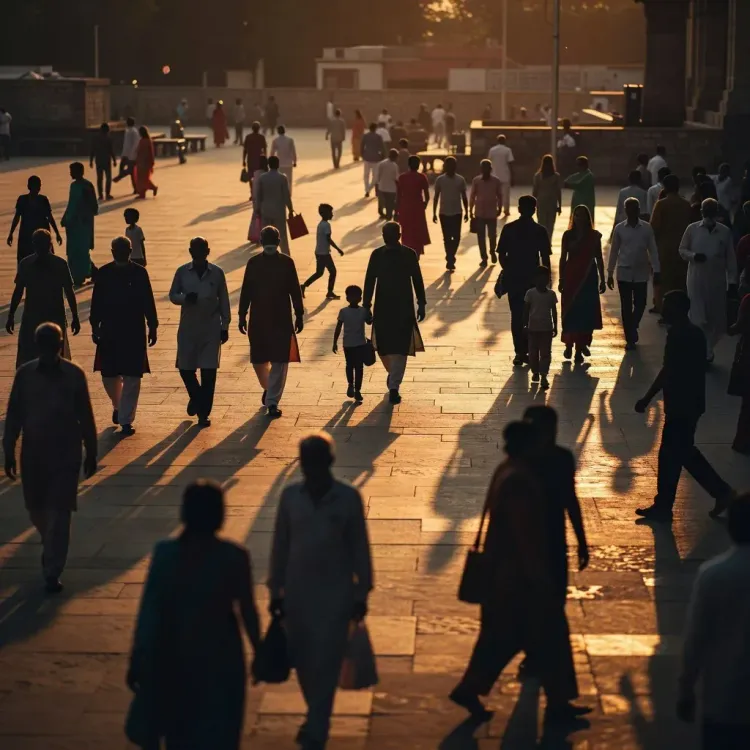
The result was a succession of large youth cohorts — each numerically comparable to a 'boom' generation — rather than a single spike followed by a sustained drop. Demographers and policymakers have frequently described this extended bulge as a potential demographic dividend, a window during which a large working-age population can, if adequately educated and employed, accelerate economic growth.
Stakeholders and Impact
Indian families across regions and income groups have lived through this demographic reality, with large households remaining common well into the late twentieth century even as urban fertility began to converge toward replacement levels. The contrast with ageing Western societies — grappling with pension shortfalls, shrinking workforces and rising dependency ratios — has become a recurring reference point in debates about India's long-term economic prospects.
Public discussion frequently contrasts these trajectories when addressing education infrastructure, employment generation and social security design. Dr. Tharoor, as a former UN Under-Secretary-General and a legislator representing Thiruvananthapuram — a constituency in Kerala, the Indian state with fertility rates closest to Western levels — brings a layered vantage point to such observations.
What's Next
India's long-delayed decadal census, when published, is expected to provide fresh granular data on fertility trends, age-structure shifts and the pace at which the demographic dividend is maturing or narrowing. Parliamentary debates on any revision to the National Population Policy are also anticipated to revisit the question of whether India's generational bulge remains an asset or is transitioning into a liability. Dr. Tharoor's light-touch remark lands at a moment when these questions are acquiring fresh urgency in policy circles.
Point of View
' he implicitly flags both the opportunity — a large working-age population — and the pressure that sustained numbers place on education, jobs and social infrastructure. Coming from a legislator who represents Kerala, a state that has already undergone a Western-style fertility transition, the remark also hints at the uneven pace of demographic change across India's regions. It is the kind of observation that bridges parliamentary debate and public understanding, which has long been a hallmark of Tharoor's political communication style.
NationPress
26 Jul 2026
Frequently Asked Questions
What did Shashi Tharoor say about baby boomers in India?
Dr. Shashi Tharoor posted on 26 July 2026 that, given India's reproductive patterns, every generation of Indians qualifies as 'baby boomers,' unlike in the West where the term refers to a single post-World War II cohort born between 1946 and 1964.
What is the difference between India's demographic pattern and the Western baby boom?
In Western nations, the 'baby boom' was a single pronounced surge in births between 1946 and 1964, followed by decades of sharply declining fertility. India maintained higher fertility rates for much longer, producing successive large youth cohorts rather than one isolated spike.
What is India's demographic dividend?
India's demographic dividend refers to the economic growth potential created by a large working-age population relative to dependents. Demographers argue this window of opportunity exists when successive large cohorts enter the workforce, but it requires adequate investment in education and employment to be realised.
When did India start its family planning programme?
India launched its national family planning programme in 1952, making it one of the first countries in the world to pursue a state-directed approach to population management, though fertility declined more gradually than in most Western nations.
Why is Shashi Tharoor's demographic observation significant?
Dr. Tharoor represents Thiruvananthapuram in Kerala, a state with fertility rates among the lowest in India and closest to Western levels, giving him a layered vantage point. His remark arrives as India awaits fresh census data and policy debates on the National Population Policy are expected to intensify.