Tharoor Pushes Back on Pakistan-Only Theory in Online Smear Row

Synopsis
Congress MP Dr. Shashi Tharoor on May 22 pushed back against those dismissing the #CockroachJantaParty phenomenon as a Pakistani conspiracy, citing counter-data suggesting 94% of the accounts involved follow an India-based user — complicating the cross-border interference narrative.
Key Takeaways
Shashi Tharoor acknowledged public pushback to his earlier post and interview on the #CockroachJantaParty phenomenon on May 22, 2026 .
He argued that attributing the campaign solely to Pakistan -based actors is 'too simplistic.' He cited counter-claims by @abhijeet_dipke that 94% of the user's followers are based in India .
The episode reflects a recurring pattern in Indian politics of competing claims about the origin and authenticity of online campaigns.
Follower location data cited in such disputes is not independently verifiable from public sources.
Parliamentary and regulatory scrutiny of social media conduct is expected to intensify ahead of future elections.
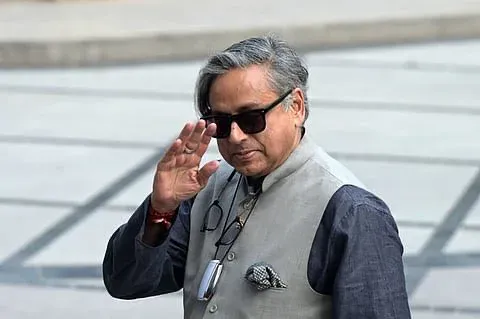
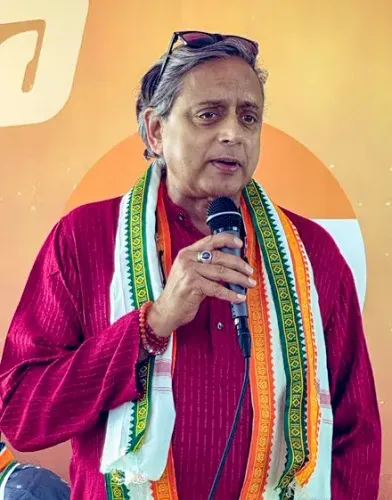
Congress MP Dr. Shashi Tharoor on Friday, May 22, 2026, acknowledged pushback to his earlier post and interview on the #CockroachJantaParty phenomenon, while arguing that dismissing it as a purely Pakistani-manufactured conspiracy is 'too simplistic' — pointing to counter-claims that a majority of the accounts involved are India-based.
Context
Tharoor, the Congress MP from Thiruvananthapuram and a former UN Under-Secretary-General, had earlier posted and given an interview touching on what he described as the #CockroachJantaParty phenomenon — a term circulating on social media apparently used to describe a pattern of coordinated online hostility. His remarks drew significant response from users who attributed the campaign to actors based in Pakistan.
In his follow-up post, Tharoor said he 'welcomes the pushback' but cautioned against an overly simple explanation. He specifically cited counter-claims by user @abhijeet_dipke, who asserts that 94% of his followers are based in India — a figure that, if accurate, would complicate the narrative of purely foreign-origin influence operations.
Policy Backdrop
Accusations of coordinated inauthentic behaviour, bot networks, and cross-border information operations have become a recurring feature of Indian political discourse, particularly on the platform X (formerly Twitter). Rival political camps have repeatedly alleged that the other side deploys organised troll armies or benefits from foreign amplification to drown out criticism or manufacture trends.
The question of follower geography and account authenticity sits at the heart of these disputes. Platform-level data on follower locations is not publicly verifiable in real time, making such claims difficult to adjudicate independently — a gap that allows competing narratives to persist and harden across partisan lines.
Stakeholders and Impact
The exchange touches on concerns held by a wide range of stakeholders: ordinary social media users who participate in political discourse, opposition politicians who allege systematic online harassment, and ruling-party supporters who contest the framing of such campaigns as externally driven. For Tharoor specifically, the episode underlines his long-standing practice of engaging directly with critics on digital platforms rather than ignoring dissent.
The reference to @abhijeet_dipke's follower data introduces a user-generated counter-narrative into the debate, reflecting how individual accounts on X increasingly shape the terms of political argument in India. Whether such data can be independently verified remains an open question that neither side has resolved.
What's Next
The broader debate over social media regulation, platform accountability, and foreign interference in domestic political discourse is expected to remain live in Indian parliamentary circles. The Election Commission of India has previously flagged concerns about digital campaigning norms, and fresh advisories ahead of upcoming electoral cycles could bring renewed scrutiny to how parties and their supporters conduct themselves online.
For now, Tharoor's willingness to engage with the pushback — while refusing to concede the Pakistan-only framing — signals that the controversy around the #CockroachJantaParty hashtag is unlikely to fade quickly from political social media timelines.
Point of View
He positions himself as a measured voice in a debate that typically generates more heat than light. The move also subtly shifts the political burden — if the campaign is predominantly India-origin, it becomes a domestic party-politics problem, not a foreign-interference story, which carries very different implications for the ruling establishment. This reflects a broader pattern in which Indian opposition figures use digital platforms not just to broadcast grievances but to actively contest the framing of online hostility directed at them. How platforms like X respond to demands for transparency on follower geography will increasingly determine whether such disputes can ever be settled on evidence rather than assertion.
NationPress
8 Oct 2026
Frequently Asked Questions
What is the #CockroachJantaParty controversy Tharoor is talking about?
The #CockroachJantaParty is a hashtag that circulated on social media and was referenced by Congress MP Dr. Shashi Tharoor in a post and interview as an example of coordinated online hostility. The specific origins and full nature of the campaign have not been independently verified from established public records.
Why does Tharoor say the Pakistan conspiracy theory is 'too simplistic'?
Tharoor argues the explanation is too simplistic because counter-claims by the user @abhijeet_dipke suggest that 94% of his followers are based in India, which would indicate the campaign is predominantly domestic rather than foreign in origin.
Who is @abhijeet_dipke and what data did he provide?
@abhijeet_dipke is a user on the platform X who, according to Tharoor's post, claims that 94% of his followers are India-based. This figure was cited by Tharoor to complicate the narrative that the campaign was Pakistani-manufactured.
Can follower location data on X be independently verified?
No. Follower geography data cited by individual users on X is not publicly verifiable in real time through independent sources, which means competing claims about account origins are difficult to settle definitively.
What is the broader debate about foreign interference in Indian social media politics?
Indian political discourse has long featured allegations of coordinated bot networks and cross-border information operations, particularly involving Pakistan-based actors. Both major political camps have levelled such accusations at each other, and the issue is expected to draw parliamentary and regulatory attention ahead of future elections.