Tharoor shares glowing review of his book on Sree Narayana Guru
Synopsis
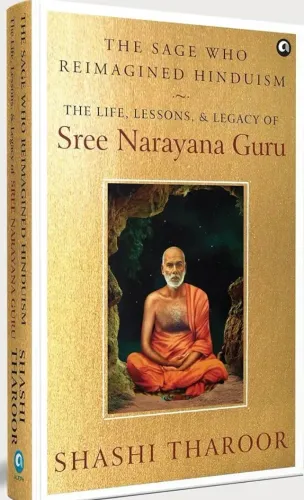
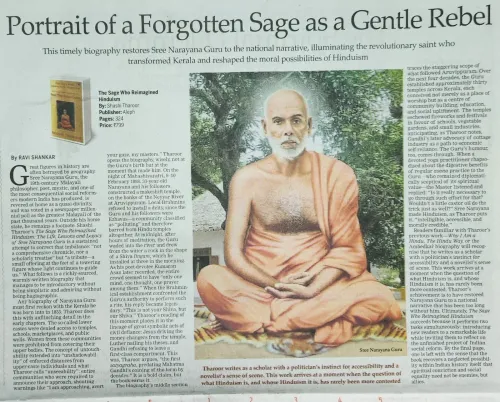
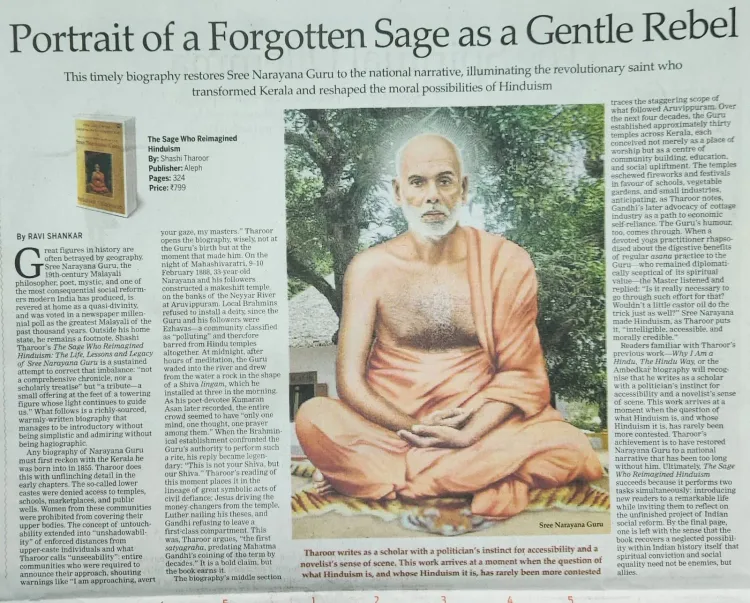
Congress MP Dr. Shashi Tharoor shared a glowing review of his book 'The Sage Who Reimagined Hinduism', a study of Kerala philosopher-reformer Sree Narayana Guru, and called for the saint to be better known beyond Kerala.
Key Takeaways
Shashi Tharoor shared a review of his book The Sage Who Reimagined Hinduism on June 7, 2026 .
The book is a study of Sree Narayana Guru ( 1856–1928 ), the Kerala-born Advaita philosopher and social reformer.
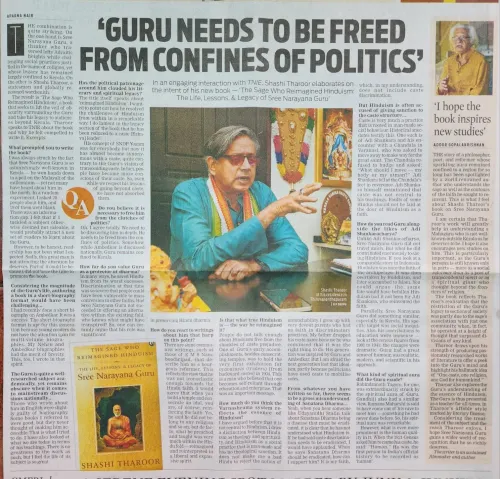
Tharoor described the review by Ravi Shankar as 'marvellous' and expressed hope it would prompt readers to pick up the book.
Sree Narayana Guru preached 'one caste, one religion, one God' and opened temples to all castes, challenging entrenched hierarchies.
The book continues Tharoor's engagement with reformist Hindu traditions, following his 2018 work 'Why I Am a Hindu' .
Tharoor argued that Sree Narayana Guru 'really deserves to be better known outside Kerala.'
Congress MP Dr. Shashi Tharoor on Sunday, June 7, 2026, shared a review of his latest book #TheSageWhoReimaginedHinduism, a study of Sree Narayana Guru, expressing hope that the coverage would draw wider readership to the Kerala philosopher-reformer's legacy.
Context
Tharoor described the review by writer Ravi Shankar as 'marvellous' and used the post to make a broader appeal — that Sree Narayana Guru 'really deserves to be better known outside Kerala.' The book, as its title signals, frames the 19th-century saint-philosopher as someone who fundamentally reimagined the contours of Hindu thought and practice.
Tharoor's post included a link to the full review and was accompanied by an image, amplifying visibility for both the book and its subject across his substantial social-media following.
Policy Backdrop
Sree Narayana Guru (1856–1928) was a Kerala-born social reformer and Advaita philosopher who consecrated temples open to all castes at a time when caste discrimination was rigidly enforced. His central teaching — 'one caste, one religion, one God' — challenged orthodox hierarchies and laid intellectual groundwork for later social-reform movements in the region.
This is not Tharoor's first engagement with reformist strands of Hinduism. His 2018 book 'Why I Am a Hindu' examined internal reform traditions within the faith and became a widely discussed intervention in debates about Hindu identity. The new volume extends that project by focusing on a single, regionally rooted figure whose national profile remains, in Tharoor's view, disproportionately small.
Kerala state governments have observed Sree Narayana Guru Jayanti as a public occasion since the mid-20th century, reflecting the reformer's deep institutional recognition within the state — recognition that has not always translated to the same prominence in national discourse.
Stakeholders and Impact
The book and its reviews are likely to resonate strongly with the Kerala diaspora, scholars of Indian philosophy, and readers engaged with debates on caste, modernity, and the meaning of Hinduism in contemporary India. Tharoor's platform — he is a sitting MP from Thiruvananthapuram, a former Union Minister, and a former UN Under-Secretary-General — gives such cultural interventions a reach well beyond literary circles.
More broadly, the book fits a pattern of Congress-linked intellectuals offering inclusive, reformist interpretations of Hindu tradition as a counterpoint to more exclusionary readings in public debate. By centring a figure like Sree Narayana Guru, Tharoor implicitly argues that the reform tradition is as authentically Hindu as any other.
What's Next
The positive review is likely to sustain interest in the book heading into upcoming literary festivals and Kerala cultural forums. Additional critical responses, book-sales momentum, and potential panel discussions at national events will determine how far the conversation around Sree Narayana Guru's legacy travels beyond its regional base. Tharoor's continued social-media amplification suggests he intends to keep the book — and its subject — in the national conversation for some time.
Point of View
Tharoor signals that inclusive, anti-caste traditions are central — not peripheral — to Hindu heritage. The timing, amid continuing national debate on caste and religious identity, gives the intervention added resonance.
NationPress
21 Oct 2026
Frequently Asked Questions
What is Shashi Tharoor's book 'The Sage Who Reimagined Hinduism' about?
It is a study of Sree Narayana Guru, the Kerala-born 19th-century philosopher and social reformer who preached 'one caste, one religion, one God' and opened temples to all castes, arguing that he fundamentally reimagined Hindu thought and practice.
Who is Sree Narayana Guru?
Sree Narayana Guru (1856–1928) was a Kerala-born Advaita philosopher and social reformer who challenged caste discrimination by consecrating temples open to all castes and teaching the unity of humanity under a single God.
What did Shashi Tharoor post about his book on June 7, 2026?
Tharoor shared a review of the book by writer Ravi Shankar, calling it 'marvellous', and expressed hope that the review would encourage more people to read it, adding that Sree Narayana Guru deserves to be better known outside Kerala.
Has Shashi Tharoor written about Hinduism before?
Yes. His 2018 book 'Why I Am a Hindu' examined internal reform movements within the faith and became a widely discussed contribution to debates on Hindu identity in India.
Why does Shashi Tharoor say Sree Narayana Guru should be better known?
Tharoor argues that despite Sree Narayana Guru's profound influence on social reform and philosophy in Kerala, the reformer's legacy has not received the national recognition it deserves, and his book aims to address that gap.