Tharoor Hosts UDF Stalwarts in Thiruvananthapuram
Synopsis
Congress MP Dr. Shashi Tharoor posted a photo of four United Democratic Front leaders together in Thiruvananthapuram, including IUML National Secretary CK Subair and CMP leader C.P. John, in an unplanned show of alliance unity ahead of the 2026 Kerala assembly elections.
Key Takeaways
Shashi Tharoor shared a photo of four senior UDF leaders gathered at his Thiruvananthapuram residence earlier in the week of June 7, 2026 .
Those identified include CK Subair , National Secretary of the IUML , and C.P.
John of the Communist Marxist Party (CMP) .
The meeting was described as unplanned, with three leaders visiting Tharoor simultaneously.
The UDF , constituted in 1979-80 , is Kerala's principal anti-Left coalition and has been out of state power since 2016 .
The gathering is being viewed as a public signal of inter-party unity ahead of 2026 Kerala assembly elections .
Seat-sharing negotiations among UDF constituents are expected to be a key political development in the months ahead.
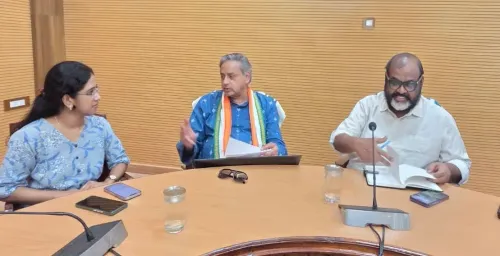
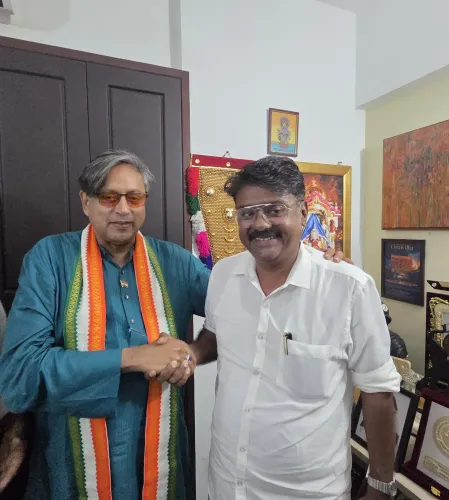
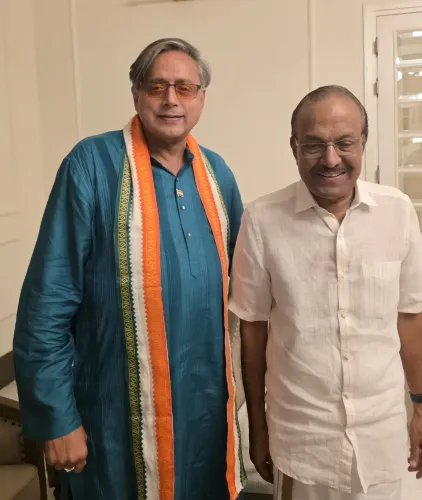
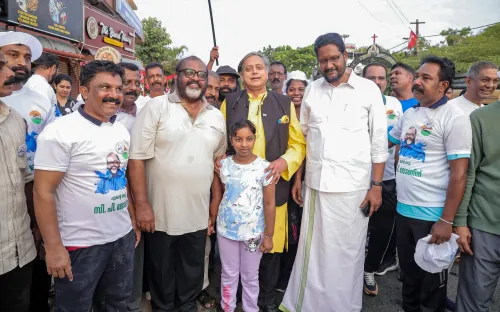
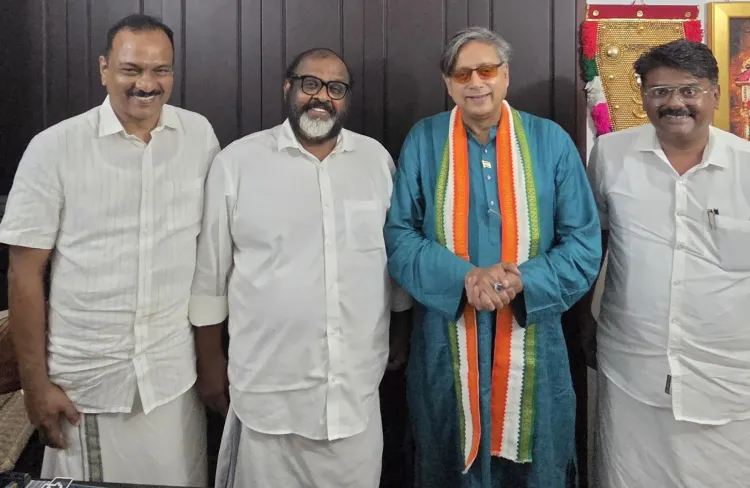
Congress MP Dr. Shashi Tharoor shared a photograph on Sunday, June 7, 2026, showing four senior United Democratic Front (UDF) leaders together in Thiruvananthapuram, calling it a snapshot of #TeamUDF after an unplanned gathering at his residence earlier in the week.
Context
Tharoor noted that three of the four leaders 'dropped in to see me around the same time,' turning an informal visit into a rare joint appearance. Those identified in the photograph include CK Subair, National Secretary of the Indian Union Muslim League (IUML), and C.P. John, a leader of the Communist Marxist Party (CMP), a small left-splinter group that has allied with the UDF in recent Kerala elections. The identity of the fourth individual was not specified in the post.
The image, posted to Tharoor's official X account, was captioned with a left-to-right identification of those present, underlining the multi-party character of the front. Thiruvananthapuram, the Kerala capital, has served as Tharoor's Lok Sabha constituency since 2009 and is a key political signalling venue for the opposition alliance.
Policy Backdrop
The UDF was constituted in 1979-80 as a broad anti-Left coalition anchored by the Indian National Congress, the IUML, and various Kerala Congress factions. The front's defining purpose has been to contest state assembly elections against the Left Democratic Front (LDF), which currently holds power in Kerala after successive victories in 2016 and 2021.
Managing coordination among ideologically diverse partners — ranging from the centrist Congress to the community-based IUML and left-splinter groups such as the CMP — has historically been the UDF's central organisational challenge. Public displays of inter-party solidarity are a routine feature of alliance politics, particularly in the run-up to assembly polls.
Stakeholders and Impact
The IUML provides crucial electoral support in northern Kerala and is among the UDF's most durable constituents. The CMP, though smaller, has periodically joined the UDF to consolidate anti-Left votes in select constituencies. Tharoor's own standing as a nationally prominent Congress figure lends additional visibility to such meetings.
For Kerala voters, particularly those in constituencies where coalition arithmetic is tight, visible unity among UDF partners signals organisational readiness. Alliance partners and prospective candidates will read such gatherings as indicators of the front's internal cohesion ahead of seat-sharing talks.
What's Next
The 2026 Kerala assembly elections are the immediate horizon against which UDF coordination efforts are being read. Seat-sharing negotiations and candidate announcements across the state's 140 assembly constituencies are expected to intensify in the coming months. How the UDF manages the competing interests of its constituent parties — and whether it can project a unified platform — will be closely watched as the election cycle advances.
Point of View
However incidental its origin, functions as a piece of deliberate political communication: Tharoor's decision to post it publicly transforms a routine visit into a statement of coalition solidarity. With the UDF having lost two consecutive Kerala assembly elections, visible unity among its diverse constituents — Congress, IUML, and left-splinter parties like the CMP — carries real strategic weight. The inclusion of both a Muslim League leader and a CMP figure in the same frame signals the front's effort to project ideological breadth without internal fracture. As seat-sharing talks loom, such optics are rarely accidental in Kerala's tightly managed coalition politics.
NationPress
22 Oct 2026
Frequently Asked Questions
Who are the UDF leaders in Shashi Tharoor's photo?
The photo shows four UDF leaders: Congress MP Dr. Shashi Tharoor , CK Subair (IUML National Secretary), and C.P. John (Communist Marxist Party). The fourth person was not identified in the post.
What is the UDF in Kerala?
The United Democratic Front (UDF) is Kerala's principal opposition alliance, led by the Indian National Congress and including the IUML and smaller parties. It was formed in 1979-80 to contest elections against the Left Democratic Front (LDF).
When are the next Kerala assembly elections?
The next Kerala assembly elections are scheduled for 2026 . The UDF is seeking to return to power after losing to the LDF in both 2016 and 2021 .
What is the Communist Marxist Party (CMP) in Kerala?
The Communist Marxist Party (CMP) is a small left-splinter group in Kerala that has periodically allied with the UDF to consolidate anti-Left votes. C.P. John is one of its prominent leaders.
Which constituency does Shashi Tharoor represent?
Dr. Shashi Tharoor represents the Thiruvananthapuram Lok Sabha constituency, Kerala's capital, and has held the seat since 2009 .