Tharoor Speaks on Empire and India's Democratic Journey in NYC
Synopsis
Congress MP Dr. Shashi Tharoor addressed the O.P. Jindal Global University New York Colloquium on Sunday, arguing that India has transformed its colonial inheritance into the aspirations of a democratic republic — a theme central to his decade-long public engagement with the legacies of British imperial rule.
Key Takeaways
Shashi Tharoor , Congress MP from Thiruvananthapuram, spoke at the O.P.
Jindal Global University New York Colloquium on a Sunday evening in New York City .
His lecture was titled 'The Making of Modern India: Empire, Memory and the Future.' Tharoor argued that India has transformed the inheritance of British colonial rule into the aspirations of a democratic republic, constituted on 26 January 1950 .
The speech continues his long-running public engagement with colonial history, which includes his book An Era of Darkness and his widely cited 2015 Oxford Union debate.
Jindal Global University's New York Colloquium series targets the Indian diaspora and international academic audiences as part of broader academic diplomacy efforts.
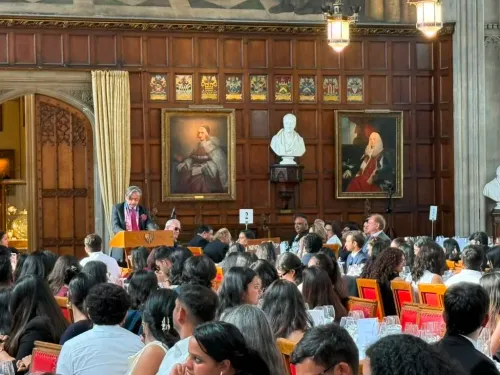
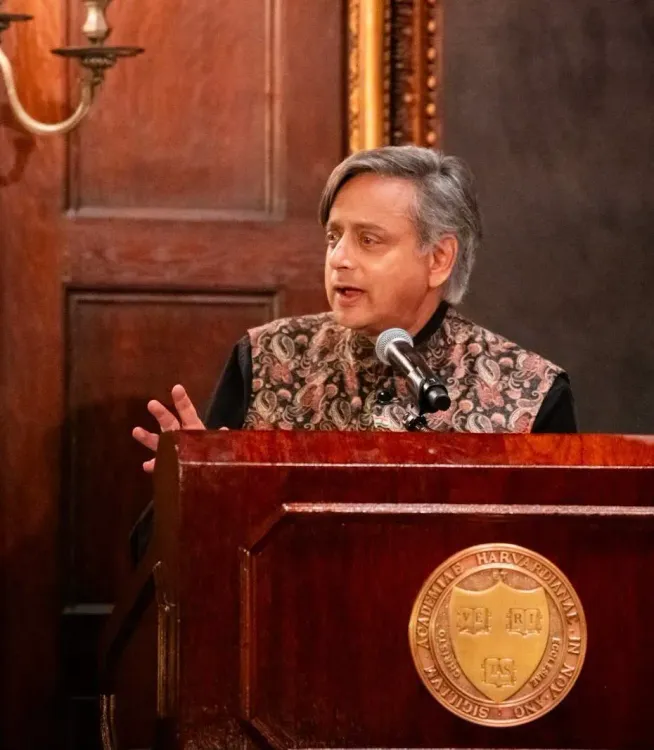
Congress MP Dr. Shashi Tharoor addressed the O.P. Jindal Global University New York Colloquium on Sunday evening in New York City, delivering a lecture titled 'The Making of Modern India: Empire, Memory and the Future,' in which he reflected on how India has transformed its colonial inheritance into the foundations of a democratic republic.
Context
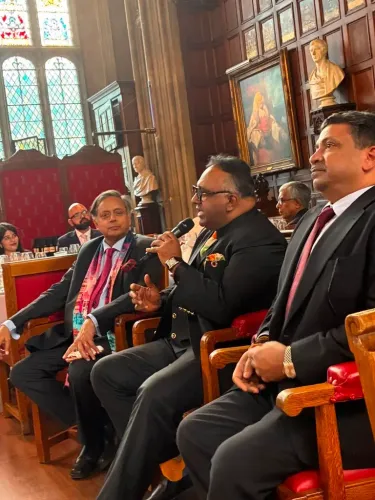
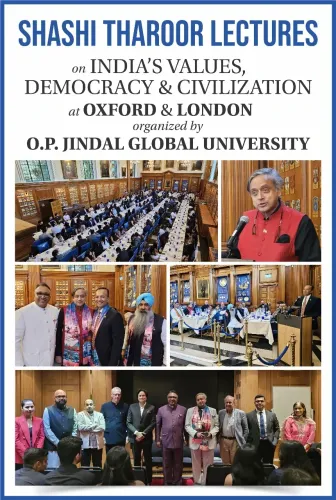
Tharoor, sharing the address on social media, described the core thrust of his argument: that India has reshaped the legacy of empire into the aspirations of a sovereign, democratic republic. The post, shared on 14 July 2026, was accompanied by four images from the event, offering a glimpse of the colloquium setting in New York City.
The lecture title — 'The Making of Modern India: Empire, Memory and the Future' — signals a three-part framework: the historical fact of British colonial rule, the role of collective memory in shaping national identity, and the forward-looking ambitions of the Indian republic that was formally constituted on 26 January 1950.
Policy Backdrop
Dr. Tharoor has long been one of India's most prominent voices on the legacies of British colonialism. His book An Era of Darkness — a detailed indictment of British imperial rule in India — became a reference point in global conversations on decolonisation and reparations, following his celebrated 2015 Oxford Union debate speech on the subject.
He has carried that argument into parliamentary proceedings and international forums alike. The O.P. Jindal Global University, a private Indian institution known for its programs in international affairs and law, has established the New York Colloquium series as a platform for engaging the Indian diaspora and international academic communities on questions of Indian history, governance, and global positioning.
Such overseas academic events are increasingly seen as instruments of what analysts describe as 'academic diplomacy' — efforts by Indian institutions and public intellectuals to shape global narratives on decolonisation, India's republican identity, and its civilisational continuity beyond the colonial period.
Stakeholders and Impact
The primary audience for the New York Colloquium comprises members of the Indian diaspora in the United States, international academics, and students of South Asian history and politics. For this community, a lecture by a sitting Member of Parliament with Tharoor's academic and diplomatic credentials carries both intellectual and symbolic weight.
The event also speaks to a broader constituency within India, where debates over how the nation remembers, teaches, and narrates its colonial past remain politically and culturally charged. Dr. Tharoor's framing — that India has actively transformed imperial inheritance rather than merely survived it — offers a particular lens on national identity that resonates across the political spectrum, even as interpretations of that history diverge sharply.
For O.P. Jindal Global University, hosting a figure of Tharoor's stature at its New York series reinforces its ambitions as a globally engaged Indian academic institution.
What's Next
The Jindal Global University New York Colloquium series is expected to continue with further sessions engaging Indian and international scholars on themes of history, law, and democratic governance. Dr. Tharoor's ongoing engagement with these themes — through books, lectures, and parliamentary work — suggests the conversation on empire, memory, and India's republican future will remain a live one in both domestic and international arenas. How these ideas feed into debates on history curricula, reparations diplomacy, and India's self-presentation on the world stage will be worth watching in the months ahead.
Point of View
Tharoor's continued prominence in this space underscores the intersection of parliamentary politics, public intellectualism, and diaspora engagement in shaping how India is perceived internationally.
NationPress
14 Jul 2026
Frequently Asked Questions
What did Shashi Tharoor speak about at the New York Colloquium?
Dr. Shashi Tharoor delivered a lecture titled 'The Making of Modern India: Empire, Memory and the Future' at the O.P. Jindal Global University New York Colloquium, arguing that India has transformed the legacy of British colonial rule into the aspirations of a democratic republic.
What is the Jindal Global University New York Colloquium?
The O.P. Jindal Global University New York Colloquium is an academic event series hosted by the private Indian university, designed to engage the Indian diaspora and international audiences on questions of Indian history, law, and governance.
What has Shashi Tharoor written about colonialism?
Dr. Tharoor is the author of 'An Era of Darkness,' a detailed critique of British colonial rule in India, and delivered a widely shared speech on the subject at the Oxford Union in 2015.
When did India become a democratic republic?
India became a sovereign democratic republic on 26 January 1950, when its Constitution came into force, three years after independence from British rule in 1947.
Why does Shashi Tharoor speak at overseas academic events?
As a Congress MP, former Union Minister, and former UN Under-Secretary-General, Dr. Tharoor participates in international academic forums to contribute to global debates on decolonisation, Indian history, and the country's democratic identity.