Tharoor Writes Open Letter to Nilekani on Exam Reform Panel
Synopsis
Congress MP Dr. Shashi Tharoor has written an open letter to Nandan Nilekani, appointed to review India's examination system, arguing that elected representatives in Parliament should have been consulted. The intervention highlights a broader tension between technocratic governance and democratic accountability in education policy reform.
Key Takeaways
Shashi Tharoor published an open letter on 27 July 2026 addressed to Nandan Nilekani , head of a government-appointed exam reform committee.
Tharoor flagged that the committee's mandate does not include seeking views from elected members of Parliament .
Nandan Nilekani , co-founder of Infosys and former UIDAI chairman, was appointed to review India's examination system amid recurring controversies over paper leaks and irregularities.
The National Testing Agency (NTA) , established in 2019 , conducts major national exams including NEET and JEE and has faced sustained criticism over transparency and administration.
Education is a concurrent subject under India's Constitution, making parliamentary oversight of exam bodies a constitutionally significant question.
The committee's eventual recommendations could either be tabled before Parliament for debate or implemented through executive action — a distinction Tharoor's letter implicitly contests.
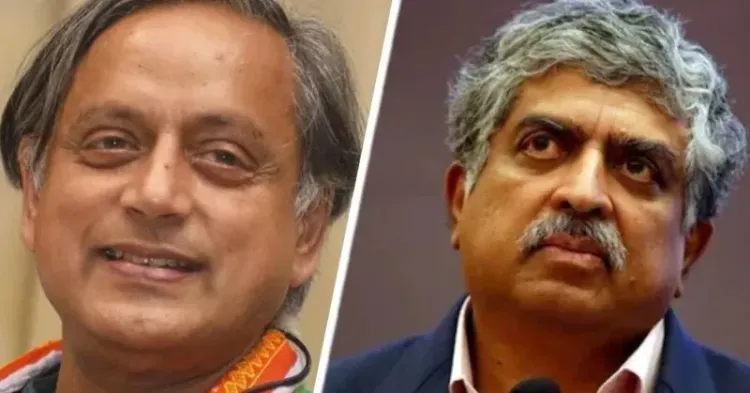
Congress MP Dr. Shashi Tharoor on Monday, 27 July 2026 published an open letter addressed to Nandan Nilekani, who has been appointed to head a committee examining India's examination system, expressing concern that Parliament's elected representatives have been excluded from the panel's consultative process.
In his post, Tharoor noted that while he considers Nilekani a personal friend, the committee's mandate does not appear to include seeking the views of members of Parliament. 'Now that my friend Nandan Nilekani has been appointed to look into India's exam woes, and has not been asked to seek the views of the people's representatives in Parliament, I thought I would send him an Open Letter to share my ideas on the steps his Committee needs to consider,' Tharoor wrote.
Context
India's centralised examination architecture has been under sustained pressure for several years. The National Testing Agency (NTA), established in 2019 to conduct high-stakes national entrance examinations including NEET and JEE, has faced repeated allegations of paper leaks, administrative irregularities, and a lack of independent oversight. These controversies have sparked student protests and demands for structural reform of the exam ecosystem.
Against this backdrop, the government appointed Nandan Nilekani — co-founder of Infosys and former chairman of the Unique Identification Authority of India (UIDAI) — to lead a review committee. Nilekani is widely respected for his role in building India's digital public infrastructure, most notably the Aadhaar biometric identity system.
Policy Backdrop
The appointment of a technocrat-led committee, rather than a parliamentary committee or a body with legislator representation, has drawn attention to questions of democratic accountability in education policy. Dr. Tharoor, in his open letter, positioned himself as a voice for parliamentary scrutiny, arguing that elected representatives have a legitimate stake in shaping how the country's examination reforms are designed and implemented.
India's federal structure also complicates exam governance. Education is a concurrent subject under the Constitution, meaning both the Union and state governments hold jurisdiction. Centralisation of examinations under bodies like the NTA has periodically created friction with states that maintain their own boards and entrance processes.
Stakeholders and Impact
The primary stakeholders in any exam reform are the millions of students who appear annually for competitive entrance tests — particularly for medical and engineering seats — as well as their families, coaching institutions, and state governments. For students from economically weaker sections and rural backgrounds, a single high-stakes examination often determines access to professional education and upward mobility.
Parliamentarians across party lines have raised exam-related concerns in both Lok Sabha and Rajya Sabha. Tharoor's open letter signals that opposition members intend to ensure the reform process does not bypass legislative deliberation entirely, even if the committee's formal mandate does not require it to consult Parliament.
What's Next
The Nilekani-led committee is expected to submit recommendations that could reshape the structure, conduct, and oversight of national examinations. Whether those recommendations will be tabled before Parliament for debate, or implemented through executive action, remains to be seen. Dr. Tharoor's public intervention raises the stakes for the committee to at minimum acknowledge broader consultative inputs — and sets the stage for a parliamentary debate once the report is made public. The outcome could determine whether India's exam reform becomes a technocratic exercise or a legislatively anchored policy overhaul.
Point of View
Without waiting for the committee's report to create a fait accompli. The move fits a broader opposition pattern of contesting technocratic bypasses of legislative oversight, particularly on education, which is electorally sensitive given the NEET controversies of recent years. By framing Nilekani as a 'friend' while still publicly challenging the committee's mandate, Tharoor avoids personalising the critique and keeps the focus on process over personality. The letter effectively pressures the committee to either widen its consultations or face legislative scrutiny when its recommendations reach Parliament.
NationPress
26 Oct 2026
Frequently Asked Questions
Why did Shashi Tharoor write an open letter to Nandan Nilekani?
Dr. Tharoor wrote the open letter because the government-appointed exam reform committee headed by Nilekani was not mandated to seek views from members of Parliament, and he wanted to share his ideas on steps the committee should consider.
Who is Nandan Nilekani and why was he appointed to the exam committee?
Nandan Nilekani is the co-founder of Infosys and former chairman of UIDAI, the body that built the Aadhaar identity system. He was appointed to lead a committee reviewing India's examination system amid recurring controversies over paper leaks and administrative failures at the NTA.
What is the NTA and why is India's exam system under scrutiny?
The National Testing Agency was established in 2019 to conduct major entrance examinations including NEET and JEE. It has faced repeated allegations of paper leaks, irregularities, and lack of transparency, prompting calls for structural reform.
What does Shashi Tharoor want the exam reform committee to do?
Tharoor has asked the committee to consider inputs from elected representatives in Parliament, arguing that people's representatives have a legitimate role in shaping national examination policy.
Will the exam reform committee's recommendations go to Parliament?
It is not yet confirmed whether the Nilekani committee's recommendations will be tabled before Parliament for debate or implemented through executive action. Tharoor's intervention is aimed at ensuring legislative deliberation is part of the process.