Tharoor Revives Case Against Paper Leaks Bill: Prevention Over Punishment

Synopsis
Congress MP Dr. Shashi Tharoor has reshared his late-night parliamentary remarks on the Public Examinations (Prevention of Unfair Means) Bill, 2024, renewing his argument that the law focuses on punishment rather than the preventive safeguards needed to stop paper leaks at their source.
Key Takeaways
Shashi Tharoor on July 31, 2026 reshared his parliamentary remarks on the Public Examinations (Prevention of Unfair Means) Bill, 2024 .
Tharoor argues the Bill offers 'prevention over punishment' in name only — its actual emphasis is punitive, not structural.
The 2024 Act was passed after major leaks in NEET and UGC-NET triggered nationwide student protests.
India has seen repeated high-profile exam integrity failures since at least 2018 , affecting centralised recruitment and entrance exams.
Critics, including Tharoor, contend that opaque exam administration and absent preventive safeguards — not just weak penalties — are the root causes.
The Ministry of Education has yet to signal any move toward amendments focused on preventive technology or institutional accountability.
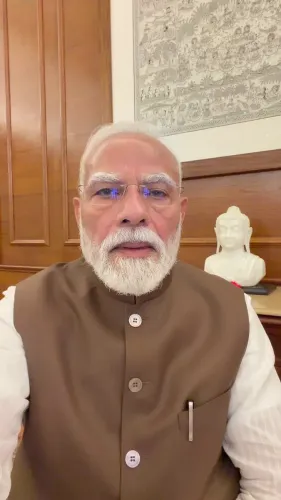
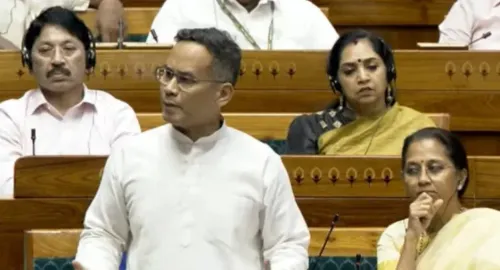
The debate over India's paper leak crisis has a sharp new entry point. Congress MP Dr. Shashi Tharoor on Friday, July 31, 2026 reshared his late-night parliamentary remarks on the Public Examinations (Prevention of Unfair Means) Bill, 2024 — and the argument he is making is pointed: the law punishes, but it does not prevent.
Tharoor, posting from New Delhi, described his remarks as 'a brief but punchy case for prevention over punishment' — which, he says, is 'all the Bill offers.' The framing cuts to the heart of a legislative debate that millions of aspirants have lived through in the most painful way possible.
The Law That Followed the Crisis
The 2024 Act did not emerge in a vacuum. It was Parliament's direct response to a cascade of exam integrity failures — leaks in NEET and UGC-NET, among others — that triggered nationwide protests and shook public confidence in the National Testing Agency (NTA). The government moved fast, prescribing stiff penalties for those caught manipulating public examinations. But speed and severity are not the same as effectiveness. Critics, including Tharoor, have argued from the outset that punitive legislation treats the symptom while leaving the disease intact. Opaque exam administration, inadequate digital safeguards, and a lack of institutional accountability — these are the structural conditions in which leaks breed. A law that adds prison terms does not, by itself, seal those gaps.A Pattern Older Than This Bill
India's paper leak problem is not new. High-profile exam integrity failures have surfaced repeatedly since at least 2018, spanning centralised recruitment drives and competitive entrance exams alike. Each cycle follows a familiar script: a leak surfaces, outrage builds, a commission is formed, legislation is tightened — and the next leak arrives on schedule. Tharoor's intervention, even as a 'reprise' of earlier remarks, lands with relevance precisely because that cycle has not been broken. His case for prevention points toward what the law does not mandate: proactive safeguards, transparent processes, and accountability for exam-conducting bodies before question papers reach the wrong hands.What Parliament Left Unanswered
The immediate question now is whether the Ministry of Education will move beyond enforcement and revisit the Act's architecture. Advocates for systemic reform argue that preventive technology — end-to-end encryption of question papers, randomised question sets, real-time audit trails — deserves the same legislative urgency that punishment currently receives. For the lakhs of students who reschedule their lives around these examinations, the distinction between deterrence and prevention is not academic. It is the difference between a law that catches wrongdoers after the damage is done, and a system that stops the damage from happening at all. That is the case Tharoor is putting back on the table — and it is one Parliament has yet to fully answer.Point of View
A ground where the government remains exposed. The broader pattern — punitive laws that follow crises without addressing root causes — is precisely the kind of institutional failure that erodes public trust in competitive examinations over time. If the Ministry of Education does not move on preventive safeguards, this argument will only grow louder with each subsequent leak.
NationPress
15 Sept 2026
Frequently Asked Questions
What is the Public Examinations (Prevention of Unfair Means) Bill 2024?
The Public Examinations (Prevention of Unfair Means) Bill, 2024 is a law passed by the Indian Parliament to prescribe penalties for paper leaks and other unfair means in public examinations. It was introduced after major leaks in NEET and UGC-NET triggered widespread protests.
What is Shashi Tharoor's criticism of the paper leaks Bill?
Tharoor argues that the Bill focuses almost entirely on punishment after the fact, rather than building preventive safeguards into how public examinations are conducted and administered.
Why did India pass a paper leak law in 2024?
Multiple high-profile exam integrity failures — including leaks in NEET and UGC-NET — sparked nationwide student protests and demands for stricter legislation, prompting Parliament to pass the 2024 Act.
What preventive measures are missing from India's paper leak law?
Critics argue the law does not mandate proactive safeguards such as end-to-end encryption of question papers, randomised question sets, or real-time audit trails for exam-conducting bodies like the NTA.
Has the 2024 paper leak law stopped exam fraud in India?
India's pattern of recurring exam integrity failures since at least 2018 predates the law, and opposition voices including Tharoor contend that punitive legislation alone has not addressed the structural conditions that enable leaks.