How Do Tibetans in Exile Honor India's 77th Republic Day?
Synopsis
On January 26, the Central Tibetan Administration in Dharamsala commemorated India's 77th Republic Day, highlighting the rich democratic values of India. Sikyong Dolma Changra and the Dalai Lama expressed deep gratitude for India's longstanding support. This celebration reflects a unique bond between Tibetans in exile and their host country, India.
Key Takeaways
Central Tibetan Administration celebrated India's 77th Republic Day .
Sikyong Dolma Changra highlighted India's democratic values.
The Dalai Lama expressed gratitude for India's support.
Tibetans draw inspiration from India's democratic framework.
The bond between Tibetans and India is historically significant.
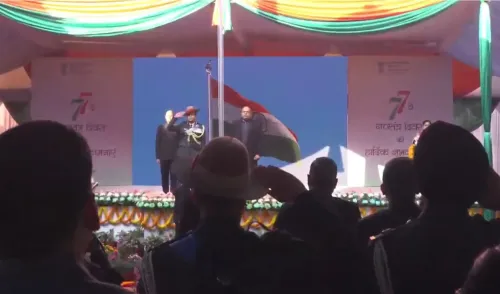
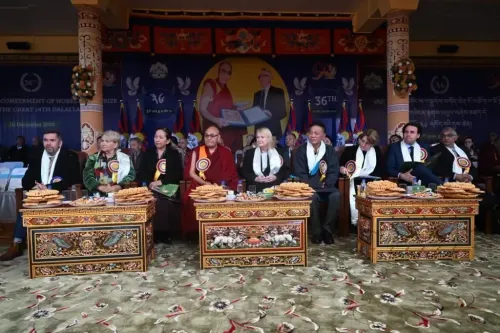
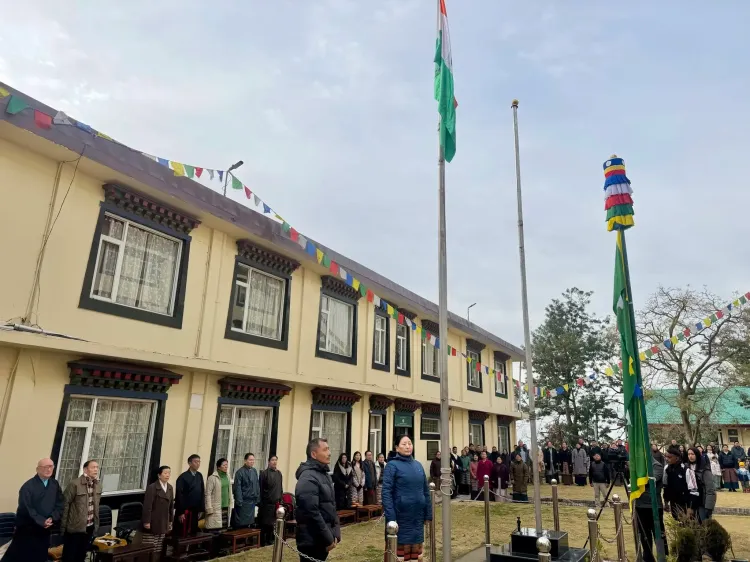
Dharamsala, Jan 26 (NationPress) As the nation celebrated its 77th Republic Day, the Central Tibetan Administration (CTA) participated in the festivities here, marking the historic moment when the Indian Constitution officially came into effect on January 26, 1950.
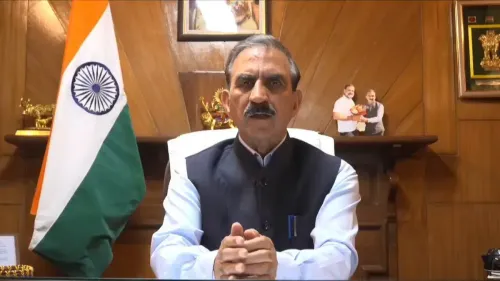
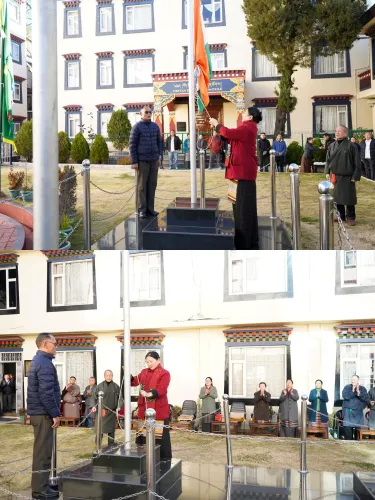
After the ceremonial flag raising and the performance of the national anthems, officiating Sikyong Dolma Changra addressed the media, sharing warm greetings to the Indian government and its citizens on behalf of the Tibetan populace.
She remarked that “India serves as a robust example of a vibrant and lasting democracy, providing valuable lessons to the global community.” She reminisced about the arrival of His Holiness the Dalai Lama in India, where he implemented a democratic framework for Tibetans in exile, a landmark shift in Tibetan history, inspired by India’s democratic principles.
Highlighting India’s generosity, she stressed the significance of Tibetan appreciation for the ongoing support from the Indian government and its people, while also commending the evolution of India’s constitution and its democratic resilience since gaining independence.
Deputy Speaker Dolma Tsering Teykhang also conveyed greetings to the Indian populace, expressing gratitude and solidarity during her media address on this notable occasion.
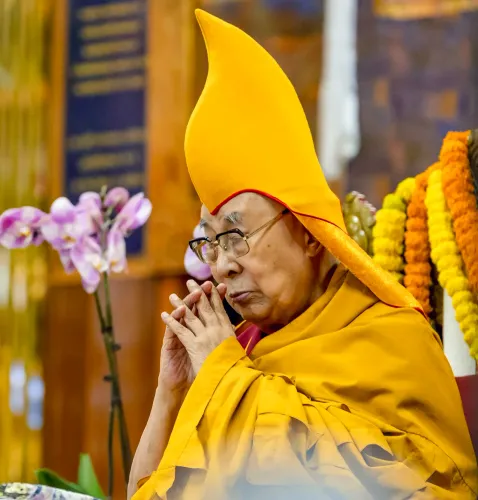
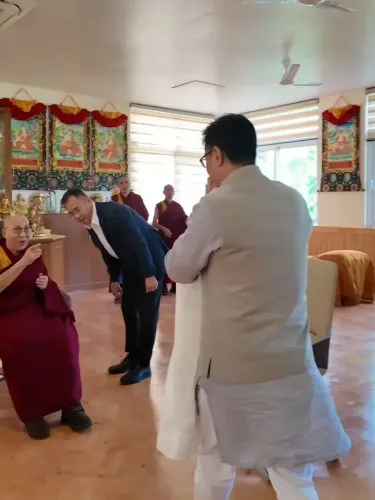
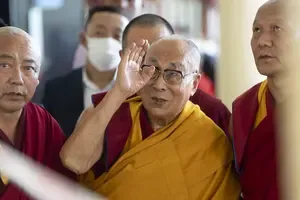
In his addresses, the Tibetan spiritual leader, the Dalai Lama, expressed his heartfelt thanks to the Indian government and the citizens for their generous hospitality and kindness extended towards the Tibetan community over the past six decades.
The Dalai Lama has been residing in India since escaping from China in 1959 following a failed uprising against Communist rule in Tibet. The government-in-exile, known as the Central Tibetan Administration (CTA), operates from Dharamsala.
His Holiness often refers to India as the “Guru” and Tibet as its “Chela,” identifying himself as the “Son of India” and a devoted follower of Mahatma Gandhi.
He promotes the revival of India’s ancient wisdom rooted in the Nalanda tradition, asserting that India is uniquely positioned to merge its timeless knowledge with modern education.
Point of View
The ongoing relationship between the Tibetan community and India is a significant aspect of both nations' histories. The Tibetan struggle for identity and the warmth shown by India towards Tibetan refugees reflects a commitment to humanitarian values and democratic principles. It is essential to recognize the contributions of both communities in fostering peace and understanding.
NationPress
19 Sept 2026
Frequently Asked Questions
Why do Tibetans celebrate India's Republic Day?
Tibetans celebrate India's Republic Day to honor the democratic values of India, which they admire and draw inspiration from, especially in their own governance in exile.
What is the Central Tibetan Administration?
The Central Tibetan Administration (CTA) is the government-in-exile for Tibetans, operating from Dharamsala, India, providing governance and support for Tibetan refugees.
Who is the Dalai Lama?
The Dalai Lama is the spiritual leader of Tibetan Buddhism, who has lived in India since 1959 after fleeing Tibet due to the Chinese government's repression.
What is the significance of January 26 for India?
January 26 marks the day when the Indian Constitution came into force in 1950, establishing India as a sovereign, democratic republic.
How has India supported the Tibetan community?
India has provided refuge and support to the Tibetan community for over six decades, allowing them to preserve their culture and governance in exile.