CM Majhi hails tigress 'Jinat' birthing four cubs at Similipal
Synopsis
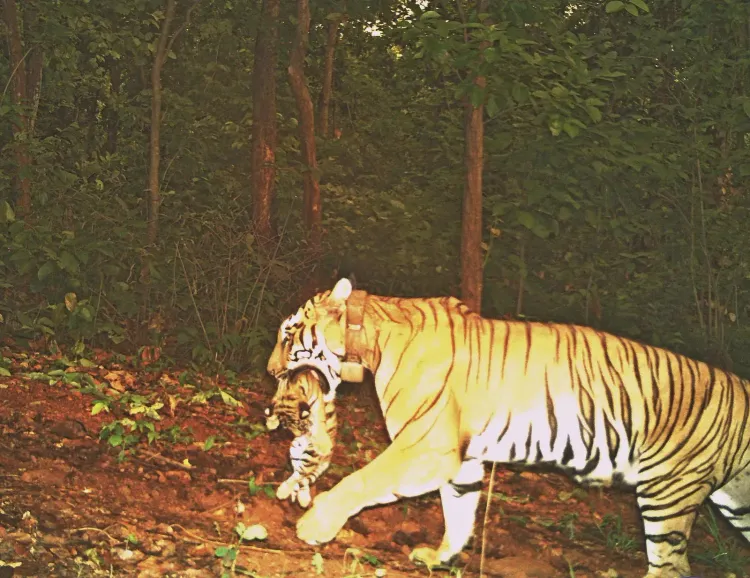
Tigress 'Jinat', relocated from Maharashtra's Tadoba-Andhari Tiger Reserve, has given birth to four cubs at Similipal in Odisha. Chief Minister Mohan Charan Majhi called it a glorious chapter in the state's wildlife conservation story, crediting the Forest Department's dedicated monitoring and the government's long-term conservation policy.
Key Takeaways
Tigress 'Jinat' , translocated from Tadoba-Andhari Tiger Reserve in Maharashtra, has given birth to four cubs at Similipal Tiger Reserve in Odisha.
Odisha CM Mohan Charan Majhi announced the development on 2 June 2026 , calling it a milestone in the state's natural heritage and biodiversity protection.
The Odisha Forest Department has deployed special measures and continuous surveillance to protect the mother and cubs.
The translocation is part of India's national inter-state tiger relocation framework coordinated by the National Tiger Conservation Authority (NTCA) under Project Tiger (launched 1973 ).
CM Majhi reaffirmed the state government's full commitment to preserving Similipal's biological balance and strengthening wildlife conservation plans going forward.
Odisha Chief Minister Mohan Charan Majhi on Tuesday, 2 June 2026 announced a significant milestone in the state's wildlife conservation efforts: tigress 'Jinat', translocated from Maharashtra's Tadoba-Andhari Tiger Reserve, has given birth to four cubs at Similipal Tiger Reserve in Odisha, marking what he described as a 'glorious chapter' in the state's natural heritage and biodiversity protection.
Context
In his post, CM Majhi wrote in Odia: 'ଓଡ଼ିଶାର ପ୍ରାକୃତିକ ସମ୍ପଦ ଓ ବନ୍ୟପ୍ରାଣୀ ସଂରକ୍ଷଣ ଦିଗରେ ଆଜି ଏକ ଗୌରବମୟ ଅଧ୍ୟାୟ ଯୋଡ଼ି ହୋଇଛି' ('A glorious chapter has been added today in the direction of Odisha's natural resources and wildlife conservation'). He credited the forest department's dedicated monitoring and the state's effective conservation policy for making Odisha a secure sanctuary for wildlife. The Odisha Forest Department has put special measures in place to protect the mother and her four cubs, with continuous surveillance of their movements.
Tigress Jinat was relocated from Tadoba-Andhari Tiger Reserve in Maharashtra, one of India's most productive tiger habitats, to Similipal as part of an inter-state translocation initiative aimed at bolstering tiger numbers and genetic diversity in eastern India. Her successful breeding at Similipal is being seen as direct validation of that strategy.
Policy Backdrop
India's tiger translocation framework operates under the broader umbrella of Project Tiger, launched in 1973, which established reserves including Similipal as protected habitats. The National Tiger Conservation Authority (NTCA) coordinates inter-state translocations to restore populations in reserves that have experienced earlier declines or require genetic reinforcement.
Similipal, a biosphere reserve in Mayurbhanj district of Odisha, has long been recognised for its rich biodiversity. The introduction of tigresses from genetically robust source populations like Tadoba-Andhari is part of a wider national effort to ensure the long-term viability of tiger populations across India's reserve network. CM Majhi highlighted that the birth of four cubs reflects not just a numerical increase but the creation of a 'safe and strong habitat' for wildlife through administrative foresight.
Stakeholders and Impact
The Odisha Forest Department and its field staff have been central to this outcome, maintaining round-the-clock monitoring of Jinat and her cubs. CM Majhi specifically acknowledged their 'sincere supervision', underscoring the role of on-ground personnel in translating policy into conservation results. Wildlife conservationists and ecologists tracking eastern India's tiger recovery have welcomed the development as a positive indicator for the region's ecological health.
For local communities and eco-tourism stakeholders around Similipal, a growing tiger population reinforces the reserve's profile as a premier wildlife destination in eastern India. The state government has reaffirmed its commitment to preserving Similipal's biological balance and strengthening wildlife conservation plans in the coming period.
What's Next
The immediate priority for the Odisha Forest Department is ensuring the survival and healthy development of the four cubs through intensive monitoring and habitat protection. Cub survival rates in the early months are a critical metric for assessing the success of translocation programmes, and official updates are expected as the cubs mature.
At the national level, the development will feed into broader tiger estimation exercises and could inform decisions on further translocations to eastern reserves. CM Majhi has pledged that the state government is 'fully committed' to strengthening Odisha's wildlife conservation plans, suggesting further policy and resource allocation for the sector in the near future. The birth of Jinat's cubs at Similipal may well serve as a template for similar inter-state conservation partnerships across India.
Point of View
The messaging positions the BJP-led state government as a proactive steward of ecological heritage — a theme that resonates with both domestic voters and international conservation audiences. The successful breeding of a translocated tigress also strengthens the case for expanding inter-state translocation programmes to other eastern reserves, potentially drawing more central resources and NTCA attention to Odisha. It fits a broader pattern of state governments leveraging wildlife conservation wins as soft-power signals of governance competence.
NationPress
19 Sept 2026
Frequently Asked Questions
Who is tigress Jinat and where did she come from?
'Jinat' is a tigress who was translocated from the Tadoba-Andhari Tiger Reserve in Maharashtra to Similipal Tiger Reserve in Odisha as part of an inter-state tiger relocation programme to boost tiger numbers and genetic diversity in eastern India.
How many cubs has Jinat given birth to at Similipal?
Tigress Jinat has given birth to four cubs at Similipal Tiger Reserve in Odisha, as announced by Chief Minister Mohan Charan Majhi on 2 June 2026.
What is Similipal Tiger Reserve?
Similipal is a tiger reserve and biosphere reserve located in Mayurbhanj district of Odisha. It is one of India's oldest protected habitats under Project Tiger, launched in 1973, and is known for its rich biodiversity.
What is India's tiger translocation programme?
India's tiger translocation programme, coordinated by the National Tiger Conservation Authority under the Project Tiger framework, involves moving tigers from genetically robust source reserves to reserves where populations need reinforcement, helping restore numbers and genetic diversity.
What steps has the Odisha Forest Department taken to protect Jinat and her cubs?
The Odisha Forest Department has put special protection measures in place for Jinat and her four cubs, including continuous monitoring of their movements and dedicated on-ground surveillance by forest staff.