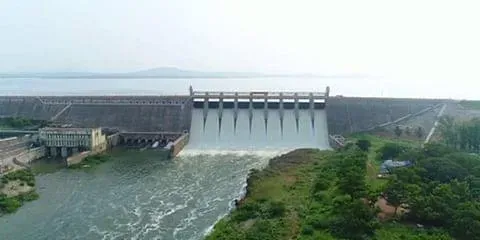
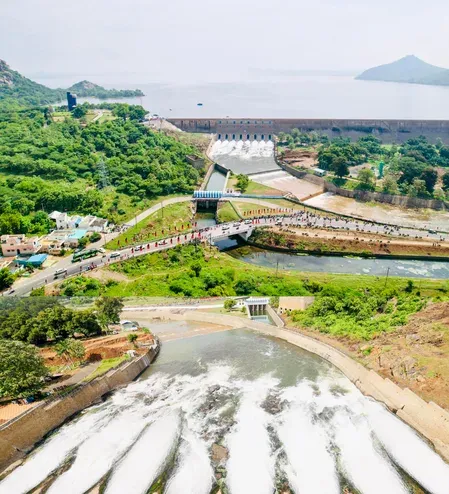
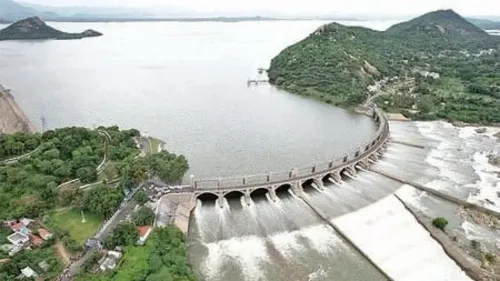
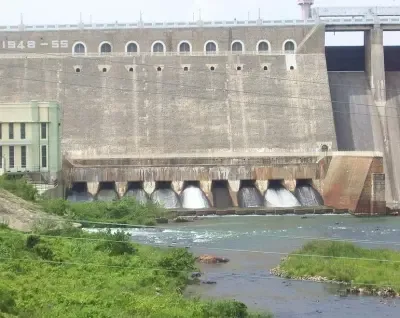
Lower Bhavani Dam at 5.34 tmcft: TN rules out irrigation release
Synopsis
With the Lower Bhavani Dam holding barely 5.34 tmcft against a 32.8 tmcft capacity and inflows at just 81 cusecs, Tamil Nadu's Water Resources Department has shut the door on irrigation releases — leaving Erode farmers facing crop losses and threatening a hunger strike from 6 July. The standoff also pits Kalingarayan canal farmers against LBP farmers in a battle over who gets what little water remains.
Key Takeaways
Lower Bhavani Dam holds only 5.34 tmcft against a full capacity of 32.8 tmcft as of Tuesday, 2 July .
Inflows are at a critically low 81 cusecs ; a minimum of 5,000–6,000 cusecs is needed before irrigation releases can begin.
The WRD has deferred water release indefinitely, prioritising drinking water needs over irrigation.
Kalingarayan canal farmers have threatened an indefinite hunger strike from 6 July if water is not released by 5 July .
Crops including banana , sugarcane , turmeric , and onion have been affected by the prolonged supply suspension.
LBP canal farmers have warned of road blockades if water is diverted to the Kalingarayan system.
Tamil Nadu's Water Resources Department (WRD) has ruled out any immediate release of irrigation water through the Kalingarayan canal system and the Lower Bhavani Project (LBP) canal system, citing critically low storage at the Lower Bhavani Dam in Erode and poor inflows from catchment areas. The decision, announced on 2 July, has deepened distress among farming communities dependent on both systems.
Reservoir Situation
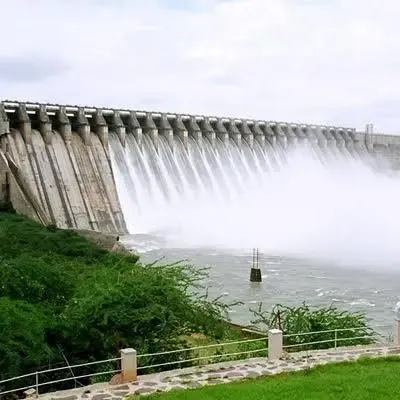
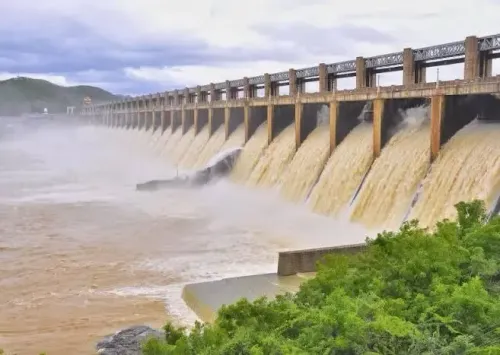
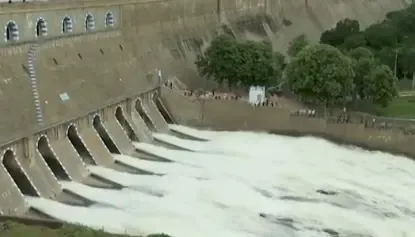
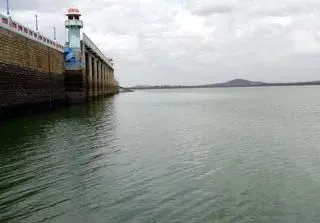
As of Tuesday, the Lower Bhavani Dam — which has a full storage capacity of 32.8 tmcft — held only 5.34 tmcft of water. Inflows stood at a mere 81 cusecs, reflecting poor rainfall across the catchment areas. The WRD has stated that the available storage is being conserved exclusively for drinking water needs, and that irrigation releases cannot be considered until inflows increase substantially.
According to department officials, a sustained inflow of 5,000 to 6,000 cusecs would be required before water could be directed to either the Kalingarayan or the LBP canal systems.
Farmers in Distress
The prolonged suspension of water supply has taken a visible toll on standing crops, including banana and sugarcane, and has disrupted preparations for the cultivation of turmeric and onion. A section of farmers under the Kalingarayan canal system has announced plans to launch an indefinite hunger strike from 6 July if irrigation water is not released by 5 July.
The Kalingarayan canal normally receives water from the Lower Bhavani Dam from mid-June, with supply continuing through the end of April. However, releases were halted in March this year to facilitate canal renovation works. Officials had initially proposed resuming supply by the end of June after completing maintenance, but the deteriorating water situation has forced the department to defer the plan indefinitely.
Rival Farmer Groups at Odds
The scarcity has also triggered competing demands between farmer groups. Farmers under the Lower Bhavani Project canal system have opposed any move to release water through the Kalingarayan canal, arguing that existing allocations of Cauvery waters and previous government orders must be strictly adhered to. They have warned of protests, including road blockades, if water is diverted under present conditions.
This inter-group tension underscores the structural challenge of managing a single reservoir serving multiple, sometimes conflicting, agricultural constituencies — a recurring pattern in Tamil Nadu's water governance.
What Officials Said
WRD officials confirmed that renovation works on the Kalingarayan canal are nearing completion, meaning water could be released promptly once reservoir conditions improve. However, they stressed that no timeline can be committed to until inflows recover to operationally viable levels. The department's position is clear: drinking water security takes precedence over irrigation in the current scenario.
With the monsoon's performance over the catchment areas remaining the single critical variable, farmers and officials alike are watching rainfall patterns closely in the days ahead.
Point of View
The first casualty is always inter-community trust, and Tamil Nadu is seeing that play out in real time between Kalingarayan and LBP farmer blocs. The WRD's decision to prioritise drinking water is defensible, but the absence of a transparent, pre-agreed protocol for such scarcity scenarios is what turns a water crisis into a political one. The hunger-strike threat from 6 July signals that farmer patience has a hard deadline, and the department has very little hydrological room to manoeuvre before that deadline arrives.
NationPress
2 Jul 2026
Frequently Asked Questions
Why has Tamil Nadu stopped irrigation water release from Lower Bhavani Dam?
The Water Resources Department has halted irrigation releases because the Lower Bhavani Dam holds only 5.34 tmcft against a full capacity of 32.8 tmcft, with inflows at just 81 cusecs. The available storage is being conserved entirely for drinking water needs until inflows recover to at least 5,000–6,000 cusecs.
When will irrigation water be released through the Kalingarayan canal?
No specific date has been given. Officials say releases can only resume once inflows into the Lower Bhavani Dam stabilise at around 5,000 to 6,000 cusecs, which depends on rainfall in the catchment areas. Renovation works on the canal are nearing completion, so supply can begin quickly once water levels improve.
What action are Kalingarayan canal farmers planning?
A section of Kalingarayan canal farmers has announced an indefinite hunger strike beginning 6 July if irrigation water is not released by 5 July. They say the suspension has damaged standing banana and sugarcane crops and disrupted sowing plans for turmeric and onion.
Why are LBP canal farmers opposing water release to the Kalingarayan system?
Farmers under the Lower Bhavani Project canal system argue that existing Cauvery water allocations and previous government orders must be followed, and that diverting scarce water to the Kalingarayan canal would violate those arrangements. They have threatened road blockades if any such diversion occurs.
What is the normal water supply schedule for the Kalingarayan canal?
The Kalingarayan canal typically receives water from the Lower Bhavani Dam from mid-June through the end of April. This year, supply was suspended in March for canal renovation works, and the planned resumption by end of June was deferred due to the critically low reservoir level.