Tamil Nadu govt schools to hold first-ever student elections in July
Synopsis
Tamil Nadu is turning its government school playgrounds into polling booths. For the first time, students across the state will campaign, present manifestos, and vote to elect Student Ministers across five houses — with oath-taking on 10 July. It is a rare, structured attempt to make democracy a lived experience for children, not just a chapter in a civics textbook.
Key Takeaways
Tamil Nadu government schools will conduct their first-ever student elections on 7 July 2025 under the 'Magizh Mutram' programme.
Each school will have five student houses — Kurinji, Mullai, Marutham, Neithal, and Palai — each electing one Student Minister .
Eligibility is restricted to students of Class 5, 8, 9, and 11 depending on school type.
Candidates will campaign on 6 July with manifestos; polling takes place on 7 July ; oath of office on 10 July .
Co-educational schools must ensure opposite-gender pairing between House Captain and Student Minister within each house.
Five portfolios — including Education , Environment and Climate Action , and Health, Hygiene and Sanitation — will be allotted by draw of lots.
Government schools across Tamil Nadu are set to conduct their first-ever student elections in July 2025, as the state's School Education Department integrates a student parliament initiative into the existing 'Magizh Mutram' programme for the current academic year. The exercise, designed to give schoolchildren hands-on exposure to democratic processes, will involve campaigns, manifestos, formal voting, and the formation of a student cabinet.
How the Student Parliament Will Work
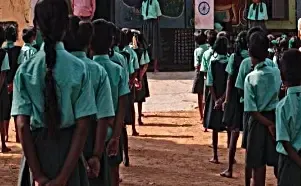
Every government school will continue to operate with five student houses — Kurinji, Mullai, Marutham, Neithal, and Palai. Each house will have a House Captain and a Student Minister. House Captains will be selected either through a draw of lots or by a show of hands, while Student Ministers will be chosen through a formal ballot.
Eligibility to contest for the post of Student Minister has been restricted to students of Class 5 in primary schools, Class 8 in middle schools, Class 9 in high schools, and Class 11 in higher secondary schools.
Key Dates and Election Schedule
The selection of House Captains is scheduled to be completed by 3 July. Candidates vying for Student Minister posts will campaign on 6 July, presenting election manifestos outlining their plans if elected. Polling will be held on 7 July, with students from all classes casting separate ballots to elect one Student Minister per house. The newly elected student leaders will take their oath of office on 10 July.
Portfolios and Gender Representation
The five elected Student Ministers will head key portfolios — Education; Student Welfare and Safety; Information and Communication; Environment and Climate Action; and Health, Hygiene and Sanitation. Portfolios will be allotted through a draw of lots among the elected ministers.
To ensure gender balance, co-educational schools have been directed to appoint House Captains and Student Ministers of opposite genders within each house. If a House Captain is a boy, the corresponding Student Minister must be a girl, and vice versa.
Structure and Support Mechanisms
Each house will have its own flag, badges for House Captains and Student Ministers, a scoreboard to track points earned in competitions and school activities, and a designated teacher coordinator to guide the functioning of the student parliament. Officials believe the initiative will help students understand the importance of elections, leadership, accountability, and collective decision-making from an early age.
Why This Initiative Matters
This comes amid growing concerns over the limited exposure of young Indians to democratic institutions and electoral practices. Notably, Tamil Nadu becomes one of the few states to embed a structured, election-simulating programme into its public school curriculum at scale. The initiative mirrors similar democratic-education models adopted in several European countries, and its rollout across all government schools signals an intent to make civic literacy a foundational skill rather than an incidental one.
Point of View
Formal ballots, portfolios, and gender-parity rules, not merely a token house captain vote. The real test will be whether student ministers are given genuine agency to act on their portfolios, or whether the exercise stops at the oath-taking ceremony. Democratic education works only when it is consequential. If the school administration overrides student decisions routinely, the programme risks becoming a well-designed ritual rather than a civics lesson with teeth. The gender-parity mandate, however, is a notable structural safeguard that many adult electoral frameworks in India still lack.
NationPress
29 Jun 2026
Frequently Asked Questions
What is the Tamil Nadu student election initiative under Magizh Mutram?
It is a first-of-its-kind student parliament programme integrated into Tamil Nadu's existing 'Magizh Mutram' scheme for government schools in the 2025-26 academic year. Students will campaign, present manifestos, and vote to elect Student Ministers who will head five portfolios within each school's house system.
When will the Tamil Nadu student elections take place?
House Captain selection will be completed by 3 July, candidate campaigning is scheduled for 6 July, polling will be held on 7 July, and the elected student leaders will take their oath of office on 10 July 2025.
Who is eligible to contest the Student Minister election?
Eligibility is restricted to students of Class 5 in primary schools, Class 8 in middle schools, Class 9 in high schools, and Class 11 in higher secondary schools across Tamil Nadu government schools.
What portfolios will the elected Student Ministers handle?
The five portfolios are Education; Student Welfare and Safety; Information and Communication; Environment and Climate Action; and Health, Hygiene and Sanitation. Portfolios will be assigned through a draw of lots among the five elected Student Ministers.
How does the programme ensure gender representation?
Co-educational schools have been directed to appoint House Captains and Student Ministers of opposite genders within each house. If a House Captain is a boy, the Student Minister for that house must be a girl, and vice versa.