Tamil Nadu, IN-SPACe sign deal for space manufacturing hub
Synopsis
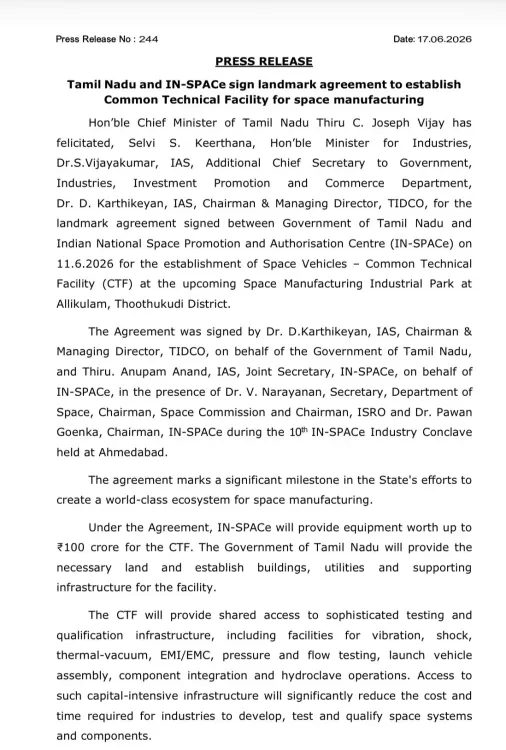
Tamil Nadu and IN-SPACe signed a landmark agreement on 17 June 2026 to establish a Common Technical Facility for space manufacturing, giving private space startups shared access to high-precision infrastructure and reinforcing Tamil Nadu's ambitions as an aerospace investment destination.
Key Takeaways
Tamil Nadu and IN-SPACe signed an agreement on 17 June 2026 to establish a Common Technical Facility for space manufacturing.
IN-SPACe was set up in June 2020 as India's nodal agency for regulating and promoting private sector participation in space activities.
Tamil Nadu's Aerospace and Defence Policy (2021-22) laid the groundwork for attracting space and defence manufacturing investments to the state.
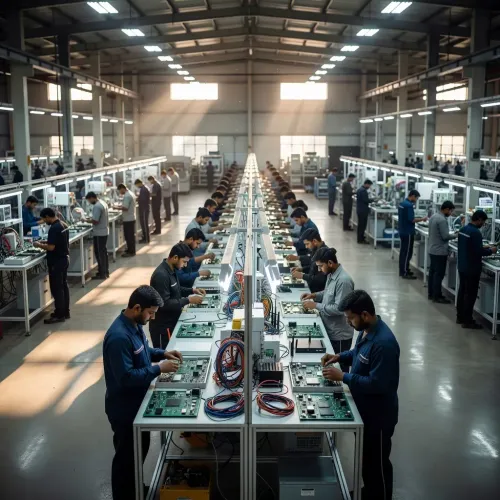
The facility is designed as shared infrastructure, lowering capital barriers for private space startups and aerospace component manufacturers.
The agreement aligns with India's Atmanirbhar Bharat framework to shift space-sector growth from a government-only model to a private-enterprise-inclusive one.
Detailed project timelines, financial outlay and the facility's exact location within Tamil Nadu are yet to be publicly disclosed.
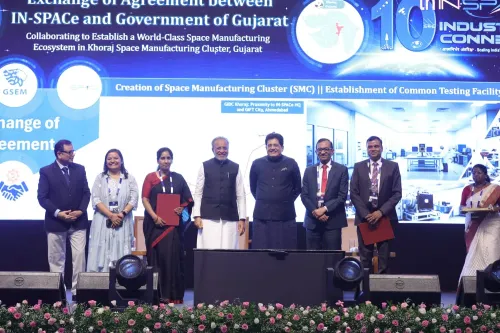
The Chief Minister's Office of Tamil Nadu announced on Wednesday, 17 June 2026 that Tamil Nadu and IN-SPACe have signed a landmark agreement to establish a Common Technical Facility dedicated to space manufacturing, marking a significant step in the state's push to become a hub for India's emerging private space economy.
Context
The agreement was announced under the hashtag #CMJosephVijay, signalling the Tamil Nadu government's active role in driving the deal. The Common Technical Facility is envisioned as a shared infrastructure platform where private space companies can access manufacturing, assembly and testing capabilities without bearing the full capital cost individually — a model increasingly adopted in advanced aerospace economies.
IN-SPACe, the Indian National Space Promotion and Authorisation Centre, is the nodal agency under the Department of Space, established in June 2020 to regulate and promote private sector participation in India's space activities. This agreement represents one of its more concrete state-level partnerships aimed at translating that mandate into physical infrastructure.
Policy Backdrop
India's decision to open its space sector to private players, formalised in 2020, set off a wave of policy activity at both the central and state levels. Tamil Nadu followed with its own Aerospace and Defence Policy in 2021-22, offering incentives including land allocation, power concessions and single-window clearances for companies setting up manufacturing and testing facilities in the state.
The broader framework is rooted in the Atmanirbhar Bharat initiative, which seeks to shift India's space programme from a purely government-driven model toward one that harnesses private enterprise for manufacturing, launch services and satellite development. Common-user facilities like the one envisaged in this agreement are seen as force multipliers for startups that lack the capital to build dedicated infrastructure.
Stakeholders and Impact
The primary beneficiaries of the Common Technical Facility are expected to be private space startups and aerospace component manufacturers, who will gain access to shared high-precision manufacturing and testing infrastructure. This lowers the barrier to entry for smaller firms and could accelerate the commercialisation of domestically developed space technologies.
Tamil Nadu stands to gain in terms of investment inflows, skilled employment and positioning within India's competitive aerospace corridor. Several states are actively vying to host such facilities, and this agreement gives Tamil Nadu a tangible advantage in attracting space-sector firms looking to set up operations.
ISRO, India's primary government space agency, has been progressively sharing expertise and facilities with private entities, and any technology transfer or infrastructure linkage from ISRO to the new facility would further enhance its value proposition for industry.
What's Next
The immediate focus will be on the detailed project report and the operational timeline for the Common Technical Facility. Subsequent agreements with private space companies to utilise the facility, along with any central government funding commitments, will determine the pace at which the centre becomes operational.
As India targets a significantly larger share of the global space economy in the coming decade, state-level infrastructure partnerships like this one are likely to multiply — making the Tamil Nadu–IN-SPACe agreement an early template for how state governments can plug into the national space liberalisation agenda.
Point of View
Investable assets. By anchoring a Common Technical Facility, Tamil Nadu is staking a claim in an industrial race where first-mover advantage in infrastructure can determine which state captures the bulk of private space investment over the next decade. The move also signals that Chief Minister Joseph Vijay's administration is willing to deploy state resources to court high-technology sectors, consistent with Tamil Nadu's established positioning as a manufacturing and electronics investment destination. The real test will be how quickly the facility moves from MoU to metal — a gap that has historically diluted the impact of similar agreements in India's industrial policy landscape.
NationPress
16 Sept 2026
Frequently Asked Questions
What is the Common Technical Facility that Tamil Nadu and IN-SPACe agreed to set up?
The Common Technical Facility is a shared infrastructure platform for space manufacturing where private companies can access high-precision manufacturing, assembly and testing capabilities without individually bearing the full capital cost. Tamil Nadu and IN-SPACe signed an agreement on 17 June 2026 to establish this facility in the state.
What is IN-SPACe and what is its role in India's space sector?
IN-SPACe, the Indian National Space Promotion and Authorisation Centre, is the nodal agency under India's Department of Space, established in June 2020. Its role is to regulate, promote and support private sector companies seeking to participate in space activities, including manufacturing, launch services and satellite development.
How does this agreement benefit private space startups in India?
Private space startups will gain access to shared, high-quality manufacturing and testing infrastructure without needing to invest in dedicated facilities. This significantly lowers the capital barrier to entry and can help smaller firms bring space technologies to market faster.
What is Tamil Nadu's existing policy framework for aerospace investment?
Tamil Nadu released its Aerospace and Defence Policy in 2021-22, which offers incentives such as land allocation, power concessions and single-window clearances to companies setting up aerospace manufacturing and testing facilities in the state.
Which other states are competing to host space manufacturing facilities in India?
Multiple Indian states are actively vying to host common-user space facilities and test ranges as India's private space sector expands. The Tamil Nadu–IN-SPACe agreement positions the state as an early mover in this inter-state competition for space-sector investment.