TN power sector debt hits ₹2.47 lakh crore; no tariff hike this year, says minister
Synopsis
Tamil Nadu's electricity board is sitting on a ₹2.47 lakh crore debt — 77.6% of all state PSU liabilities combined — yet the government has ruled out a tariff hike. A 25-year white paper lays bare a deficit that has grown under every government since 2006, while a fresh procurement irregularity probe adds a new accountability dimension.
Key Takeaways
Tamil Nadu 's power sector debt stands at ₹2.47 lakh crore , disclosed in a white paper released on 25 June 2025 .
The debt equals 77.6% of the total liabilities of all state public sector undertakings.
TNEB recorded a deficit of ₹34,447 crore between 2021 and 2026 , on expenditure of ₹5.32 lakh crore against revenue of ₹4.97 lakh crore.
Sector deficits have grown across successive governments: ₹35,463 crore (2006–11), ₹56,361 crore (2011–16), ₹58,534 crore (2016–21).
Shifting to long-term power purchase agreements could cut monthly costs by nearly ₹215 crore .
Alleged procurement irregularities at nine locations are under investigation; no electricity tariff revision is planned this year.
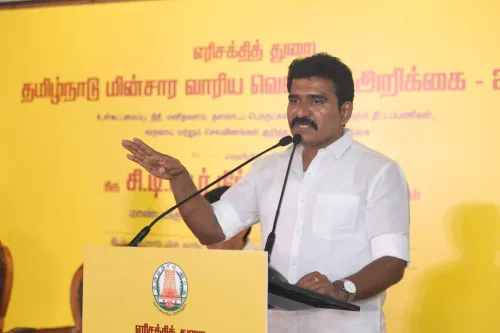
Tamil Nadu's power sector has accumulated an outstanding debt of ₹2.47 lakh crore, Electricity Minister C.T.R. Nirmal Kumar disclosed on Thursday, 25 June, releasing a white paper on the financial health of the Tamil Nadu Electricity Board (TNEB) at its headquarters in Chennai. Despite the scale of the fiscal burden, the minister assured consumers that electricity tariffs would remain unchanged for the current year.
Key Findings of the White Paper
The white paper covers a 25-year review of the power sector's financial performance and was released shortly after the Tamil Nadu government published a broader fiscal document estimating the state's total debt at ₹13.18 lakh crore. Of that, the power sector alone accounts for ₹2,47,130 crore — representing 77.6% of the combined debt of all state public sector undertakings.
Between 2021 and 2026, the Electricity Board recorded a total expenditure of ₹5.32 lakh crore against revenues of ₹4.97 lakh crore, leaving a deficit of ₹34,447 crore.
A Deficit That Has Grown Across Governments
The white paper documents a pattern of mounting losses across successive administrations. The power sector posted a deficit of ₹35,463 crore during 2006–11, which climbed to ₹56,361 crore between 2011 and 2016, and rose further to ₹58,534 crore in the 2016–21 period. Nirmal Kumar alleged that despite heavy borrowing and significant revenue collections, infrastructure development had not kept pace with the funds deployed.
What the Government Said
Minister Nirmal Kumar said the government's immediate priority is improving the financial health of TNEB through better financial management and operational efficiency. He noted that Tamil Nadu's peak power demand has reached 21,307 MW, met through a mix of hydroelectric, thermal, and gas-based generation, supplemented by procurement from Central generating stations, private producers, and other states.
A key reform being pursued is the replacement of costly short-term power purchase agreements with long-term contracts — a move the minister said could reduce monthly expenditure by nearly ₹215 crore.
Tariff Relief and Procurement Probe
Reiterating the no-tariff-hike commitment, Nirmal Kumar said the focus would remain on structural reforms rather than passing the burden onto consumers. He also disclosed that alleged irregularities in the procurement of electrical conductors at nine locations had surfaced and would be thoroughly investigated. This comes amid broader scrutiny of public sector spending efficiency in the state.
With structural reforms and a procurement probe now both on the table, the coming months will test whether Tamil Nadu can stabilise its power finances without either raising tariffs or deepening its debt.
Point of View
Rooted in politically motivated tariff suppression and chronic under-recovery. The no-tariff-hike assurance may be consumer-friendly in the short term, but it perpetuates the very cycle the white paper documents. The real question is whether the shift to long-term power purchase agreements and the procurement probe signal genuine reform or are optics ahead of electoral cycles. At 77.6% of all state PSU debt, TNEB's finances are not just a power sector problem — they are a Tamil Nadu fiscal problem.
NationPress
24 Sept 2026
Frequently Asked Questions
What is the Tamil Nadu power sector debt revealed in the white paper?
The Tamil Nadu Electricity Board has accumulated an outstanding debt of ₹2.47 lakh crore, as disclosed in a white paper released by Electricity Minister C.T.R. Nirmal Kumar on 25 June 2025. This accounts for 77.6% of the total debt of all state public sector undertakings.
Will electricity tariffs increase in Tamil Nadu this year?
No. Minister C.T.R. Nirmal Kumar explicitly assured that there would be no electricity tariff revision during the current year, with the government's focus instead on improving TNEB's financial health through structural reforms.
How has the TNEB deficit grown over the years?
The power sector deficit has risen under successive governments: ₹35,463 crore during 2006–11, ₹56,361 crore during 2011–16, and ₹58,534 crore during 2016–21. Between 2021 and 2026, the deficit stood at ₹34,447 crore.
What reforms is the Tamil Nadu government planning for TNEB?
The government plans to replace costly short-term power purchase agreements with long-term contracts, which is expected to reduce monthly expenditure by nearly ₹215 crore. Improved financial management and operational efficiency are also being prioritised.
What is the procurement irregularity probe mentioned in the white paper release?
Minister Nirmal Kumar disclosed that alleged irregularities in the procurement of electrical conductors at nine locations have come to light and will be thoroughly investigated, adding an accountability dimension to the broader reform agenda.