Bhil Pradesh demand echoes at Banswara's Mangarh Dham tribal convention
Synopsis
Tribal communities from five states and a Union Territory gathered at Mangarh Dham in Banswara on 17 July to demand a separate 'Bhil Pradesh' — arguing that state borders have fragmented their homelands and denied them development for decades. With BAP legislators on stage and an MP joining by phone from Switzerland, the annual convention is quietly becoming a cross-state political force.
Key Takeaways
Thousands of tribals from Rajasthan, Gujarat, Madhya Pradesh, Maharashtra , and Dadra and Nagar Haveli attended the convention at Mangarh Dham, Banswara on 17 July .
The Bhil Pradesh Mukti Morcha organised the event under a social, non-political banner, demanding a separate 'Bhil Pradesh' state.
MP Rajkumar Roat (Banswara-Dungarpur) addressed the gathering via phone from Switzerland , alleging neglect by governments of all four states.
Five Bharat Adivasi Party (BAP) MLAs from Rajasthan and Madhya Pradesh participated in the convention.
Speakers flagged that tribal youth are not receiving full reservation benefits on the ground despite constitutional provisions.
The convention is held annually on 17 July at Mangarh Dham, with this year's turnout spanning six administrative units.
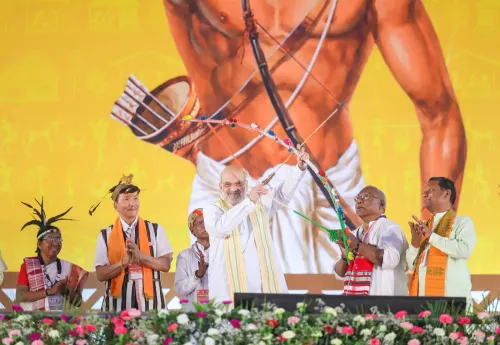
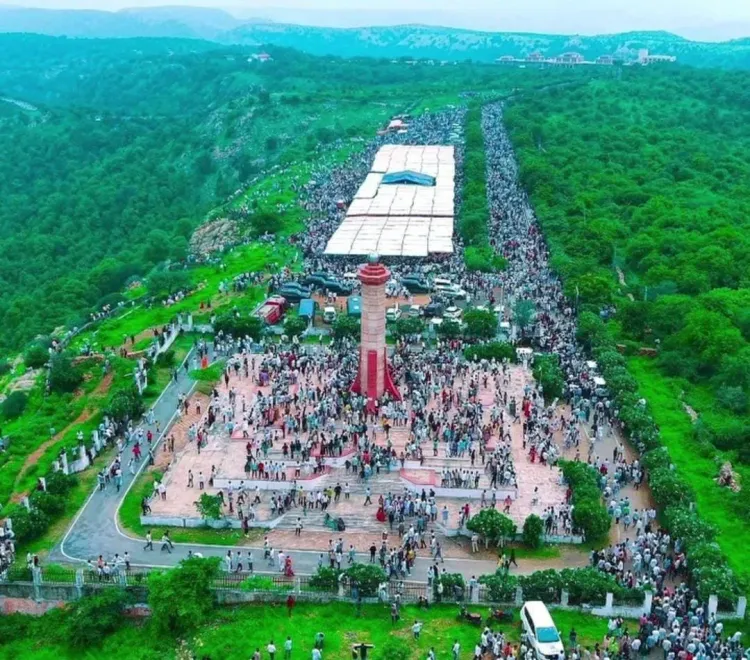
Thousands of tribal people from Rajasthan, Gujarat, Madhya Pradesh, Maharashtra, and the Union Territory of Dadra and Nagar Haveli converged on the historic Mangarh Dham in Banswara on Friday, 17 July, to raise a unified demand for the creation of a separate 'Bhil Pradesh' state. The grand convention, organised under the banner of the Bhil Pradesh Mukti Morcha (Bhil Pradesh Liberation Front), drew participants from across inter-state tribal belts and concluded peacefully.
What the Convention Demanded
Speakers at the convention pressed for the consolidation of geographically fragmented tribal regions into a single administrative unit to be called Bhil Pradesh. Vinod Kumar Kharadi, District Vice President of the Bharat Adivasi Party (BAP), described the event as a fight for the community's existence rather than a political exercise. 'We demand that tribals receive their due rights and that the scattered tribal regions be consolidated to form a separate Bhil Pradesh, thereby protecting the people in border areas from the hardships they currently face,' Kharadi said.
Organisers stressed that tribal communities living along state borders face compounded disadvantages — from access to government schemes to reservation benefits — because administrative boundaries cut through their traditional homelands.
Key Voices at Mangarh Dham
Rajesh Vasuniya, District Convener of the Bhil Pradesh Mukti Morcha, and Ravindra Barjod, State Convener, addressed the gathering alongside Hiralal Dama and other leaders. Several legislators from the Bharat Adivasi Party were also present: Kamlesh Dodiyar (MLA, Ratlam, Madhya Pradesh), Thavarchand Meena (MLA, Dhariyawad), Umesh Meena (MLA, Aspur), Anil Katara (MLA, Chorasi), and Jaykrishna Patel (MLA, Bagidora).
Rajkumar Roat, Member of Parliament for the Banswara-Dungarpur Lok Sabha constituency, could not attend in person as he was in Switzerland. He conveyed a message by phone, alleging that governments across all four states had neglected the tribal belt, leaving it chronically underdeveloped, and that successive administrations had treated the tribal community unfairly.
The Grievances Behind the Demand
Speakers highlighted that despite constitutional provisions for tribal reservation in employment and education, the community's youth are reportedly not receiving the full benefits on the ground. Deep concern was also expressed over documented instances of oppression and harassment faced by tribals across multiple sectors.
Notably, this convention is held annually on 17 July at Mangarh Dham — a site of deep historical and cultural significance for the Bhil community. The gathering's scale this year, drawing attendees from five states and a Union Territory, signals a broadening of the movement beyond Rajasthan.
What Happens Next
The event concluded in a disciplined and peaceful manner under the supervision of organising committee member Bhanwarlal Parmar and community representatives. No formal timeline was announced for presenting the Bhil Pradesh demand to the Centre, but organisers indicated they intend to escalate pressure on state governments. The annual nature of the convention suggests the movement is building toward a sustained political campaign, even as its organisers continue to frame it as a social cause.
Point of View
But the geographic spread of this year's convention — five states and a Union Territory — marks a qualitative shift from a local grievance to a cross-state tribal mobilisation. What mainstream coverage tends to miss is the structural logic: state borders drawn without regard for tribal homelands create administrative orphans who are simultaneously residents of multiple states and full beneficiaries of none. The BAP's growing legislative presence gives the movement an institutional spine it previously lacked. Whether the Centre engages or dismisses the demand will test its stated commitment to tribal welfare under the Janjati Gaurav frameworks it has championed elsewhere.
NationPress
16 Oct 2026
Frequently Asked Questions
What is the demand for 'Bhil Pradesh'?
'Bhil Pradesh' is a proposed separate state that would consolidate tribal-dominated regions currently fragmented across Rajasthan, Gujarat, Madhya Pradesh, Maharashtra, and Dadra and Nagar Haveli into a single administrative unit. Proponents argue this would end the developmental neglect faced by communities split across multiple state borders.
Where and when was the Bhil Pradesh convention held?
The convention was held on 17 July at Mangarh Dham in Banswara, Rajasthan. It is an annual event organised by the Bhil Pradesh Mukti Morcha and reportedly draws attendees from across the inter-state tribal belt each year.
Who organised the Banswara tribal convention?
The event was organised by the Bhil Pradesh Mukti Morcha (Bhil Pradesh Liberation Front). Key organisers included District Convener Rajesh Vasuniya, State Convener Ravindra Barjod, and committee member Bhanwarlal Parmar.
Why did MP Rajkumar Roat not attend the convention?
Rajkumar Roat, the Banswara-Dungarpur Lok Sabha MP, was in Switzerland at the time of the event. He conveyed his message to the gathering via phone, alleging that governments of all four states had neglected the tribal belt and treated the community unfairly.
Which political leaders attended the Mangarh Dham convention?
Several Bharat Adivasi Party (BAP) MLAs attended, including Kamlesh Dodiyar (Ratlam, Madhya Pradesh), Thavarchand Meena (Dhariyawad), Umesh Meena (Aspur), Anil Katara (Chorasi), and Jaykrishna Patel (Bagidora). Senior Bhil Pradesh Mukti Morcha leaders also addressed the gathering.