K.N. Tripathi elected INTUC chief as two factions merge in Delhi
Synopsis
After years of division, INTUC's two rival factions have reunited in New Delhi, electing former Jharkhand minister K.N. Tripathi as national president. But the final word on the unified body rests with Congress president Mallikarjun Kharge, to whom the new working committee will be submitted.
Key Takeaways
INTUC's Chandrashekhar Dubey and K.K.
Tiwari factions merged on 28 November 2026 in New Delhi .
Former Jharkhand minister K.N.
Tripathi was elected National President .
Abhay Kumar Dubey became Senior Vice President; K.K.
Tiwari was elected unopposed as General Secretary.
The merger took place at the 34th General Conference at the Dr Ambedkar International Centre , with Meira Kumar as chief guest.
The new working committee will be submitted to Congress president Mallikarjun Kharge to form a united INTUC.
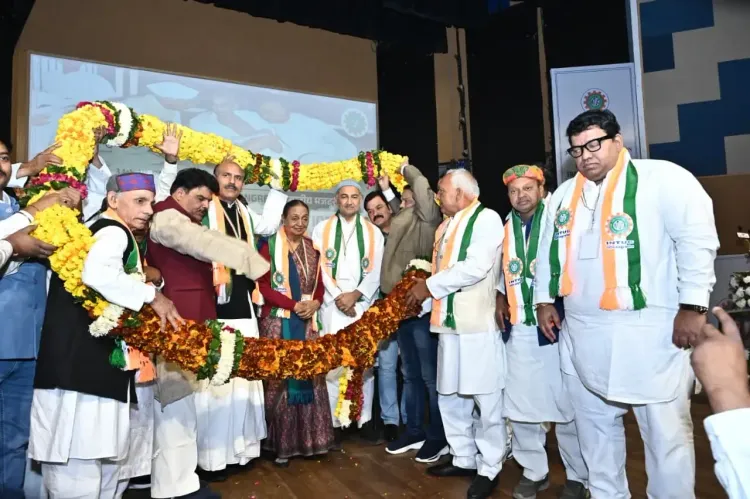
The two warring factions of the Indian National Trade Union Congress (INTUC) merged on Saturday, 28 November 2026, and elected former Jharkhand minister K.N. Tripathi as the organisation's new National President at a conference in New Delhi. The unification brings the Chandrashekhar Dubey faction and the K.K. Tiwari faction under one banner, according to a statement issued by a trade union leader.
Key Developments at the Merger Conference
The merger was formalised at the National Merger Conference 2026, also billed as the 34th General Conference of INTUC, held at the Dr Ambedkar International Centre in New Delhi. Representatives of INTUC unions and federations from across the country took part, the statement said.
Alongside Tripathi's election, Abhay Kumar Dubey was elected Senior Vice President, while K.K. Tiwari was elected unopposed as General Secretary. The leadership line-up gives both erstwhile factions a place in the new organisational structure.
Former Lok Sabha Speaker Meira Kumar attended as chief guest. Qazi Muhammad Nizamuddin, the All India Congress Committee (AICC) observer, was also present.
What Tripathi Said After His Election
Addressing delegates after taking charge, Tripathi said: “I am deeply grateful for the trust the delegates have placed in me. Today, INTUC has returned to the path shown by Mahatma Gandhi and Sardar Patel in 1947. Our goal now is to bring every worker under one INTUC banner and fight for their rights in mines, factories, railways, banks and the unorganised sector.”
He thanked Congress president Mallikarjun Kharge for backing the unification by sending an AICC observer. Tripathi also thanked Meira Kumar for her presence and guidance, and congratulated representatives of both factions for placing workers' interests above their differences.
Resolutions and the Congress Link
The conference passed several resolutions and held detailed discussions on labour laws and other issues affecting workers, the statement said. The main resolution was to submit the newly elected working committee to Mallikarjun Kharge, so that he could unify the organisation and form a united INTUC.
Notably, the resolution underscores INTUC's close ties to the Indian National Congress. The union's reliance on the party leadership to formally seal the unification signals that the merger's final shape still rests with the Congress president.
Why the Merger Matters for Workers
Speakers at the conference unanimously declared that INTUC would be united and remain united. They argued that years of division had weakened the workers' voice, and that a strong, united INTUC was the need of the hour at a time when workers' rights are under increasing pressure, according to the statement.
This comes amid continuing debate over labour laws, a subject the conference discussed in detail. A consolidated INTUC could give the Congress-aligned labour movement a single negotiating voice across sectors such as mining, railways, banking and the unorganised workforce.
The next step lies with Kharge's office, where the working committee will be submitted for approval. How quickly the unified structure takes effect on the ground will determine whether the merger delivers the stronger worker representation its leaders have promised.
Point of View
But the fine print matters: the union has handed the final unification to the Congress president, underlining how tightly its fortunes remain tethered to party politics. That dependence cuts both ways at a time when independent worker representation is under pressure. The real test for Tripathi will be whether the merger translates into membership and bargaining strength on factory floors, or remains a leadership-level truce. Unity declared at a conference hall has rarely, on its own, restored a union's clout.
NationPress
28 Nov 2026
Frequently Asked Questions
Who is the new national president of INTUC?
K.N. Tripathi, a former Jharkhand minister, was elected national president of INTUC on 28 November 2026. He was elected after the organisation's two factions merged at a conference in New Delhi.
Which INTUC factions merged?
The Chandrashekhar Dubey faction and the K.K. Tiwari faction of INTUC merged. The merger was formalised at the National Merger Conference 2026, the union's 34th General Conference.
Who else was elected to the INTUC leadership?
Abhay Kumar Dubey was elected Senior Vice President, while K.K. Tiwari was elected unopposed as General Secretary.
What role does the Congress play in the INTUC merger?
The conference resolved to submit the newly elected working committee to Congress president Mallikarjun Kharge so he could unify the organisation and form a united INTUC. An AICC observer, Qazi Muhammad Nizamuddin, attended the event.
Where was the INTUC merger conference held?
It was held at the Dr Ambedkar International Centre in New Delhi. Former Lok Sabha Speaker Meira Kumar attended as chief guest.