Piyush Goyal: Opposition cannot stop Nari Shakti in Parliament

Synopsis
Union Commerce Minister Piyush Goyal said PM Modi's Nari Shakti message is loud and clear. He charged that the opposition cannot stop women from claiming their place in Parliament, invoking the 2023 law reserving one-third of seats after census and delimitation.
Key Takeaways
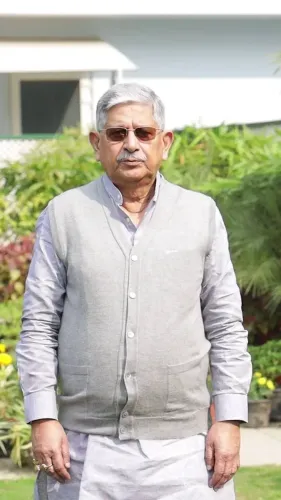
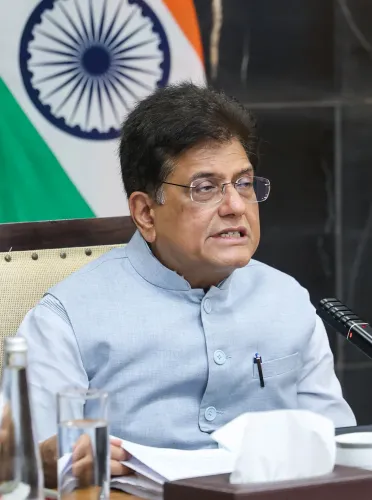
On 28 November 2026, Union Commerce and Industry Minister Piyush Goyal said PM Narendra Modi's message on Nari Shakti is loud and clear.
Goyal charged that an anti-women opposition cannot stop women from claiming their rightful place in Parliament.
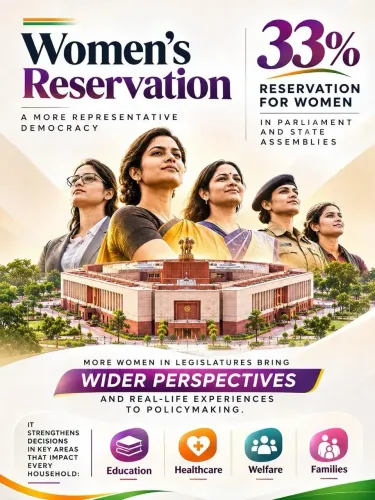
The Nari Shakti Vandan Adhiniyam, passed in September 2023, reserves one-third of seats for women in the Lok Sabha and state assemblies.
The quota takes effect only after a census and a subsequent delimitation of constituencies.
Goyal is also Leader of the House in the Rajya Sabha.
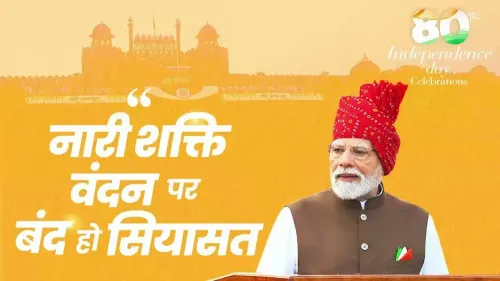
The fight over who owns the women's reservation story just got sharper. On Saturday, 28 November 2026, Union Commerce and Industry Minister Piyush Goyal declared that Prime Minister Narendra Modi's line on Nari Shakti is already decided — and that the opposition, he said, cannot keep women from Parliament.
Goyal's post was blunt. He wrote that the Prime Minister's message is ‘loud and clear’ and that an ‘anti-women opposition CANNOT stop our Nari Shakti from claiming their rightful place in Parliament.’ The capital letters were the point. This was a political charge, not a footnote.
The 2023 law that locked in one-third seats
Parliament has already written the quota into the Constitution. In September 2023, both Houses passed the Constitution (One Hundred and Twenty-Eighth Amendment) Bill, 2023, popularly called the Nari Shakti Vandan Adhiniyam. It provides for reservation of one-third of seats for women in the Lok Sabha and in state legislative assemblies.
The ruling party has treated that vote as a signature achievement, arguing that earlier governments delayed the same idea for years. Opposition parties have long backed reservation in principle and have often accused the government of timing and credit-seeking. Goyal's Saturday remark folds that history into one frame: women on one side, an ‘anti-women opposition’ on the other.
Census and delimitation still stand between law and seats
The reserved seats are not yet live. The amendment is tied to a census and a subsequent delimitation exercise that will redraw constituencies. Until those two steps are completed, the 33 percent quota does not apply to an election. That is the real clock. Every speech about Nari Shakti in Parliament now collides with that unfinished sequence.
Watch the census calendar. Watch delimitation. Watch whether states move their own laws in parallel. The political volume is already high. The maps have not caught up.
Goyal has drawn a hard public line. The next test is whether the reservation Parliament wrote into the Constitution actually reaches the ballot.
Point of View
Obstruction, and timing. Because the law is wired to census and delimitation, the seats remain a future event while the rhetoric stays in the present. The next real test is whether that administrative calendar moves fast enough for the quota to leave the campaign trail and reach the ballot.
NationPress
28 Nov 2026
Frequently Asked Questions
What did Piyush Goyal say about Nari Shakti?
On 28 November 2026, Union Commerce and Industry Minister Piyush Goyal said Prime Minister Narendra Modi's message is loud and clear and that an anti-women opposition cannot stop Nari Shakti from claiming a rightful place in Parliament. He posted the remark on X while backing the Prime Minister's line on women's political participation.
What is the Nari Shakti Vandan Adhiniyam?
It is the popular name for the Constitution (One Hundred and Twenty-Eighth Amendment) Bill, 2023, which reserves one-third of seats for women in the Lok Sabha and state legislative assemblies. Parliament passed the measure in September 2023.
Why has women's reservation not started in Lok Sabha elections yet?
The amendment is linked to a census and a subsequent delimitation of constituencies. Until those processes are completed, the 33 percent reservation does not take effect in elections.
How many seats will be reserved for women in Parliament?
The 2023 constitutional amendment provides for one-third of seats in the Lok Sabha, and in state assemblies, to be reserved for women once census and delimitation are done. The exact seat numbers will follow the redrawn maps.
Who is Piyush Goyal?
Piyush Goyal is the Union Minister of Commerce and Industry, a senior BJP leader, and Leader of the House in the Rajya Sabha. He posted the Nari Shakti remark on 28 November 2026.