Delimitation Bill in Lok Sabha Monday, seeks 850-seat cap
Synopsis
The Centre is moving to grow the Lok Sabha to as many as 850 seats. On Monday, Arjun Ram Meghwal introduces the Delimitation Bill, which raises every state's seats by 50% while keeping their relative share unchanged. The package also clears the path for 33% women's reservation in Parliament and Assemblies.
Key Takeaways
Arjun Ram Meghwal will introduce the Delimitation Bill, 2026 in the Lok Sabha on 30 November 2026 .
The Union Cabinet chaired by PM Narendra Modi approved the 132nd Amendment Bill and the Delimitation (Second) Bill on 27 November .
Lok Sabha and Assembly seats for each state and UT would rise by 50 per cent , with the Lok Sabha capped at 850 members .
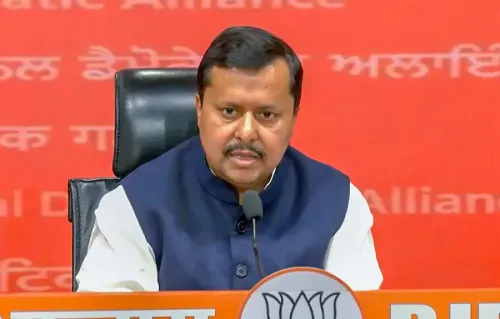
Amit Shah will introduce the UT Laws (Amendment) Second Bill covering Delhi, J&K and Puducherry .
The Bills aim to facilitate 33 per cent reservation for women and set up a new Delimitation Commission .
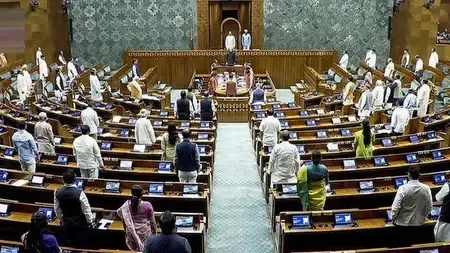
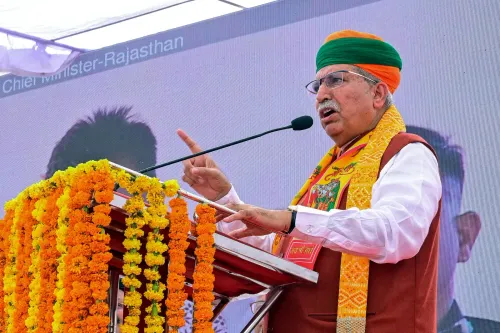
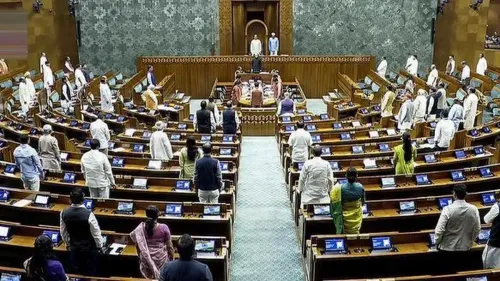
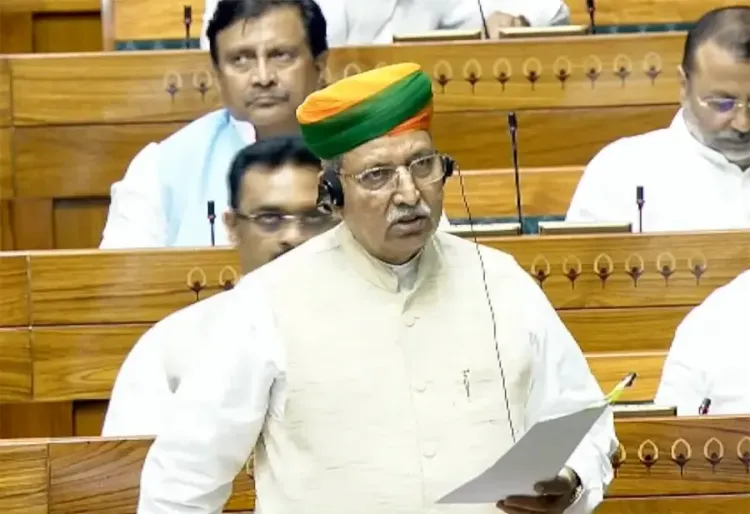
The Delimitation Bill, 2026 will be introduced in the Lok Sabha on Monday, 30 November 2026, the first day of the House's special sitting. Minister of State for Parliamentary Affairs Arjun Ram Meghwal is listed to move it, according to the list of business circulated among MPs in New Delhi. The legislation would raise the maximum strength of the Lok Sabha to 850 members and clear the way for 33 per cent reservation for women in Parliament and state Assemblies.
The Bill depends on the Constitution (One Hundred and Thirty-Second Amendment) Bill, 2026. The Union Cabinet, chaired by Prime Minister Narendra Modi, approved both the constitutional amendment and the dependent Delimitation (Second) Bill, 2026 on Friday, 27 November.
Key Developments in Parliament
Home Minister Amit Shah will introduce a second measure the same day, the Union Territories Laws (Amendment) Second Bill, 2026. It aligns the laws governing Union Territories that have legislative assemblies (Delhi, Jammu and Kashmir and Puducherry) with the revised 132nd Amendment Bill.
Both Bills will be presented after the formal withdrawal of earlier versions that could not be passed in the House. This means the government is effectively reintroducing the package rather than continuing an earlier legislative attempt.
The Rule 66 Procedural Motion
Meghwal is also expected to move a motion that is likely to read: “That this House do suspend the application of the proviso to Rule 66 of the Rules of Procedure and Conduct of Business in Lok Sabha in respect of the motion for consideration and passing of the Delimitation (Second) Bill, 2026 and the Union Territories Laws (Amendment) Second Bill, 2026 insofar as it is dependent upon the Constitution (One Hundred and Thirty-second Amendment) Bill, 2026.”
Rule 66 governs how a dependent Bill can be introduced while the Bill it relies on is still pending, in anticipation of that earlier Bill being passed. Suspending its proviso would let the House take up the delimitation and UT laws Bills alongside the constitutional amendment rather than strictly after it.
What the Constitutional Amendment Proposes
The 132nd Amendment Bill seeks to amend Article 334A, which deals with reservation for women in legislatures. It proposes adding a proviso that would increase the number of Lok Sabha seats allotted to each state and Union Territory by 50 per cent of their existing strength. Seats in their legislative Assemblies would rise by the same proportion.
The amendment would raise the Lok Sabha's maximum strength to 850 members. It also provides for increasing the strength of state legislative Assemblies by 650 members.
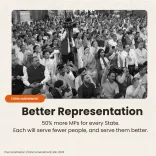
According to the statement of reasons accompanying the fresh Delimitation Bill, the uniform increase is meant to enhance representation while maintaining the existing relative distribution of seats among states. That design choice is significant. Seat reallocation based on population has long been politically sensitive, because states with slower population growth fear losing relative weight in Parliament.
Women's Reservation and the Delimitation Commission
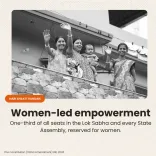
The legislation also seeks to facilitate the implementation of 33 per cent reservation for women in the Lok Sabha and state Legislative Assemblies. Notably, the operation of women's reservation has been tied to a fresh delimitation exercise. This makes the Delimitation Bill a key step toward putting the quota into effect.
The Delimitation (Second) Bill provides for a Delimitation Commission to be constituted after the law comes into force. The Commission will readjust constituencies and allocate seats among states and Union Territories.
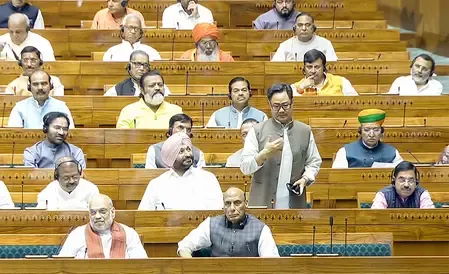
All eyes will now be on the Lok Sabha floor on Monday. How the Opposition responds to the procedural motion and the 50 per cent expansion is likely to shape the pace of what could be one of the largest restructurings of India's legislatures since Independence.
Point of View
Which neatly sidesteps the most combustible question in delimitation: whether states that controlled population growth should lose relative seats. Freezing the inter-state balance buys political peace, but it postpones the debate rather than settling it. It also expands an already large legislature without any accompanying reform of how Parliament functions. The reintroduction after earlier Bills failed, and the procedural fast-track via Rule 66, suggest urgency. That urgency should not come at the cost of scrutiny on a change this foundational. Women's reservation deserves implementation, but tying it to a sweeping seat expansion makes one reform hostage to the other.
NationPress
28 Nov 2026
Frequently Asked Questions
What is the Delimitation Bill, 2026?
It is a Bill to constitute a Delimitation Commission that will readjust constituencies and allocate seats after the 132nd Constitutional Amendment takes effect. Arjun Ram Meghwal will introduce it in the Lok Sabha on 30 November 2026.
How many seats will the Lok Sabha have under the new amendment?
The 132nd Amendment Bill proposes raising the maximum strength of the Lok Sabha to 850 members. Seats for each state and Union Territory would rise by 50 per cent of their existing strength.
How does the Delimitation Bill relate to women's reservation?
The legislation seeks to facilitate 33 per cent reservation for women in the Lok Sabha and state Assemblies. The constitutional amendment does this by amending Article 334A, which deals with women's reservation in legislatures.
Which Union Territories are covered by Amit Shah's Bill?
The Union Territories Laws (Amendment) Second Bill, 2026 covers Delhi, Jammu and Kashmir, and Puducherry, the UTs with legislative assemblies. It aligns their laws with the revised 132nd Amendment Bill.
Why is Rule 66 being suspended?
Rule 66 governs how a dependent Bill is introduced while the Bill it relies on is still pending. Suspending its proviso lets the House take up the Delimitation and UT laws Bills alongside the pending constitutional amendment.