Gadkari: Cabinet clears path for 33% women reservation
Synopsis
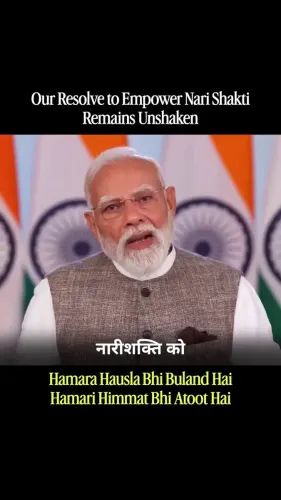
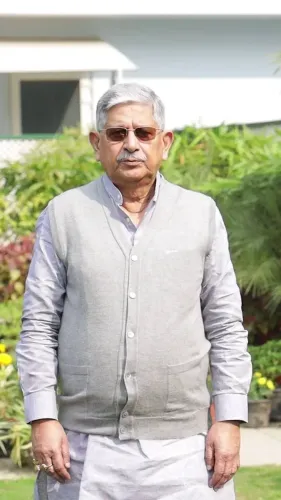
Union Road Transport and Highways Minister Nitin Gadkari said the Cabinet, led by PM Narendra Modi, had cleared the 132nd Constitutional Amendment Bill to put the Nari Shakti Vandan Adhiniyam into practice. He called 33 percent women's reservation a historic step and urged every party to support it.
Key Takeaways
Union minister Nitin Gadkari said the Cabinet approved the 132nd Constitutional Amendment Bill to operationalise the Nari Shakti Vandan Adhiniyam.
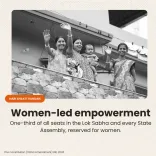
He said 33 percent reservation for women in the Lok Sabha and state assemblies is now moving toward becoming reality.
Gadkari argued one-third women in Vidhan Sabhas would make state and Union Territory policies more sensitive and inclusive.
The Women's Reservation Bill was first introduced in 1996; a 2010 Rajya Sabha-passed version lapsed; the 2023 Act is the 128th Constitutional Amendment.
He appealed to all political parties to back the initiative from the heart.
Union Road Transport and Highways Minister Nitin Gadkari on Saturday said India had taken a historic step toward seating women in one-third of its legislatures. He announced that the Union Cabinet, led by Prime Minister Narendra Modi, had approved the 132nd Constitutional Amendment Bill to operationalise the Nari Shakti Vandan Adhiniyam.
In a Hindi post on X, Gadkari said giving the country's nari shakti (women's power) full respect in politics had been a resolve of the Modi government. He stated that the Cabinet had, the previous day, cleared the amendment to take the women's reservation law to the ground, and that the 33 percent quota women had awaited for years was now going to become reality.
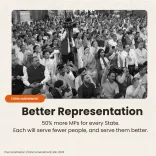
One-third presence of women in Vidhan Sabhas, he argued, would make the policies and schemes of states and Union Territories more sensitive and inclusive. Increased participation in the Lok Sabha, he said, would play a decisive role in setting the direction of the country's law, policy and development.
Gadkari added: ‘This is not just reservation, but a resolve to make India's daughters and sisters equal partners in the system of governance.’ He urged all political parties to support the initiative from the heart.
What Gadkari says the 132nd Amendment will do
The minister presented the Cabinet decision as the bridge between a law already on the books and seats actually reserved for women. The Nari Shakti Vandan Adhiniyam is the statute that provides for one-third reservation in the Lok Sabha and state assemblies. Gadkari's claim is that a fresh constitutional amendment, numbered 132 in his post, is the instrument that will make that reservation operational.
He tied the move to Prime Minister Modi's leadership and to a wider government pitch on women's political participation. The appeal to every party is the political core: without numbers in Parliament, a constitutional amendment does not travel.
From the 1996 bill to the 2023 Act
The Women's Reservation Bill was first introduced in the Lok Sabha in 1996. A later version was passed by the Rajya Sabha in 2010 but lapsed when the Lok Sabha was dissolved. In 2023, Parliament enacted the Nari Shakti Vandan Adhiniyam as the 128th Constitutional Amendment Act.
That 2023 law promised one-third of seats for women. Putting it into force has remained bound up with census and delimitation. Successive governments have returned to the idea since the mid-1990s, and parties have often declared support even as the file stalled over seat maps and demands for OBC sub-quotas inside the women's quota.
Seats, maps and the all-party test
If a bill of the kind Gadkari described is introduced, the watch-points are debate in both Houses, the special majority a constitutional amendment requires, and any ratification by state legislatures. Women candidates, sitting members whose constituencies may rotate, and every recognised party that must field those candidates are the people who will feel the change first.
Gadkari's message is that 33 percent is no longer a slogan. If the Cabinet step he described now enters Parliament, India will test whether three decades of intent can survive the hard arithmetic of seats, maps and votes.
Point of View
First tabled in 1996 and written into law in 2023 as the 128th Amendment. Gadkari's intervention recasts the remaining gap as implementation, not principle, and his all-party appeal tries to lock in support before delimitation and sub-quota fights return. The 2023 Act already promised 33 percent seats; the political question is whether a fresh amendment and a Cabinet push can convert that promise into actual constituencies. Parties that cheer nari shakti in public will now be judged on whether they help draw the maps.
NationPress
28 Nov 2026
Frequently Asked Questions
What did Nitin Gadkari say about women's reservation?
Gadkari said the Union Cabinet, led by Prime Minister Narendra Modi, had approved the 132nd Constitutional Amendment Bill to operationalise the Nari Shakti Vandan Adhiniyam. He described it as a historic step to make 33 percent reservation for women a reality in the Lok Sabha and state assemblies.
What is the Nari Shakti Vandan Adhiniyam?
It is the law providing for reservation of one-third of seats for women in the Lok Sabha and state legislative assemblies. Parliament enacted it in 2023 as the 128th Constitutional Amendment Act, after earlier bills dating back to 1996 had lapsed.
How much reservation for women is proposed in Indian legislatures?
The framework Gadkari referred to is 33 percent, or one-third of seats, for women in the Lok Sabha and in Vidhan Sabhas. He said that share would make state policies more inclusive and give women a decisive role in national law-making.
Why has women's reservation in Parliament taken so long?
The Women's Reservation Bill was first introduced in 1996 and a version passed the Rajya Sabha in 2010 before lapsing. Even after the 2023 Act, implementation has been linked to census and delimitation, while debates over OBC sub-quotas have repeatedly delayed consensus.
What happens next after Gadkari's announcement?
The next public tests would be introduction and debate of any such bill in Parliament and, for a constitutional amendment, the special majority and possible state ratification. Gadkari has appealed to all political parties to support the move.