Piyush Goyal: Kashi Tamil Sangamam 5.0 begins in Varanasi
Synopsis
Union Commerce and Industry Minister Piyush Goyal said Kashi Tamil Sangamam 5.0 has opened in Varanasi, pairing Kashi with Tamil Nadu's heritage. The fifth edition is themed Thirukkural Payilvom and is framed under Ek Bharat Shreshtha Bharat as a living confluence from Kashi to Kanyakumari.
Key Takeaways
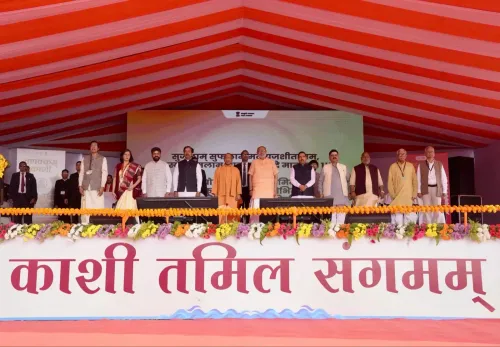
Union Commerce and Industry Minister Piyush Goyal said Kashi Tamil Sangamam 5.0 began in Varanasi on 28 November 2026.
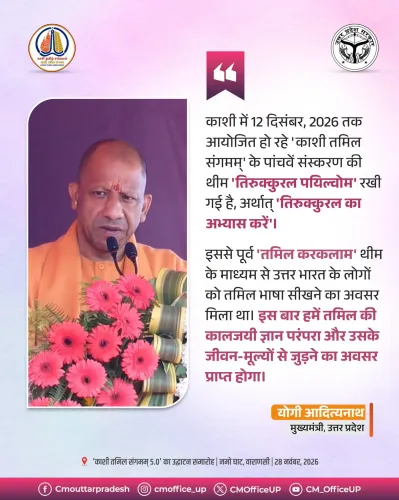
The fifth edition is centred on the theme Thirukkural Payilvom, focusing on the wisdom of Thiruvalluvar.
Goyal said the initiative has fostered cultural exchanges, knowledge-sharing and national unity under Prime Minister Narendra Modi.
He framed the gathering as a confluence from Kashi to Kanyakumari under Ek Bharat Shreshtha Bharat, launched in 2015.
The Sangamam is a recurring cultural exchange linking Varanasi with Tamil Nadu's heritage and scholars.
Two of India's oldest living cultures meet again on the ghats of the Ganga. Union Commerce and Industry Minister Piyush Goyal on Saturday, 28 November 2026 announced that Kashi Tamil Sangamam 5.0 has begun in Varanasi, casting the fifth edition as a civilisational handshake between Kashi and Tamil Nadu.
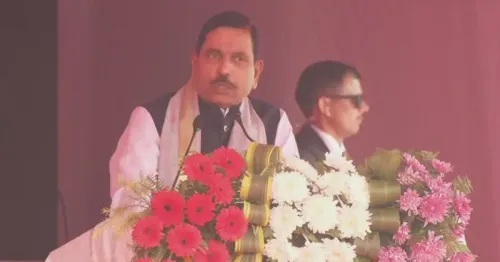
In his post on X, Goyal said the gathering brings together the rich civilisational heritage of two of India's most ancient cultural centres. Under the leadership of Prime Minister Narendra Modi, he wrote, this unique initiative has fostered meaningful cultural exchanges, knowledge-sharing and a deeper sense of national unity. The fifth edition, he added, 'brings the timeless wisdom of Thiruvalluvar into focus, highlighting its enduring relevance for generations to come.'
'Thirukkural Payilvom' puts Valluvar at the heart of Kashi
The programme is centred on the theme Thirukkural Payilvom (Let us study the Thirukkural). That choice puts Thiruvalluvar — the ancient Tamil poet-philosopher — at the centre of a north Indian sacred city, not as a guest exhibit but as a shared ethical voice.
The Thirukkural is a compact work of couplets on virtue, wealth and love that has travelled far beyond Tamil-speaking India. Placing it in Varanasi is the point of the Sangamam. It is not a museum piece. It is a living text, staged in a city that has taught dharma for millennia.
Why Varanasi? Because Kashi Tamil Sangamam was built to pair specific cultural centres from different linguistic regions. Tamil scholars and heritage organisations typically join academic sessions, performances and exhibitions aimed at younger participants as well as specialists. The form is familiar. The pairing is the point.
From Kashi to Kanyakumari under Ek Bharat Shreshtha Bharat
Goyal closed on a geographic sweep: from Kashi to Kanyakumari, the confluence is meant to make Ek Bharat Shreshtha Bharat a living reality. That Union programme, launched in 2015, was designed to thicken cultural bonds between states and regions. The Sangamam sits inside that architecture. It does not create a new statutory body. It repeats a pairing — Varanasi with Tamil Nadu's heritage and scholars — until the exchange feels ordinary.
Prime Minister Modi, in office since 2014, has used such pairings to present India's diversity as a civilisational continuum. Subsequent editions, and any state-level follow-ups from the Ministry of Culture or the Ministry of Education, will show whether the fifth outing deepens that claim or merely restages it.
From the north bank of the Ganga to the last rock of the peninsula, the test is simple: does a couplet written centuries ago still bind a republic that speaks in many tongues?
Point of View
Put scholars and students in the same room, and argue that linguistic India is still one cultural map. Centring the Thirukkural in Varanasi is a deliberate north-south stitch, using a Tamil classic as shared ethical vocabulary rather than a regional artefact. For the Union government this is continuity, not novelty — the same pairing, a new edition number, a living-unity claim. The question now is whether Culture and Education ministries turn the fifth outing into state-level follow-through, or whether the Sangamam remains a seasonal Varanasi set-piece.
NationPress
28 Nov 2026
Frequently Asked Questions
What is Kashi Tamil Sangamam 5.0?
It is the fifth edition of a recurring cultural exchange programme linking Varanasi, also called Kashi, with Tamil Nadu's heritage and scholars. Union Commerce and Industry Minister Piyush Goyal said it began in Varanasi on 28 November 2026 under the broader Ek Bharat Shreshtha Bharat framework.
What is the theme of Kashi Tamil Sangamam 5.0?
The theme is Thirukkural Payilvom, meaning let us study the Thirukkural. Piyush Goyal said this edition brings Thiruvalluvar's timeless wisdom into focus and stresses its relevance for future generations.
Who is Thiruvalluvar and what is the Thirukkural?
Thiruvalluvar is an ancient Tamil poet-philosopher. The Thirukkural is his compact work of couplets on virtue, wealth and love, and it is the intellectual centrepiece of this Sangamam edition.
What is Ek Bharat Shreshtha Bharat?
It is a Union government programme launched in 2015 to strengthen cultural bonds between different states and regions of India. Kashi Tamil Sangamam operates under that framework without creating a new statutory body.
Where is Kashi Tamil Sangamam 5.0 being held?
It is being held in Varanasi, Uttar Pradesh, the ancient city also known as Kashi. Goyal described the gathering as a confluence stretching in spirit from Kashi to Kanyakumari.