AICC appoints six National Coordinators for All India Adivasi Congress
Synopsis
The Congress has quietly overhauled its tribal wing in a single day — six national coordinators appointed, state-level changes running in parallel, and a mandate covering everything from forest rights to election mobilisation. With tribal seats proving decisive in Jharkhand, Chhattisgarh, and Rajasthan, this is less an administrative reshuffle and more a strategic recalibration.
Key Takeaways
AICC appointed six National Coordinators for the All India Adivasi Congress on 11 July , with immediate effect.
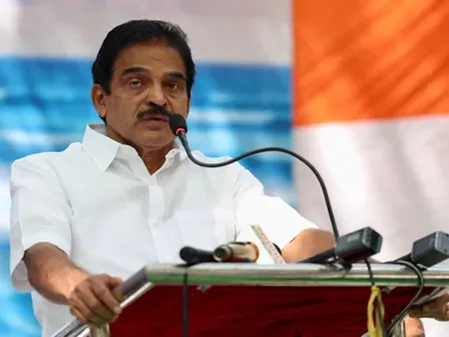
The decision was approved by Congress President Mallikarjun Kharge and announced by General Secretary K.C.
Appointees: Ritu Meena , Narayan Singh Patta , Panchilal Meda , R.A.
Inqalavi , Sajjad Tariq , and Yogesh Kumar Meena .
The coordinators will oversee tribal welfare strategy, government scheme monitoring, forest rights, and electoral mobilisation.
Appointments coincide with state-level organisational changes, indicating a comprehensive restructuring of the party's tribal outreach wing.
Ritu Meena and Yogesh Kumar Meena are expected to bolster outreach in Rajasthan and Meena-dominated tribal regions.
The All India Congress Committee (AICC) on Saturday, 11 July announced the appointment of six National Coordinators for the All India Adivasi Congress, signalling a concerted effort to strengthen the party's tribal outreach and organisational footprint across the country. The decision was approved by Congress President Mallikarjun Kharge.
The Appointments
In an official press release issued by AICC General Secretary K.C. Venugopal, the following leaders were named National Coordinators with immediate effect: Ritu Meena, Narayan Singh Patta, Panchilal Meda, R.A. Inqalavi, Sajjad Tariq, and Yogesh Kumar Meena. The appointments coincide with a parallel round of state-level organisational changes, indicating a top-to-bottom restructuring of the party's tribal wing.
Role and Mandate
The newly appointed coordinators are tasked with formulating strategies for tribal welfare, monitoring the implementation of government schemes, and addressing pressing concerns such as forest rights, land acquisition, and access to education and healthcare for Adivasi communities. Their brief also covers expanding party membership among Scheduled Tribes and mobilising the organisation ahead of upcoming electoral campaigns.
Significance of the Restructuring
Sources within the Congress described the appointees as a blend of experienced leaders and grassroots workers with strong ties to tribal belts. Notably, the inclusion of both male and female leaders — including Ritu Meena — reflects the party's stated commitment to gender inclusivity in tribal politics. Ritu Meena and Yogesh Kumar Meena are expected to deepen outreach in Rajasthan and other states with significant Meena tribal populations.
Context and Broader Implications
The All India Adivasi Congress functions as the dedicated tribal wing of the Indian National Congress (INC), focusing on safeguarding the rights and interests of Scheduled Tribes across India. The reorganisation comes as the Congress seeks to consolidate its base among tribal communities — a constituency that has increasingly become a flashpoint in electoral battles across states such as Jharkhand, Chhattisgarh, Madhya Pradesh, and Rajasthan. Stronger central coordination is expected to bridge the gap between national policy positions and ground-level implementation by state units. Whether the structural overhaul translates into tangible gains for tribal communities — and electoral dividends for the party — will depend on follow-through beyond the appointment orders.
Point of View
Chhattisgarh, and Rajasthan, and the Bharatiya Janata Party (BJP) has invested heavily in counter-narratives around van adhikar and welfare delivery. The real test for these coordinators is not the appointment order but whether they can cut through at the block and panchayat level, where tribal grievances around land acquisition and forest rights remain unresolved. Organisational reshuffles without policy specificity have a poor track record of moving tribal voters.
NationPress
10 Oct 2026
Frequently Asked Questions
Who are the six National Coordinators appointed for the All India Adivasi Congress?
The six National Coordinators appointed on 11 July are Ritu Meena, Narayan Singh Patta, Panchilal Meda, R.A. Inqalavi, Sajjad Tariq, and Yogesh Kumar Meena. The appointments were announced by AICC General Secretary K.C. Venugopal and approved by Congress President Mallikarjun Kharge.
What is the All India Adivasi Congress?
The All India Adivasi Congress is the dedicated tribal affairs wing of the Indian National Congress, focused on safeguarding the rights and interests of Scheduled Tribes across India. It works on issues including forest rights, land acquisition, education, and healthcare access for Adivasi communities.
Why has the AICC reorganised its tribal wing now?
The reorganisation reflects the Congress party's push to strengthen its organisational presence among tribal communities ahead of future electoral campaigns. Tribal constituencies have been increasingly competitive in states like Jharkhand, Chhattisgarh, Madhya Pradesh, and Rajasthan.
What will the new National Coordinators be responsible for?
The coordinators are mandated to formulate tribal welfare strategies, monitor government scheme implementation, address forest rights and land acquisition concerns, expand party membership among Scheduled Tribes, and prepare the organisation for upcoming political campaigns.
Who approved the appointments?
The appointments were approved by Congress President Mallikarjun Kharge and formally announced through a press release issued by AICC General Secretary K.C. Venugopal on 11 July.