Tripura CMO marks Partition Horrors Remembrance Day at MBB College
Synopsis
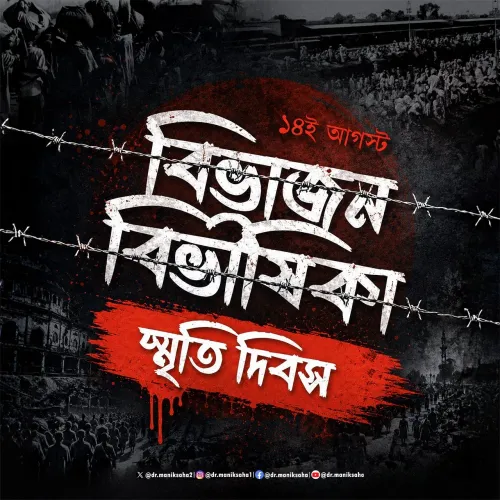
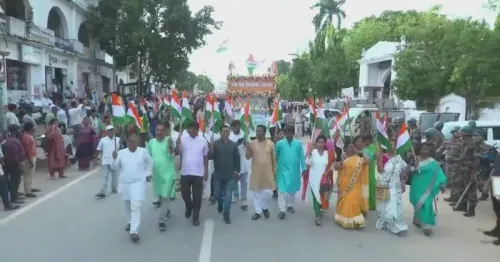
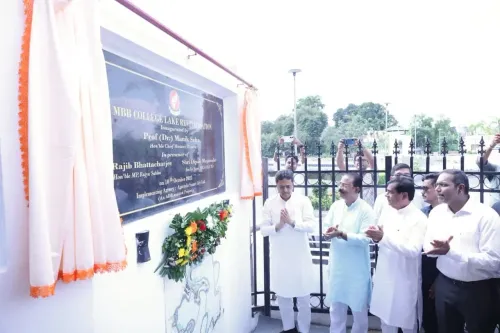
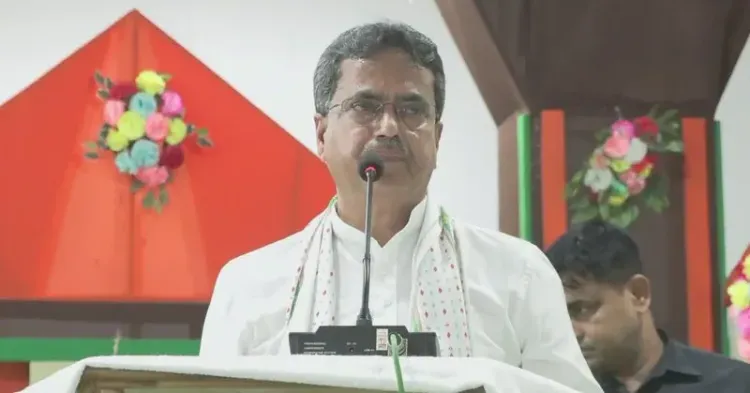
On 14 August 2026, the Chief Minister's Office of Tripura live-streamed the state's Partition Horrors Remembrance Day observance from Maharaja Bir Bikram College in Agartala — a state shaped more than most by the 1947 Partition of Bengal.
Key Takeaways
14 August 2026 : Tripura's CMO live-streamed Partition Horrors Remembrance Day from Maharaja Bir Bikram College (MBB College), Agartala .
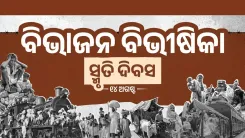
The national observance was declared by the Ministry of Culture via gazette notification in August 2021 , marking 14 August permanently as a day of Partition remembrance.
Tripura received massive refugee inflows after the 1947 Partition of Bengal , making it one of India's most Partition-affected states.
MBB College was established in 1947 , the same year as Partition, and is a regular venue for state-level commemorative events in Agartala.
The live-stream format extends the observance beyond the physical venue, making it publicly accessible across digital platforms.
Seventy-nine years after the bloodiest border-drawing in modern history tore the subcontinent apart, Tripura's Chief Minister's Office on 14 August 2026 live-streamed the state's observance of Partition Horrors Remembrance Day from Maharaja Bir Bikram College, Agartala — a fitting venue in a state that carries the Partition's demographic scars more visibly than almost anywhere else in India.
Why Tripura carries the Partition's weight differently
When the 1947 Partition of Bengal created East Pakistan, Tripura — a small princely state suddenly flanking a new international border — absorbed wave after wave of displaced Hindu Bengali refugees. The demographic transformation was staggering: a state that had been majority indigenous tribal became majority Bengali within decades. No other corner of India felt the human arithmetic of that border quite so viscerally.
Maharaja Bir Bikram College, established in 1947 — the very year of Partition — has since served as a premier government institution in Agartala and a regular venue for state-level commemorative events. Holding the observance here is not incidental; it places memory inside an institution born in the same rupture it is asked to recall.
A national observance with a northeast heartbeat
The Ministry of Culture declared 14 August as Partition Horrors Remembrance Day via gazette notification in August 2021, designating the eve of Independence Day as a permanent moment of collective reckoning with the violence, mass migration, and family separations of 1947. Eastern states — Tripura and West Bengal foremost among them — have held particular resonance in these observances because the Partition literally bisected Bengal, scattering communities across a line drawn in weeks.
The live-stream from MBB College extends that reckoning into the public digital space, making witness-bearing accessible beyond the auditorium walls.
Memory as living policy
Each year's observance renews a question that policy-watchers track: will governments translate remembrance into institutional action — archival projects, oral-history drives, school curricula that give Partition its full, unflinching chapter? For Tripura, where partition-era displacement shaped the state's very social fabric, the stakes of that question are not abstract.
The answer, so far, is still being written — but the fact that a state government is streaming the moment live signals that this is remembrance with an audience in mind, not a quiet ceremony tucked away from view.
On the eve of India's 80th Independence Day, Tripura is asking its people — and anyone watching online — to hold both things at once: the freedom won, and the price paid for it.
Point of View
An institution born in 1947, sharpens that symbolism deliberately. The broader arc here is a gradual shift in how Indian states are operationalising the 2021 gazette declaration: from quiet local ceremonies toward more visible, digitally amplified public acts of remembrance. The unresolved policy question remains whether remembrance will translate into concrete institutional outputs — archives, curricula, oral-history projects — particularly in states like Tripura where the demographic consequences of Partition are still legible in the present.
NationPress
14 Aug 2026
Frequently Asked Questions
What is Partition Horrors Remembrance Day?
Partition Horrors Remembrance Day is observed every year on 14 August to commemorate the violence, displacement, and family separations caused by the 1947 Partition of British India . The Government of India's Ministry of Culture declared it a national observance via gazette notification in August 2021 .
Why is Tripura significant for Partition Remembrance Day?
Tripura shares a border with what was once East Pakistan (now Bangladesh) and received enormous waves of Bengali Hindu refugees after the 1947 Partition of Bengal . The displacement fundamentally altered the state's demographic composition, making it one of the most directly Partition-affected states in India.
Where is MBB College and why was it chosen?
Maharaja Bir Bikram College (MBB College) is a government degree college in Agartala, Tripura , established in 1947 . It is a prominent state institution and a regular venue for official commemorative events, making it a historically resonant choice for the Partition observance.
When was Partition Horrors Remembrance Day declared?
The Ministry of Culture issued a gazette notification in August 2021 formally declaring 14 August as Partition Horrors Remembrance Day, designating it as an annual national observance.
What did the Tripura CMO post about the event?
The Chief Minister's Office of Tripura shared a live-stream link on 14 August 2026 for the Partition Horrors Remembrance Day event being held at MBB College, Agartala , making the observance publicly accessible online.