Tripura exports organic produce to Gulf, opens new market for farmers
Synopsis
Tripura has shipped organic scented lemons, Kalikhasa aromatic rice, and Queen pineapples to Dubai — its second major international export in quick succession after 10,000 kg of bird's eye chilli reached Germany. For a landlocked northeastern state, cracking GCC retail networks that source from 85 countries is a supply-chain achievement that most larger Indian states have not matched in organic produce.
Key Takeaways
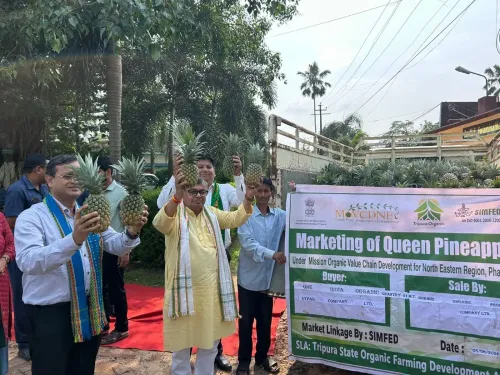
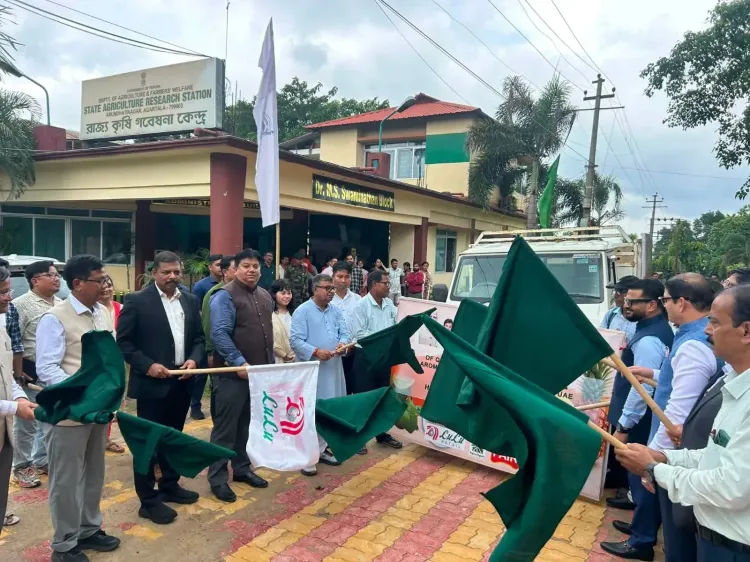
Agriculture Minister Ratan Lal Nath flagged off Tripura's organic export consignment to Dubai on 10 July .
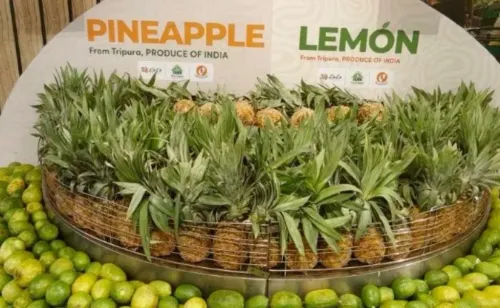
The shipment includes 1,300 organic scented lemons , 182 kg of Kalikhasa aromatic rice , and 350 Queen pineapples .
The Dubai-based partner operates across 6 GCC countries with procurement from over 85 countries .
Tripura recently exported 10,000 kg of organic dried bird's eye chilli to Germany .
Agriculture and Horticulture sectors attracted MoUs worth ₹1,698.4 crore at the Tripura Destination Business Conclave .
TSECL and TREDA signed MoUs worth ₹18,100 crore and ₹13,080 crore respectively at the same conclave.
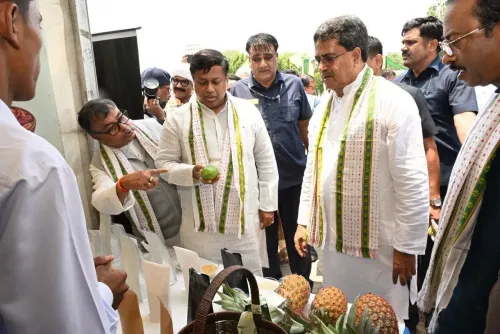
Tripura Agriculture and Farmers' Welfare Minister Ratan Lal Nath on Friday, 10 July flagged off a consignment of the state's organic agricultural products destined for Gulf Cooperation Council (GCC) countries, marking a significant step in connecting Tripura's farmers to international markets. The shipment, routed through a Dubai-based retail organisation, includes organic scented lemons, aromatic rice, and Queen pineapples supplied by local Farmer Producer Companies (FPCs).
What Is Being Exported
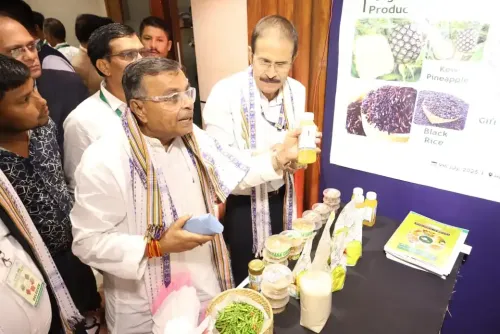
The consignment comprises 1,300 organic scented lemons, 182 kg of organic 'Kalikhasa' aromatic rice, and 350 Queen pineapples, all sourced from various FPCs across the state. Minister Nath described the Dubai-based partner organisation as one of the largest full-fledged retail marketing organisations in the GCC, operating across six GCC countries and maintaining procurement networks spanning more than 85 countries.
The inclusion of Tripura's produce in such a globally connected retail chain, he said, is a matter of pride for the state and is expected to create new income opportunities for local farmers.
Building on Recent Export Milestones
Friday's flagging-off ceremony follows a recent export of 10,000 kg of organic dried bird's eye chilli from Tripura to Germany — a consignment that signalled the state's growing footprint in European markets. Together, the two developments indicate that Tripura's organic produce is gaining traction across multiple international corridors, from Europe to the Gulf.
Notably, both consignments were driven by FPCs, reflecting a structured, collective approach to export readiness rather than individual farmer-level exports. This is the kind of supply-chain organisation that typically takes years to build in smaller states.
State Government's Role in Organic Promotion
Minister Nath said the state government has been consistently strengthening value addition, certification, branding, and market linkages to ensure farmers receive remunerative prices. The organic certification and branding infrastructure behind these exports is central to their international acceptance, as GCC markets — and Germany before them — require verifiable organic standards.
He added that these export successes reflect the hard work and dedication of Tripura's farmers and the growing global recognition of the state's organic farming practices.
Investment Push at Tripura Destination Business Conclave
Separately, Minister Nath — who also holds the power portfolio — noted that the two-day Tripura Destination Business Conclave, which concluded on Friday, generated significant investment commitments. The Tripura State Electricity Corporation Ltd (TSECL) signed Memoranda of Understanding (MoUs) worth ₹18,100 crore, while the Tripura Renewable Energy Development Agency (TREDA) signed MoUs worth ₹13,080 crore.
The Agriculture and Horticulture sectors together attracted MoUs worth ₹1,698.4 crore during the conclave. Nath said additional investment agreements are expected in the coming months, which would further strengthen the state's agricultural and allied sectors.
With Gulf access now established and European exports already underway, Tripura's organic farming ecosystem appears poised for a broader international expansion — provided supply consistency and certification standards are maintained at scale.
Point of View
Both driven by Farmer Producer Companies rather than large agri-corporates, suggest the FPC model is delivering where state-level export schemes have historically stalled. The real test will be whether supply volumes can scale without compromising the organic certification standards that made these exports possible in the first place. The ₹1,698.4 crore in agriculture MoUs from the Business Conclave could help — but MoU-to-disbursement conversion in northeastern states has historically been uneven.
NationPress
10 Oct 2026
Frequently Asked Questions
What organic products did Tripura export to Dubai on 10 July?
Tripura exported 1,300 organic scented lemons, 182 kg of organic Kalikhasa aromatic rice, and 350 Queen pineapples to Dubai on 10 July. The consignment was supplied by Farmer Producer Companies and flagged off by Agriculture Minister Ratan Lal Nath.
Which organisation is receiving Tripura's organic produce in the Gulf?
The consignment is being received by a Dubai-based retail marketing organisation described as one of the largest in the GCC, with operations across six GCC countries and procurement networks in more than 85 countries. The organisation's name was not disclosed in official statements.
Has Tripura exported organic produce internationally before?
Yes. Tripura recently exported 10,000 kg of organic dried bird's eye chilli to Germany, making the Dubai consignment its second major international organic export in quick succession. Both shipments were facilitated through Farmer Producer Companies.
What investment commitments did Tripura attract at its Business Conclave?
The Tripura Destination Business Conclave, which concluded on 10 July, saw TSECL sign MoUs worth ₹18,100 crore and TREDA sign MoUs worth ₹13,080 crore. Agriculture and Horticulture sectors together attracted MoUs worth ₹1,698.4 crore.
How is the Tripura government supporting organic farming exports?
The state government is strengthening value addition, certification, branding, and market linkages to help farmers earn remunerative prices. Minister Ratan Lal Nath said additional investment agreements from the Business Conclave are expected in coming months to further boost the agricultural sector.