Tripura offers rooftop solar panels for ₹1,000 under PM Surya Ghar, 1.5 lakh families targeted
Synopsis
Tripura is offering rooftop solar systems worth ₹66,000 for just ₹1,000 to households using under 50 units of electricity — one of the steepest state-level subsidies under PM Surya Ghar. With 1.5 lakh families in the first phase and a 150 MW target, the state is betting that near-zero cost entry can drive mass adoption where income barriers have historically stalled clean energy transitions.
Key Takeaways
Tripura will provide rooftop solar systems worth ₹66,000 for just ₹1,000 to households consuming fewer than 50 units per month.
An initial 1.5 lakh families have been identified; field work is expected to begin next month .
The state currently generates 11 MW under PM Surya Ghar, with a new target of 150 MW .
Around 17,000 people have registered and nearly 3,500 families have already installed rooftop solar systems.
The rollout is backed by the Asian Development Bank (ADB) ; Germany-based GIZ is providing technical training to engineers and vendors.
Two handbooks in English and Bengali were launched to guide consumers and stakeholders on system operation and maintenance.
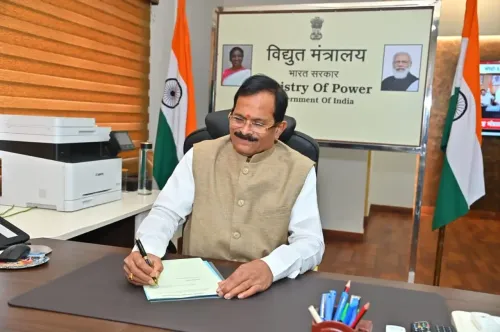
Tripura Power Minister Ratan Lal Nath on Wednesday, 20 May announced that the state government and the Tripura State Electricity Corporation Limited (TSCL) will provide rooftop solar systems worth ₹66,000 for just ₹1,000 to households consuming fewer than 50 units of electricity per month. An initial batch of 1.5 lakh families has already been identified under the PM Surya Ghar: Muft Bijli Yojana, making Tripura one of the more aggressive state-level adopters of the central scheme.
What the Scheme Offers
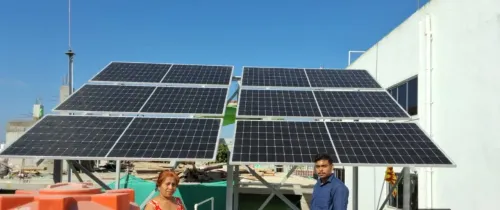
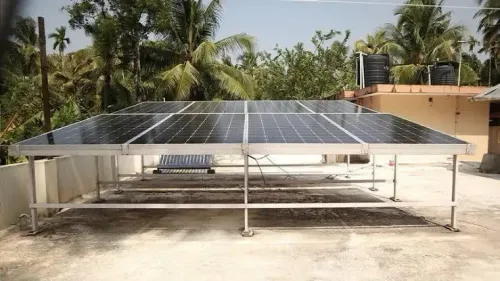
Under the central government's PM Surya Ghar initiative, subsidies are structured by system size: ₹33,000 for a 1 kilowatt system, ₹66,000 for 2 kilowatts, and ₹85,800 for a 3 kilowatt installation. For the lowest-consumption households — those using under 50 units monthly — the state and TSCL are absorbing the residual cost, leaving beneficiaries to pay only ₹1,000 out of pocket for a 2 kW system.
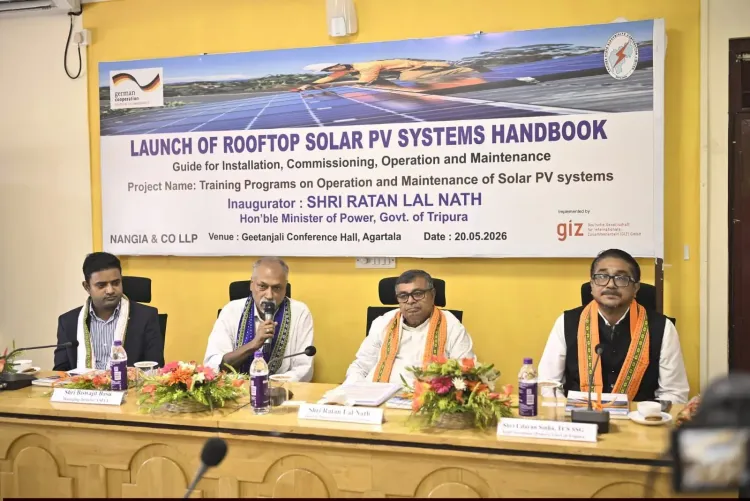
Minister Nath made the announcement while launching a Rooftop Solar Photovoltaic System Handbook at the Geetanjali Government Guest House in Agartala. The handbook, published in both English and Bengali, is designed to guide consumers, vendors, engineers, and bank officials on the operation and maintenance of rooftop solar installations.
Current Progress and New Targets
The scheme has already gathered momentum in the state: approximately 17,000 people have registered under PM Surya Ghar, and close to 3,500 families have completed rooftop solar installations. These installations are currently generating 11 megawatts (MW) of power collectively.
With the expanded push, Tripura is targeting an additional 150 MW of rooftop solar capacity. According to Nath, there are nearly 3 lakh families in the state consuming fewer than 50 units per month; the first phase will cover half of them. Field work is expected to begin as early as next month, with beneficiaries identified through official electricity consumption records.
ADB Partnership and Capacity Building
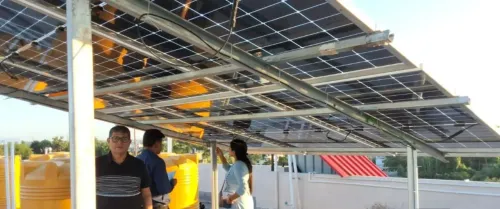
The expansion is being undertaken in collaboration with the Asian Development Bank (ADB), which is co-funding the broader rollout alongside TSCL and the state government. Separately, Germany-based development organisation GIZ has been conducting training programmes for officials, engineers, and vendors on the maintenance and repair of rooftop solar systems — a capacity-building effort that the newly launched handbooks are intended to supplement.
'Earlier, consumers had to pay electricity bills, but now many of them are earning money by supplying power through rooftop solar systems,' Nath said, referring to the net-metering provisions that allow households to sell surplus electricity back to the grid.
Broader Significance
This comes amid a national push to install rooftop solar in 1 crore households under PM Surya Ghar, which was launched by the Centre earlier this year with a substantial outlay. Tripura's low per-capita consumption profile — reflected in its large share of sub-50-unit households — makes it a natural candidate for high penetration, though execution at scale across dispersed rural settlements remains a challenge. Notably, this is one of the first state-level programmes to peg beneficiary contribution as low as ₹1,000, potentially serving as a replicable model for other low-income states.
Point of View
000 is a significant political and policy signal — it essentially removes cost as a barrier for Tripura's poorest electricity consumers. The real test, however, is last-mile execution: identifying and onboarding 1.5 lakh dispersed rural households, ensuring quality installations, and sustaining maintenance in a state with limited technical infrastructure. The GIZ training and bilingual handbooks are steps in the right direction, but grid integration of 150 MW from fragmented rooftop sources will stress TSCL's network management capabilities. If Tripura delivers, the ₹1,000 model could pressure other low-income states to match it — raising the floor on solar equity nationally.
NationPress
23 Sept 2026
Frequently Asked Questions
What is the ₹1,000 rooftop solar scheme in Tripura?
It is a state initiative under the PM Surya Ghar: Muft Bijli Yojana through which the Tripura government and TSCL provide a 2 kW rooftop solar system worth ₹66,000 to households consuming fewer than 50 units of electricity per month for a one-time payment of just ₹1,000. An initial 1.5 lakh families have been identified as beneficiaries.
Who is eligible for the ₹1,000 solar panel scheme in Tripura?
Households in Tripura consuming fewer than 50 units of electricity per month are eligible. There are nearly 3 lakh such families in the state; the first phase covers 1.5 lakh of them, with beneficiaries identified through official electricity consumption records.
What subsidies are available under PM Surya Ghar in Tripura?
Under PM Surya Ghar, the central subsidy is ₹33,000 for a 1 kW system, ₹66,000 for 2 kW, and ₹85,800 for 3 kW. For low-consumption households in Tripura, the state and TSCL absorb the remaining cost, bringing the beneficiary's share down to ₹1,000.
How much solar power is Tripura currently generating under PM Surya Ghar?
Tripura is currently generating 11 MW of electricity through rooftop solar installations under the PM Surya Ghar scheme. The state has set a new target of 150 MW as it scales up to cover 1.5 lakh additional families.
What role does the Asian Development Bank play in Tripura's solar expansion?
The Asian Development Bank (ADB) is collaborating with TSCL and the Tripura state government to fund and implement the expanded rooftop solar rollout. Separately, Germany-based GIZ is providing technical training to officials, engineers, and vendors on maintenance and repair of solar systems.