Umar Khalid moves Delhi High Court for interim bail in 2020 riots case
Synopsis
Despite a track record of honouring bail conditions, Umar Khalid has now been denied interim relief by a trial court — and is appealing to the Delhi High Court — on grounds as personal as a mourning ritual and a mother's surgery. The repeated rejections, capped by a Supreme Court dismissal earlier this year, underscore how stringent the UAPA's bail threshold remains in practice.
Key Takeaways
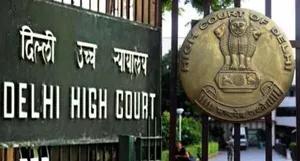
Umar Khalid filed a petition before the Delhi High Court on Thursday challenging a trial court order denying him interim bail.
He sought temporary release to attend the Chehlum of his late uncle Khursheed Ahmad Khan on 24 May and to assist his mother ahead of surgery on 2 June .
Additional Sessions Judge Sameer Bajpai of Karkardooma Court dismissed the plea, calling the grounds 'unreasonable'.
A bench of Justice Prathiba M.
Singh and Justice Madhu Jain is scheduled to hear the High Court petition on Friday .
Khalid has been in custody since September 2020 under UAPA ; the Supreme Court dismissed his regular bail plea and review petition in 2025 .
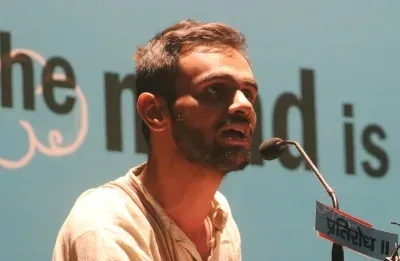
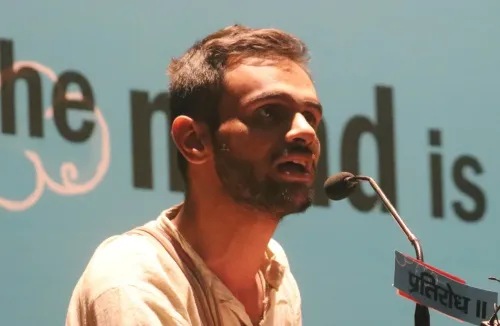
Jailed student activist Umar Khalid has approached the Delhi High Court, challenging a trial court order that denied him interim bail in the alleged larger conspiracy case tied to the 2020 Delhi riots. The petition, filed on Thursday, seeks temporary release on humanitarian grounds — to attend the Chehlum ceremony of his late uncle and to care for his ailing mother ahead of a scheduled surgery.
What Khalid's Petition Seeks
According to the plea, Khalid's uncle, Khursheed Ahmad Khan, passed away on 10 April, and the 40th-day mourning ritual (Chehlum) is scheduled to be held in Delhi on 24 May. Separately, his mother has been advised surgery for lump excision on 2 June at a private hospital.
The petition argued that Khalid, described as the eldest and only son in the family, is required to support his mother before and after the procedure. His 71-year-old father is reportedly not in a position to provide adequate care, while his five sisters live away from the parental home after marriage.
As per the causelist on the official Delhi High Court website, a bench of Justice Prathiba M. Singh and Justice Madhu Jain is scheduled to hear the matter on Friday.
How the Trial Court Ruled
Earlier, Additional Sessions Judge Sameer Bajpai of the Karkardooma Court dismissed Khalid's interim bail application filed under Section 483 of the Bharatiya Nagarik Suraksha Sanhita (BNSS), read with Section 439 of the CrPC.
Rejecting the first ground, the court said: 'Attending the Chehlum ceremony of his uncle is not that necessary.' On the surgery ground, it noted that Khalid has multiple family members who can support his mother. 'Accordingly, finding the reasons unreasonable, the Court doesn't deem it appropriate to grant the desired relief to the applicant. The application is dismissed,' the order stated.
Prosecution's Stand
The Special Public Prosecutor opposed the plea, contending that Khalid was attempting to misuse the court's leniency and that the grounds raised were not compelling. The prosecution argued that Khalid's uncle did not fall within the category of 'close relations' and that the mother's procedure was a 'minor surgery' requiring only local anaesthesia — one that his sisters and father could manage.
Khalid's Custody and Legal History
Khalid has been in judicial custody since September 2020 under provisions of the Unlawful Activities (Prevention) Act (UAPA) and related offences. He faces allegations in the alleged larger conspiracy case, in which the Delhi Police has claimed that several student activists involved in protests against the Citizenship Amendment Act (CAA) during 2019–2020 conspired to engineer the riots that erupted in North-East Delhi in February 2020.
He has previously been granted interim bail on multiple occasions — including short spells in 2022, 2024, and 2025 — and has reportedly surrendered on time each instance. In December 2024, a Delhi court allowed him 14 days of interim bail to attend his sister's wedding, subject to strict conditions including restrictions on movement and social media use.
Earlier this year, the Supreme Court dismissed bail pleas filed by both Khalid and co-accused Sharjeel Imam, holding that prosecution material disclosed prima facie grounds attracting the statutory embargo on bail under Section 43D(5) of the UAPA. Khalid's subsequent review petition was also dismissed by the top court in April 2025.
The Delhi High Court's ruling on the fresh interim bail plea will be closely watched, given the prolonged nature of the trial and the repeated rejections at multiple judicial levels.
Point of View
Leaving humanitarian interim relief as the only available lever. Yet trial courts are now applying near-identical scrutiny to short-term pleas, treating each application as a fresh merits exercise rather than acknowledging a pattern of compliance. The broader question — whether indefinite pre-trial detention under UAPA, now stretching beyond four years, is consistent with constitutional guarantees — remains conspicuously unanswered by the courts hearing this case.
NationPress
5 Oct 2026
Frequently Asked Questions
Why has Umar Khalid approached the Delhi High Court?
Umar Khalid has challenged a trial court order that rejected his interim bail application in the 2020 Delhi riots conspiracy case. He sought temporary release to attend his uncle's Chehlum ceremony on 24 May and to care for his mother before her surgery on 2 June.
What did the trial court say when it dismissed his plea?
Additional Sessions Judge Sameer Bajpai of Karkardooma Court found the stated grounds 'unreasonable', noting that attending a Chehlum for an uncle was 'not that necessary' and that Khalid's family members could support his mother during her minor surgery.
How long has Umar Khalid been in custody?
Khalid has been in judicial custody since September 2020 — over four years — under the Unlawful Activities (Prevention) Act (UAPA) and related offences in connection with the alleged larger conspiracy case tied to the February 2020 North-East Delhi riots.
What is Umar Khalid's bail history in this case?
Khalid has been granted interim bail on multiple occasions, including in 2022, 2024, and 2025, and has reportedly complied with all conditions each time. However, the Supreme Court dismissed his regular bail plea and a subsequent review petition in 2025, citing prima facie grounds under Section 43D(5) of the UAPA.
What is the 2020 Delhi riots conspiracy case?
The case relates to riots that broke out in North-East Delhi in February 2020, in which the Delhi Police alleges that student activists involved in anti-CAA protests during 2019–2020 conspired to engineer the violence. Several accused, including Khalid and Sharjeel Imam, are charged under the UAPA among other offences.