What Historic Changes are Anticipated in Part B of the Union Budget?
Synopsis
As the Indian government gears up to present the 2026-27 Union Budget, a historic shift in Part B promises detailed insights into economic directions and policies. This unprecedented focus aims to illuminate India’s growth priorities amid a shifting global landscape, making this a pivotal moment for the nation.
Key Takeaways
Part B of the Budget will provide unprecedented detail on economic reforms.
The government aims to balance short-term stability with long-term growth .
Focus on sectors like defence and infrastructure is anticipated.
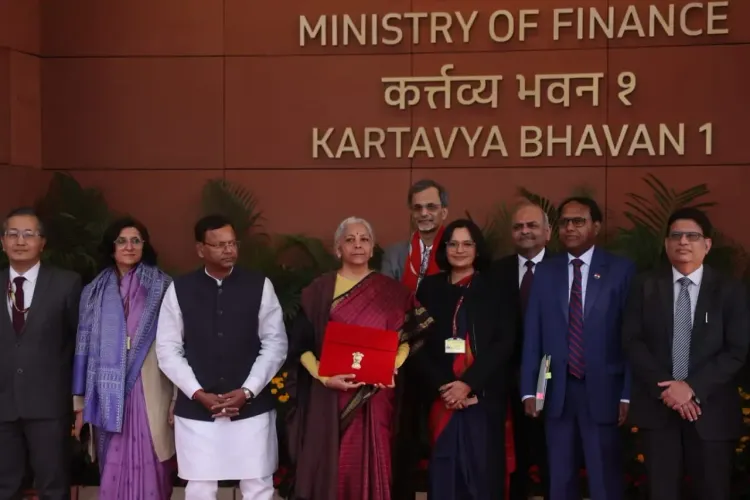
FM Sitharaman will present the budget for the ninth consecutive time .
This marks a significant shift in the transparency of fiscal planning.
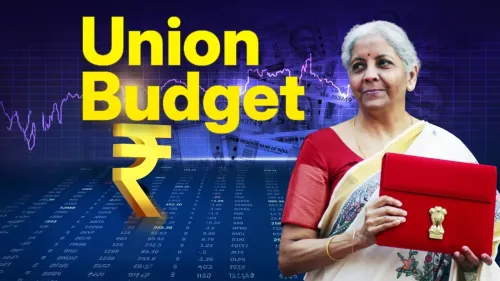
New Delhi, Feb 1 (NationPress) The Indian government is preparing to unveil the Union Budget for 2026-27, with Part B of the Budget document anticipated to include unprecedented detail and a pronounced focus on economic direction and policy reforms for the first time. This segment will provide directional insights on growth priorities and the nation’s evolving role in a changing global economy.
The Union Budget is structured into two segments: A and B, where Part B primarily focuses on tax proposals and select updates, while Part A encompasses the majority of detailed policy announcements.
This year's Budget marks a significant transformation in the structure of the Finance Minister's address, as per government officials.
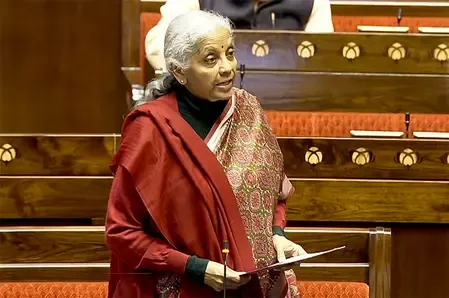
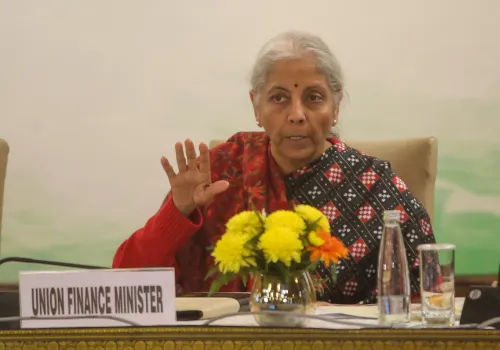
Finance Minister Nirmala Sitharaman is set to dedicate an extraordinary level of detail to Part B, which is projected to act not merely as a tax policy outline but as an extensive statement regarding India's economic trajectory.
Officials indicate that Part B will outline both immediate priorities aimed at ensuring economic stability and long-term goals that will influence India’s growth path.
The section is expected to introduce a framework to enhance India's local strengths on the global stage, emphasizing sectors where the nation has competitive advantages while also highlighting emerging sectors.
This year’s focus is anticipated to be on defence, infrastructure, capital expenditure, power, and promoting growth in affordable housing, alongside a commitment to balancing social welfare with fiscal prudence. Additionally, policymakers are tasked with harmonizing growth objectives with fiscal discipline amid heightened global uncertainty.
The Budget aims to achieve a careful equilibrium between sustaining growth momentum and ensuring fiscal consolidation. It must also tackle immediate challenges arising from unprecedented geopolitical shifts, economists have noted.
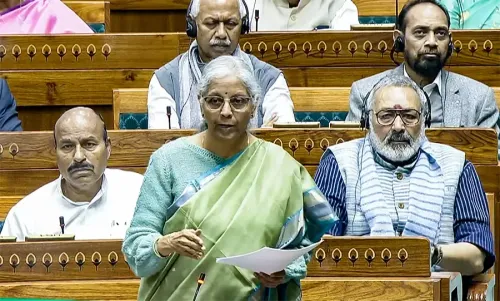
FM Sitharaman will present the 15th Budget under Prime Minister Narendra Modi’s administration. This will also be the second complete Budget since the National Democratic Alliance (NDA) assumed power for a third consecutive term in 2024.
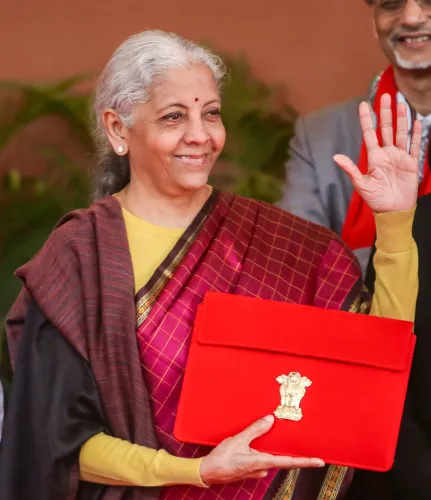
Sitharaman, as the first female finance minister to deliver the Budget in Parliament for the ninth consecutive time, is expected to take a more selective approach to stimulating consumption in the FY27 Budget, contrasting with the FY26 Budget that focused more on tax reliefs for the middle class.
Point of View
The government's focus on detailed economic direction in the upcoming Union Budget is a prudent strategy. It reflects a commitment to both immediate stability and long-term growth, ensuring that India remains competitive on the global stage. We, as a nation, must support these efforts for a sustainable economic future.
NationPress
13 Oct 2026
Frequently Asked Questions
What is the significance of Part B in the Union Budget?
Part B of the Union Budget is significant as it provides detailed insights into the government's economic direction and policy reforms, marking a shift towards transparency in fiscal planning.
How will the budget impact India's growth?
The budget is expected to outline both short-term measures for economic stability and long-term strategies to enhance India's growth trajectory.
What sectors are likely to be emphasized in the budget?
Key sectors likely to receive attention include defence, infrastructure, capital expenditure, power, and affordable housing.
Who is presenting the budget?
The budget will be presented by Finance Minister Nirmala Sitharaman, who is making history as the first woman to do so for the ninth consecutive time.
What challenges is the budget expected to address?
The budget must address immediate challenges stemming from global geopolitical uncertainties while balancing growth and fiscal discipline.