Union Minister Joshi hails women’s reservation decision
Synopsis
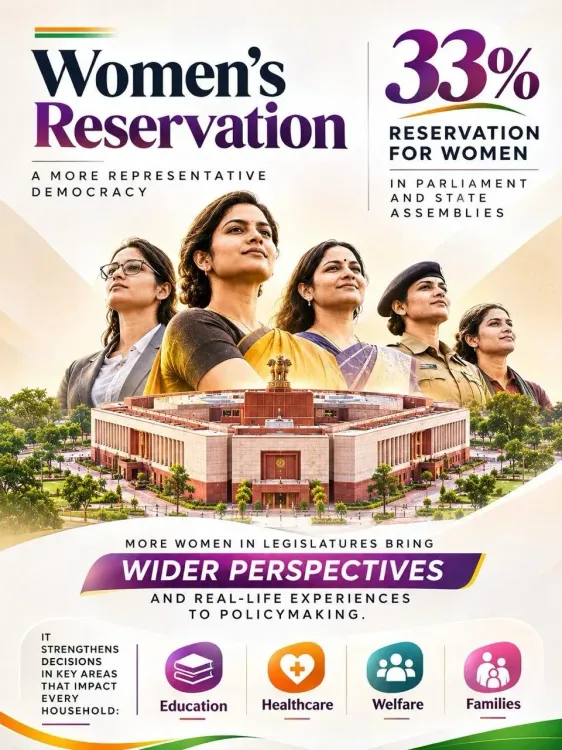
Union Consumer Affairs Minister Pralhad Joshi on 28 November 2026 hailed the Union Cabinet’s decision under Prime Minister Narendra Modi to ensure women’s reservation, calling it a historic step toward women-led development and a larger role for Nari Shakti in Viksit Bharat.
Key Takeaways
Union Consumer Affairs Minister Pralhad Joshi on 28 November 2026 praised a Union Cabinet decision to ensure women’s reservation.
He said the step would strengthen women’s role in decision-making and leadership under Prime Minister Narendra Modi .
Joshi framed the move as a shift from women’s empowerment to women-led development and Nari Shakti in Viksit Bharat .
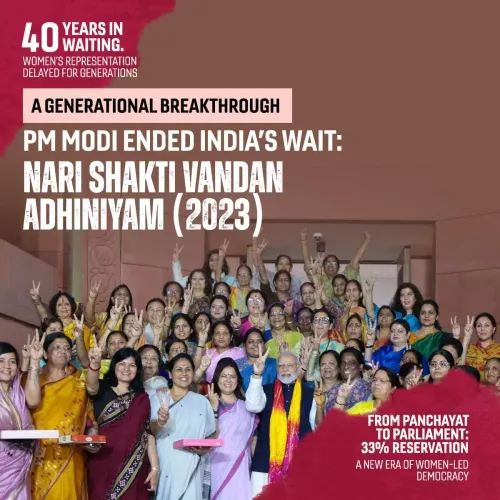
Parliament in September 2023 passed the Nari Shakti Vandan Adhiniyam, reserving one-third of Lok Sabha and assembly seats for women.
The 73rd and 74th Amendments of the 1990s already reserved seats for women in panchayats and municipalities.
Implementation of the legislative quota still depends on the next census and a delimitation exercise.
Union Consumer Affairs Minister Pralhad Joshi on 28 November 2026 called the Union Cabinet’s decision under Prime Minister Narendra Modi a historic step to ensure women’s reservation and to put Nari Shakti at the centre of national decision-making. Speaking from the government’s New Delhi power centre, the Karnataka BJP leader framed the move as a shift from empowerment slogans to women-led development in the Viksit Bharat project.
In a bilingual English and Kannada post, Joshi wrote that it was ‘a historic step towards a more inclusive and representative democracy.’ The Cabinet’s call ‘to ensure women’s reservation,’ he said, would strengthen women’s presence in leadership. The Kannada text, ಎಲ್ಲರನ್ನೂ ಒಳಗೊಂಡ ಬಲಿಷ್ಠ ಪ್ರಜಾಪ್ರಭುತ್ವದತ್ತ ಇದೊಂದು ಐತಿಹಾಸಿಕ ಹೆಜ್ಜೆ (an historic stride toward a strong democracy that includes everyone), carried the same charge: not just empowerment, but women steering development, with a larger role for Nari Shakti in building #ViksitBharat.
Nari Shakti Vandan Adhiniyam’s long parliamentary road
Parliament in September 2023 enacted the Constitution (One Hundred and Twenty-Eighth Amendment) Bill, known as the Nari Shakti Vandan Adhiniyam, reserving one-third of seats for women in the Lok Sabha and in state assemblies. The bill first arrived in 1996. It survived repeated collapses, including a Rajya Sabha passage in 2010 that later lapsed, before the 2023 House finally wrote it into the Constitution.
That national quota sits on an older local foundation. The 73rd and 74th Amendments of the 1990s already reserved seats for women in panchayats and municipalities. Joshi’s post places the Cabinet’s latest emphasis in that arc: from the village council to the national legislature, and from reserved benches to a claim on leadership itself.
Census and delimitation still hold the clock
The one-third promise does not land on election day by announcement. It is locked to the next census and a subsequent delimitation exercise before reserved seats can apply to Lok Sabha and assembly polls. Until those two processes finish, the constitutional guarantee remains on the statute book, not yet on the ballot paper.
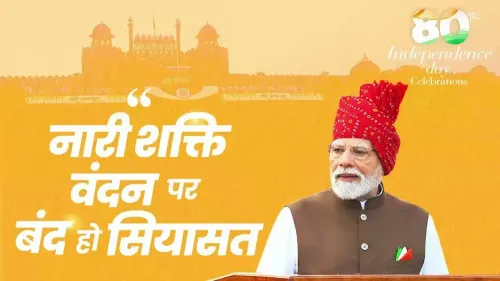
Joshi tied the Cabinet decision to a larger slogan of the Modi years: moving ‘beyond women’s empowerment to women-led development,’ and giving Nari Shakti a greater role in a developed India by 2047. The political test is now a calendar test. When census and delimitation redraw the map, the reservation he celebrated will either enter the next election cycle — or wait for the one after that.
Point of View
The Centre has treated one-third legislative reservation as proof of a shift from welfare-style empowerment to women-led development. The unresolved census-and-delimitation lock remains the real political clock, because seats cannot be reserved until those exercises are done. The message does not reopen the older fight over OBC sub-quotas; it keeps the story on inclusion, leadership, and 2047.
NationPress
28 Nov 2026
Frequently Asked Questions
What did Pralhad Joshi say about the Union Cabinet and women’s reservation?
Union Consumer Affairs Minister Pralhad Joshi on 28 November 2026 called the Cabinet’s decision under Prime Minister Narendra Modi a historic step to ensure women’s reservation. He said it would strengthen women’s representation in decision-making and leadership and move the country from empowerment to women-led development.
What is the Nari Shakti Vandan Adhiniyam?
It is the Constitution (One Hundred and Twenty-Eighth Amendment) enacted in September 2023, reserving one-third of seats for women in the Lok Sabha and state assemblies. The idea was first introduced in Parliament in 1996 and had failed several times before the 2023 law.
When will the 33 percent women’s reservation apply to Lok Sabha elections?
The quota cannot apply until after the next census and a subsequent delimitation exercise. Until those two processes are completed, the reservation remains in the Constitution but is not yet in force for parliamentary and assembly elections.
Who is Pralhad Joshi?
Pralhad Joshi is the Union Minister of Consumer Affairs, Food and Public Distribution and Minister of New and Renewable Energy. He is a senior BJP leader from Karnataka.
How is women’s reservation linked to Viksit Bharat?
Joshi said the Cabinet decision gives Nari Shakti a greater role in shaping Viksit Bharat, the government’s vision of a developed India by 2047. He described it as a resolve to go beyond women’s empowerment to women-led development.