UP 2027: BJP, SP dismiss AIMIM-ASP alliance; Congress frames race as Modi vs Rahul
Synopsis
Every major party in Uttar Pradesh dismissed the AIMIM-ASP alliance on the same day it was announced — but the speed and volume of the rebuttals reveal real anxiety about vote-splitting ahead of 2027. With the SP calling the alliance a BJP 'B-team' and Congress reframing the race as Modi vs Rahul, UP's pre-poll positioning is already shaping up as fiercely contested terrain.
Key Takeaways
BJP, SP, Congress and RLD all dismissed the AIMIM-ASP alliance on 12 November 2026 , ahead of the UP Assembly election 2027 .
UP Minister Girish Chandra Yadav said the alliance would have no impact on the BJP , predicting another BJP government in 2027.
Shiv Sena's Shaina N.C. noted that both AIMIM and ASP won zero seats in 2022 despite contesting 133 seats combined.
SP MP Jitendra Kumar Dohare alleged that Owaisi and Chandrashekhar function as the BJP's B-team , seeking to split opposition votes.
Congress MP Imran Masood framed the UP contest as a direct fight between PM Narendra Modi and Rahul Gandhi .
Tyagi said the alliance would not affect NDA prospects but could make the campaign more competitive.
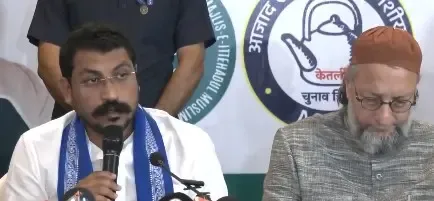
The Bharatiya Janata Party (BJP), the Samajwadi Party (SP), the Indian National Congress, and the Rashtriya Lok Dal (RLD) on Thursday, 12 November 2026, collectively downplayed the electoral significance of the newly announced AIMIM-Azad Samaj Party (ASP) alliance ahead of the Uttar Pradesh Assembly election scheduled for 2027. While each party drew different conclusions about the alliance's impact, the unanimous verdict from across the political spectrum was that the tie-up between AIMIM chief Asaduddin Owaisi and ASP-Kanshi Ram chief Chandrashekhar Aazad would not decisively alter the state's electoral arithmetic.
BJP: 'No Alliance Can Stop Us'
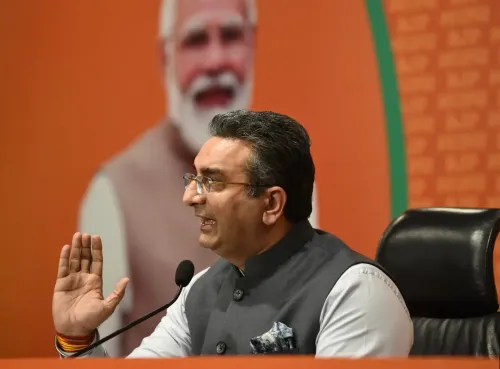
Uttar Pradesh Minister Girish Chandra Yadav was dismissive of the alliance's reach, saying: 'Let them contest on 200 seats; it is not going to have any impact on us, the Bharatiya Janata Party. And no alliance or front can stop the BJP.' He invoked the SP's failed 'Vijay Yatra' ahead of the 2022 Assembly election, when the BJP retained power with a majority exceeding two-thirds of seats. 'In 2027 as well, under the leadership of the illustrious Chief Minister of Uttar Pradesh, a BJP government will be formed; no one on earth can stop it,' he added.
Shiv Sena leader Shaina N.C. pointed to the alliance partners' dismal track record in 2022, noting that Owaisi's AIMIM won zero of the 100 seats it contested, while Chandrashekhar Aazad's ASP won zero of 33 seats. 'Zero means zero, and this time too, zero means zero,' she said, cautioning against identity-based politics. BJP MLA Ram Kadam acknowledged the democratic right to form alliances but questioned whether the two parties had any concrete agenda on development, education, or law and order. BJP leader Mukhtar Abbas Naqvi was equally dismissive, saying the alliance partners 'know there is no political space for them' and were acting for 'a little happiness and self-satisfaction.'
SP: 'The Public Has Already Decided'
SP MP Awadhesh Prasad asserted that voters in Uttar Pradesh had resolved to remove the BJP from power, insisting that only the SP-led PDA-INDI Alliance under Akhilesh Yadav had the strength to do so. 'The public knows very well who they are meeting for and who they are meeting to help win; the public is no longer under any illusion,' he said. SP spokesperson Udayveer Singh maintained that his party's sole objective remained ousting the BJP, adding that all parties were free to form alliances as per their 'convenience and understanding.'
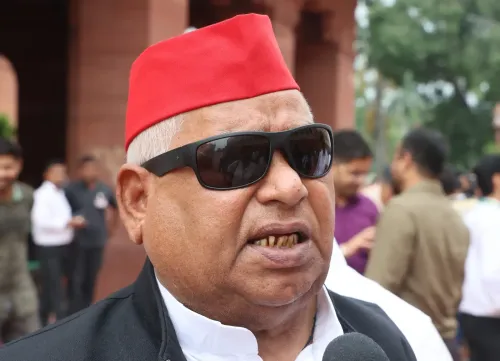
SP MP Jitendra Kumar Dohare went further, alleging that both Owaisi and Chandrashekhar were effectively working in the BJP's interest. 'They are the BJP's B-team,' he said, claiming the duo sought to split votes away from the SP. This 'B-team' charge — a standard SP attack line against smaller parties contesting Muslim and Dalit-heavy constituencies — reflects a broader concern that vote-splitting in triangular contests could benefit the BJP even if the alliance wins no seats outright.
Congress: This Is a Two-Way National Contest
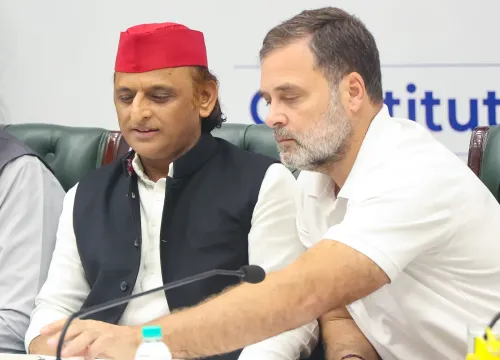
Congress MP Imran Masood reframed the entire UP election within a national political narrative, arguing that the real contest was between Prime Minister Narendra Modi and Leader of the Opposition in the Lok Sabha Rahul Gandhi. 'The fight is clearly between Rahul Gandhi and Narendra Modi. There is no middle ground,' he said. The Congress framing is notably distinct from both the BJP and SP — it subordinates regional alliance calculations to what the party portrays as a binary national choice.
RLD: Exciting but Not a Threat to NDA
RLD leader K.C. Tyagi offered a more measured assessment, saying the alliance posed no threat to the National Democratic Alliance (NDA)'s electoral agenda but could inject 'more excitement and aggression' into the campaign. His comments reflect the RLD's position as a junior NDA partner in Uttar Pradesh, where it has sought to consolidate Jat and western UP support within the ruling coalition.
What This Signals for 2027
This comes amid a broader pre-poll realignment across Uttar Pradesh, with smaller parties announcing alliances and positioning ahead of a state that sends 80 Lok Sabha seats and is widely seen as the single most consequential battleground in Indian politics. Notably, the AIMIM-ASP alliance's decision to field candidates on a large number of seats — reportedly up to 200 — mirrors a strategy that failed in 2022, raising questions about whether the two parties can convert a combined social base of Muslim and Dalit voters into actual seats in a first-past-the-post system. The formation of the alliance, and the speed with which every rival party rushed to dismiss it, itself signals that vote-splitting anxieties remain live beneath the confident public posturing. How the alliance performs in seat selection and campaigning over the coming months will determine whether these dismissals hold.
Point of View
But risks erasing the SP's ground-level coalition work. With Uttar Pradesh deciding 80 Lok Sabha seats, every alliance announcement between now and polling day will be watched not for its headline seat count but for where, precisely, it draws votes from.
NationPress
12 Nov 2026
Frequently Asked Questions
What is the AIMIM-ASP alliance and why does it matter for UP 2027?
The AIMIM-ASP alliance is a tie-up between Asaduddin Owaisi's All India Majlis-e-Ittehadul Muslimeen (AIMIM) and Chandrashekhar Aazad's Azad Samaj Party (ASP-Kanshi Ram) , targeting Muslim and Dalit voters in Uttar Pradesh ahead of the 2027 Assembly election. The alliance is seen by rival parties as a potential vote-splitter in key constituencies, though both AIMIM and ASP won zero seats in the 2022 UP Assembly election despite contesting a combined 133 seats.
How did the BJP respond to the AIMIM-ASP alliance announcement?
BJP leaders dismissed the alliance entirely. UP Minister Girish Chandra Yadav said it would have no impact on the BJP, while Shiv Sena's Shaina N.C. noted both parties returned zero seats in 2022. BJP MLA Ram Kadam acknowledged the democratic right to form alliances but questioned the alliance's development agenda for Uttar Pradesh.
Why is the Samajwadi Party calling AIMIM and ASP the BJP's 'B-team'?
SP MP Jitendra Kumar Dohare alleged that both Owaisi and Chandrashekhar Aazad contest elections in ways that split Muslim and Dalit votes away from the SP, indirectly benefiting the BJP. The 'B-team' label is a recurring SP attack line, reflecting the party's concern that triangular contests in key constituencies can hand victories to the BJP even without direct support.
What is Congress's position on the UP 2027 election?
Congress MP Imran Masood framed the UP election as a direct national contest between Prime Minister Narendra Modi and Leader of the Opposition Rahul Gandhi, saying there was 'no middle ground.' This positioning elevates Rahul Gandhi's national profile but deliberately sidesteps the question of alliance arithmetic on the ground.
What was the AIMIM and ASP's performance in the 2022 UP Assembly election?
Both parties performed poorly in 2022. AIMIM contested 100 seats and won zero, while ASP-Kanshi Ram contested 33 seats and also won zero — a combined tally of zero from 133 contested seats. Critics, including Shiv Sena's Shaina N.C., cited these figures to question whether the new alliance could change electoral outcomes in 2027.