UP Census 2027 Phase I launched: CM Yogi flags off house listing across 75 districts
Synopsis
India's first digital census is now underway in Uttar Pradesh — and it comes with two historic firsts: caste enumeration and the inclusion of forest villages. With a significant data gap since the last completed census in 2011, the stakes for accurate enumeration have never been higher for welfare targeting, delimitation, and resource allocation.
Key Takeaways
CM Yogi Adityanath launched Census 2027 Phase I in Uttar Pradesh on 7 May 2026 in Lucknow .
Self-enumeration on the digital platform is open from 7 May to 21 May 2026 .
Caste enumeration and coverage of forest villages are included for the first time.
The exercise covers 75 districts , 57,694 gram panchayats , and approximately 1.04 lakh revenue villages across UP.
UP's estimated population stands at 25.70 crore — roughly one-sixth of India's total.
India's last completed census was in 2011 ; the 2021 census was deferred due to COVID-19 .
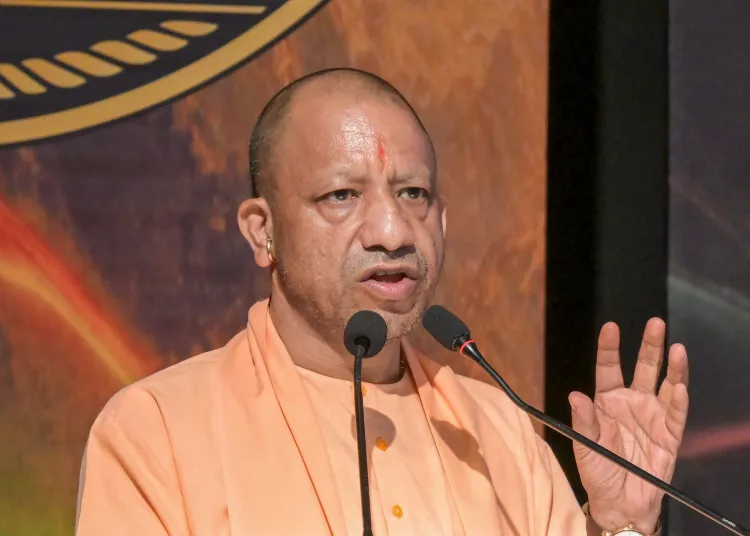
Uttar Pradesh Chief Minister Yogi Adityanath on Thursday, 7 May 2026, formally launched the first phase of Census 2027 in the state, inaugurating house listing and housing census operations at a programme held at his official residence in Lucknow. The drive, themed 'Hamari Janaganana, Hamara Vikas' (Our Census, Our Development), covers an estimated population of 25.70 crore across 75 districts.
What Phase I Covers
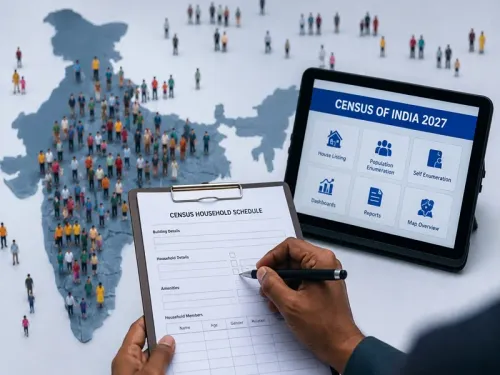
The first phase focuses exclusively on house listing and housing census. Citizens have been given a self-enumeration window from 7 May to 21 May 2026, during which they can enter their details directly on a dedicated digital platform. Following this, census personnel will conduct door-to-door listing under field operations.
The second phase will cover individual enumeration. Notably, caste enumeration has been included in Census 2027 for the first time, as have forest villages — another first in the country's census history.
Scale of the Exercise in UP
The census exercise in Uttar Pradesh will span 18 divisions, 75 districts, 350 tehsils, 17 municipal corporations, 745 other urban local bodies, 21 cantonment boards, 57,694 gram panchayats, and approximately 1 lakh 4 thousand revenue villages. The sheer administrative scale makes Uttar Pradesh one of the most complex census operations in the country, given that the state alone accounts for roughly one-sixth of India's total population.
What CM Yogi Said
"Census is not merely a count of population, but a strong foundation for holistic, inclusive, and well-planned development," said Chief Minister Yogi Adityanath. He appealed to every resident to participate and provide accurate information, warning that incomplete data could distort development planning. He added that the present era is driven by data-based decisions, and census data plays a critical role in the effective implementation of infrastructure, education, healthcare, social security, and public welfare schemes.
Adityanath also stated that, under the guidance of Prime Minister Narendra Modi, a digital census is being conducted in the country for the first time. A special census portal has been developed to enable real-time monitoring of work up to the village and ward level.
Why This Census Matters
India's last census was conducted in 2011; the scheduled 2021 census was deferred due to the COVID-19 pandemic, leaving a significant data gap that has complicated welfare targeting, delimitation planning, and resource allocation across states. Census 2027 is therefore not just a routine exercise — it is a critical recalibration of the country's demographic baseline. The inclusion of caste data, in particular, carries significant political and policy weight, as successive governments have debated its necessity for targeted affirmative action.
The digital-first approach — self-enumeration portals, real-time monitoring dashboards, and a dedicated census portal — represents a structural shift from the paper-based processes used in previous cycles. Officials say this will reduce enumeration errors and speed up data publication timelines.
What Comes Next
After the self-enumeration window closes on 21 May 2026, field enumerators will begin door-to-door visits to verify and supplement entries. Phase II, covering individual enumeration including caste data, is expected to follow later in the year. The Chief Minister urged every citizen to ensure they are counted at only one location and to provide accurate information to enable precise development planning.
Point of View
Parliamentary delimitation calculations, and fiscal federalism. The inclusion of caste data is the most politically charged element: while it has bipartisan support in principle, the methodology and publication framework remain undefined, leaving room for both policy utility and political exploitation. The digital-first model is promising, but UP's vast rural geography — over a lakh revenue villages — will test whether self-enumeration portals can reach those who need welfare most but are least likely to navigate a digital platform. How the Centre handles caste data publication will be the defining political and administrative test of this census cycle.
NationPress
22 Sept 2026
Frequently Asked Questions
What is Census 2027 Phase I in Uttar Pradesh?
Census 2027 Phase I in Uttar Pradesh covers house listing and housing census operations launched on 7 May 2026 by Chief Minister Yogi Adityanath. Citizens can self-enumerate on a digital platform between 7 May and 21 May 2026, after which field enumerators will conduct door-to-door verification.
Why is caste enumeration significant in Census 2027?
Caste enumeration has been included in Census 2027 for the first time, a move with major implications for affirmative action policy and welfare targeting. India has not had comprehensive published caste data since the Socio-Economic and Caste Census of 2011, which was never fully released.
Why was the census delayed from 2021?
The Census scheduled for 2021 was deferred due to the COVID-19 pandemic, creating a significant gap since the last completed census in 2011. This gap has affected welfare scheme targeting, delimitation planning, and state-level resource allocation.
How large is the census exercise in Uttar Pradesh?
The UP census covers 18 divisions, 75 districts, 350 tehsils, 17 municipal corporations, 57,694 gram panchayats, and approximately 1.04 lakh revenue villages. The state's estimated population is 25.70 crore.
What is new about Census 2027 compared to previous censuses?
Census 2027 is India's first digital census, featuring a self-enumeration portal and real-time monitoring up to village and ward level. It also includes caste enumeration and coverage of forest villages — both firsts in India's modern census history.