Is Census 2027 the Most Ambitious Digital Count Yet?
Synopsis
The Union Cabinet's approval for Census 2027 signifies a groundbreaking leap into digital data collection and demographic analysis, promising inclusivity with caste enumeration and an innovative self-enumeration option for citizens. This ambitious project could reshape India's data landscape.
Key Takeaways
Census 2027 will be India’s first fully digital census.
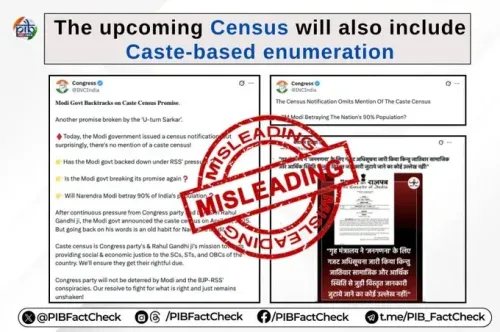
It includes caste enumeration for the first time.
Citizens can self-enumerate through a secure online platform.
Approximately 30 lakh personnel will be involved.
Real-time tracking of fieldwork will be enabled through a dedicated portal.
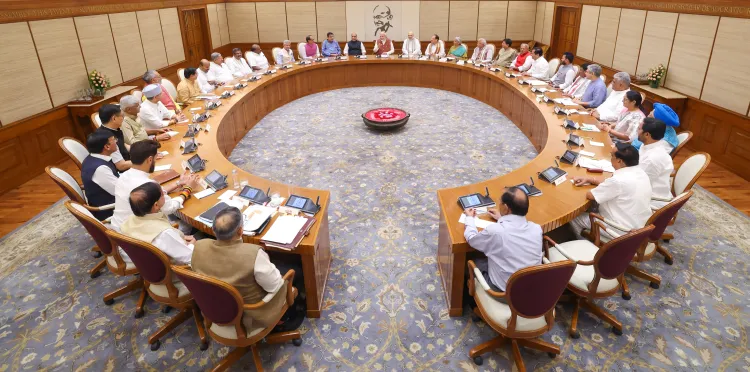
New Delhi, Dec 12 (NationPress) The Union Cabinet, led by Prime Minister Narendra Modi, has given its approval for the Census of India 2027, with an estimated expenditure of Rs 11,718.24 crore. This historic initiative marks India’s first fully digital census and stands as one of the largest administrative undertakings globally.
The census will unfold in two distinct phases: the Houselisting and Housing Census from April to September 2026, followed by the Population Enumeration scheduled for February 2027.
In regions like Ladakh and the snow-affected areas of Jammu & Kashmir, Himachal Pradesh, and Uttarakhand, the Population Enumeration will occur earlier, in September 2026, to account for adverse weather conditions.
Largest digital enumeration exercise
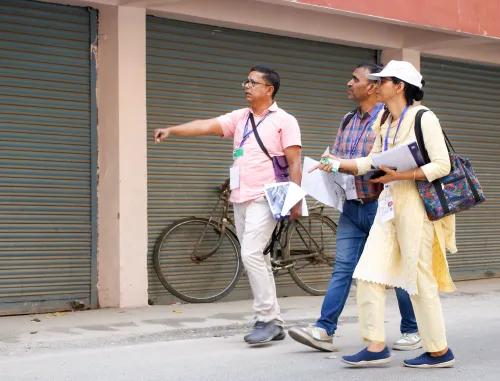
Approximately 30 lakh field personnel, including enumerators, supervisors, master trainers, and census officers, will be engaged in this operation. For the first time, data collection will be facilitated through mobile applications available on both Android and iOS.
A specialized Census Management & Monitoring System (CMMS) portal has been designed for real-time monitoring of field activities, while a new Houselisting Block (HLB) Creator web-mapping tool will aid charge officers in digitally outlining enumeration regions.
Caste enumeration to be included
In a pivotal decision, the Cabinet Committee on Political Affairs approved the inclusion of caste enumeration during the census. This data will be electronically collected during the Population Enumeration phase, signifying a significant enhancement in demographic data gathering.
Option for self-enumeration
For the first time, citizens will have the opportunity for self-enumeration via a secure online platform. The government has promised that the digital process will feature strong security measures to safeguard personal information.
Employment and capacity building
The Census 2027 initiative is anticipated to generate around 1.02 crore man-days of employment, enlisting approximately 18,600 technical personnel over a span of nearly 550 days across various local administrative units. This effort is also set to improve digital and data management skills among participants, enhancing their future job prospects.
Faster and better data delivery
The government aims to expedite the release of census data compared to previous cycles, bolstered by enhanced digital infrastructure. A new “Census-as-a-Service (CaaS)” platform will offer clean, machine-readable datasets to ministries and agencies, while advanced visualization tools will make results more accessible to the public down to the village and ward levels.
Census 2027 will mark the 16th national census and the 8th since Independence. Conducted under the Census Act, 1948, and Census Rules, 1990, this decennial exercise remains India’s most thorough source of primary demographic, social, and economic data.
Point of View
I firmly believe that Census 2027 represents a pivotal moment in India's governance and data collection methodologies. By embracing digital tools and including caste data, we are taking a step towards a more inclusive understanding of our diverse population. This initiative will not only enhance employment opportunities but also improve data management capabilities, setting a precedent for future administrative exercises.
NationPress
19 Sept 2026
Frequently Asked Questions
What is the estimated cost of Census 2027?
The estimated cost of Census 2027 is Rs 11,718.24 crore.
When will the Census 2027 be conducted?
Census 2027 will be conducted in two phases: Houselisting and Housing Census from April to September 2026, followed by Population Enumeration in February 2027.
Will there be an option for self-enumeration?
Yes, for the first time, citizens will have the option to self-enumerate through a secure online platform.
What new features will be included in Census 2027?
Census 2027 will feature a fully digital data collection process, including caste enumeration and a dedicated Census Management & Monitoring System for real-time tracking.
How many personnel will be involved in the Census 2027?
Approximately 30 lakh field functionaries will participate in the Census 2027 operation.