Yogi Adityanath: UP free from mafia rule, rule of law now prevails
Synopsis
At a law university convocation in Lucknow, Chief Minister Yogi Adityanath drew a straight line from the 1975 Emergency to the pre-2017 'mafia era' in UP — arguing both were symptoms of one ruling above the law. His warning to young lawyers: silence in the face of injustice is not an option, and AI or not, a carelessly drafted document can still take away a person's freedom.
Key Takeaways
Yogi Adityanath declared Uttar Pradesh free from 'mafia rule' at the fifth convocation of Dr Ram Manohar Lohia National Law University in Lucknow on 17 October 2026 .
He argued that law and order uncertainty before 2017 had deterred investment and blocked the state's development.
He cited Justice H.R.
Khanna's Emergency-era dissent as a model of upholding constitutional values under pressure.
UP has set up cyber police stations in all 75 districts and cyber help desks in 1,583 police stations ; 1 million youths are being trained under the AI Pragya initiative.
The Chief Minister linked the role of young lawyers to UP's goal of becoming a one-trillion-dollar economy by 2029-30 and the national Viksit Bharat 2047 vision.
Supreme Court Justice Vikram Nath and Allahabad High Court Chief Justice Arun Bhansali also addressed the graduating batch.
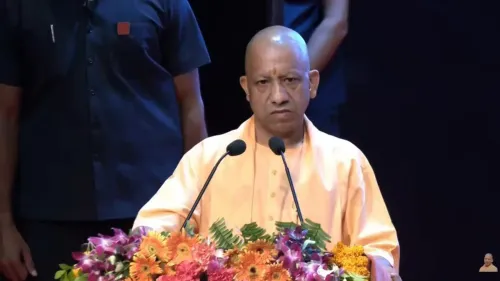
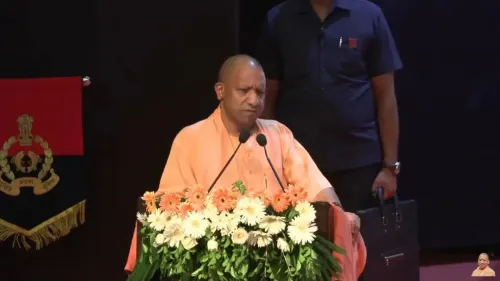
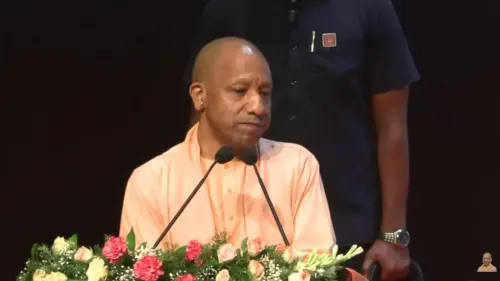
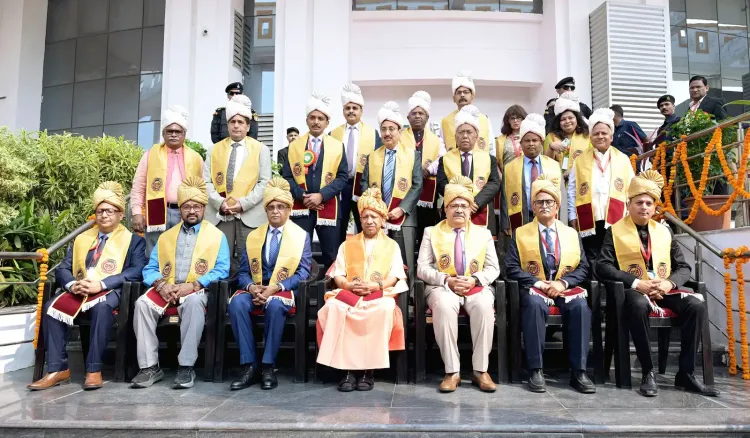
Uttar Pradesh Chief Minister Yogi Adityanath on Saturday, 17 October 2026, declared that the state had decisively moved away from what he called the 'rule of the mafia' to an established system of rule of law, asserting that no individual or position could be placed above the Constitution of India. His remarks came during the fifth convocation ceremony of Dr Ram Manohar Lohia National Law University in Lucknow.
Before 2017: A State Held Back
Addressing graduating law students, Adityanath argued that prior to 2017 — the year the Bharatiya Janata Party (BJP) came to power in the state — uncertainty over law and order had deterred investment and stalled development. He said mafia elements had posed systemic obstacles to progress, and that the restoration of the rule of law had since transformed Uttar Pradesh's image on the national stage.
The Chief Minister urged young advocates that remaining silent in the face of injustice was not an option, framing the legal profession as a moral vocation and not merely a career. He said history would ultimately deliver its verdict, but lawyers bore the responsibility of presenting the arguments.
Emergency Reference and Justice H.R. Khanna's Dissent
In a pointed historical reference, Adityanath cited 25 June 1975 — the date of the imposition of the Emergency — alongside 15 August 1947 and 26 January 1950, as defining moments in India's democratic history. He said the Emergency had starkly illuminated the fundamental distinction between the rule of law and the rule of an individual.
Invoking the dissenting opinion of Justice H.R. Khanna during that period, the Chief Minister said decisions taken in defence of fundamental principles secured a lasting place in history. He urged young legal professionals to uphold constitutional values and remain committed to truth, righteousness and continuous learning.
Viksit Bharat 2047 and UP's ₹1 Trillion Economy Goal
Adityanath linked the aspirations of young lawyers to the national vision of a developed India by 2047, saying the goal of Viksit Bharat must be pursued with facts, evidence and integrity. He noted that Uttar Pradesh had drawn up a roadmap to become a one-trillion-dollar economy by 2029-30 — an ambition that, he argued, required a robust legal and institutional framework to sustain.
AI, Cybercrime and the Future of Law
On the rapid expansion of artificial intelligence, the Chief Minister cautioned that while technology could simplify tasks, final decisions must remain guided by human judgment. He warned that a carelessly drafted legal document could cost an innocent person their freedom, and flagged the rise of deepfakes and cybercrime as fresh challenges to the reliability of evidence in courts.
He noted that cyber police stations had been established across all 75 districts of Uttar Pradesh, with cyber help desks now operational in 1,583 police stations. Under the state's AI Pragya initiative, one million youths are being trained in artificial intelligence, he added.
Other Dignitaries at the Convocation
Supreme Court Justice Vikram Nath, also present at the ceremony, told graduates that obtaining a degree marked the beginning of a journey rather than its culmination. He said the true test of education began beyond university walls and called on graduates to measure success by the positive impact they made on others' lives.
Allahabad High Court Chief Justice Arun Bhansali highlighted the university's contributions to legal education and the judiciary, expressing confidence that its graduates would uphold its traditions and strengthen the rule of law. The ceremony included a lighting of a ceremonial lamp, floral tributes to Goddess Saraswati, and a Saraswati Vandana, after which Adityanath presented medals to meritorious students across several programmes.
As Uttar Pradesh positions itself for its trillion-dollar economy target, the Chief Minister's call to arms for young lawyers signals that the administration views a credible legal system as central to — not separate from — the state's economic ambitions.
Point of View
But deploying it at a law university convocation — alongside an invocation of the Emergency and Justice H.R. Khanna — is a deliberate signal about constitutional legitimacy and judicial independence, aimed as much at a national audience as at the graduates in front of him. The UP government's trillion-dollar economy target by 2029-30 is an ambitious number that will require scrutiny: the state's per-capita income and infrastructure gaps remain significant, and GDP projections at the state level often outrun ground-level delivery. The AI Pragya claim of training one million youths is notable but unverified in this setting — the quality, depth and employment outcomes of such programmes deserve independent assessment. Most tellingly, the Chief Minister's warning about deepfakes and carelessly drafted legal documents signals that the justice system itself is feeling the pressure of rapid technological change — a challenge that cyber help desks alone are unlikely to resolve.
NationPress
17 Oct 2026
Frequently Asked Questions
What did CM Yogi Adityanath say at the Dr RML National Law University convocation?
Chief Minister Yogi Adityanath said Uttar Pradesh had moved from the 'rule of the mafia' to an established rule of law since 2017, and that no individual or position could be above the Constitution. He urged young lawyers to uphold constitutional values, fight injustice and remain committed to truth and continuous learning.
Why did Yogi Adityanath reference the 1975 Emergency in his speech?
Adityanath cited the Emergency of 25 June 1975 as a historic example of the rule of an individual overriding the rule of law. He held up Justice H.R. Khanna's dissenting opinion during that period as a model of principled constitutional defence, urging graduates to emulate that commitment.
What is Uttar Pradesh's one-trillion-dollar economy target?
The Uttar Pradesh government has set a goal of becoming a one-trillion-dollar economy by 2029-30. Chief Minister Adityanath connected this ambition to the role of young lawyers, saying the vision of Viksit Bharat must be pursued with facts, evidence and integrity — requiring a strong legal and institutional foundation.
What steps has UP taken to address cybercrime and AI challenges?
According to Chief Minister Adityanath, cyber police stations have been established in all 75 districts of Uttar Pradesh, and cyber help desks are operational in 1,583 police stations. Under the AI Pragya initiative, one million youths are being trained in artificial intelligence to prepare for technology-driven challenges.
Who else spoke at the Dr RML National Law University convocation?
Supreme Court Justice Vikram Nath and Allahabad High Court Chief Justice Arun Bhansali also addressed the ceremony. Justice Nath said a degree marked the beginning — not the end — of a journey, while Chief Justice Bhansali highlighted the university's contributions to legal education and the judiciary.