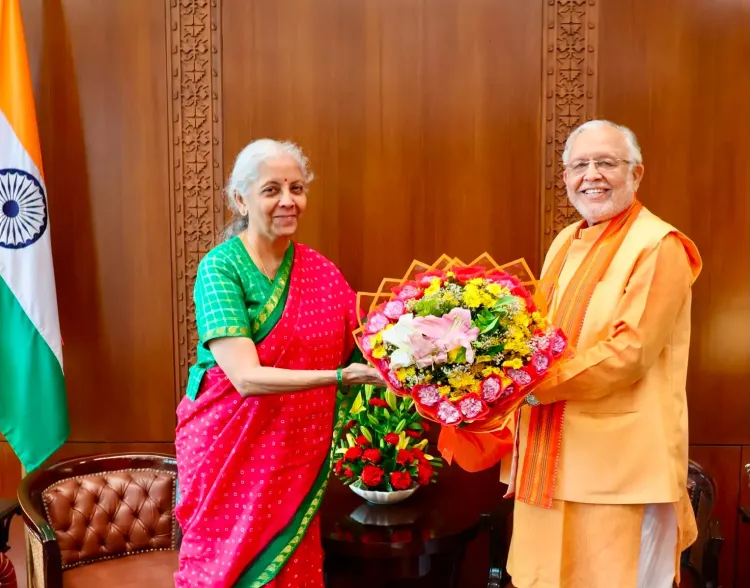
UP Finance Minister Khanna calls on Nirmala Sitharaman
Synopsis
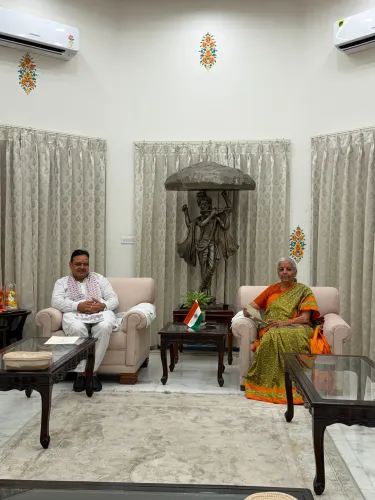
UP Finance Minister Suresh Kumar Khanna called on Union Finance Minister Nirmala Sitharaman in New Delhi on 10 July 2026, continuing the routine but consequential practice of direct state-centre fiscal engagement that shapes revenue sharing, scheme funding and legislative coordination for India's most populous state.
Key Takeaways
Suresh Kumar Khanna , Uttar Pradesh's Finance and Parliamentary Affairs Minister, called on Union Finance Minister Nirmala Sitharaman on 10 July 2026 .
Uttar Pradesh is India's most populous state and one of the largest recipients of central tax devolution and grant transfers.
The meeting reflects the established federal practice of state finance ministers consulting the Union Finance Minister on revenue, scheme funding and legislative matters.
The GST Council , set up in 2017 , provides the principal formal forum for such state-centre indirect-tax coordination.
Since 2015 , with the replacement of the Planning Commission by NITI Aayog , the Finance Ministry has become the primary nodal point for state allocation negotiations.
Follow-up signals may emerge at the next GST Council meeting or during the Uttar Pradesh assembly's forthcoming finance bill session.
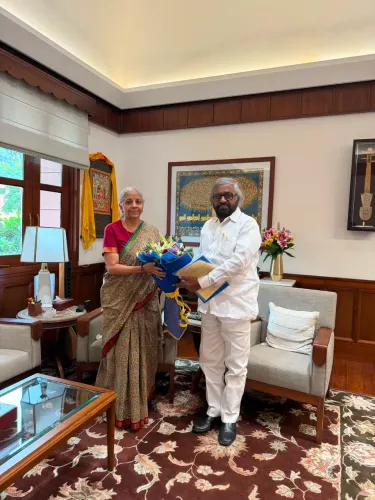
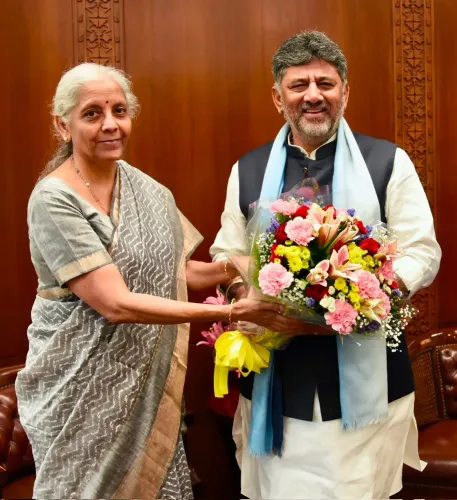
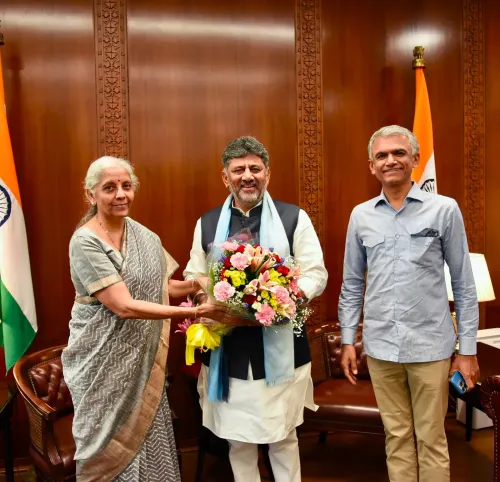
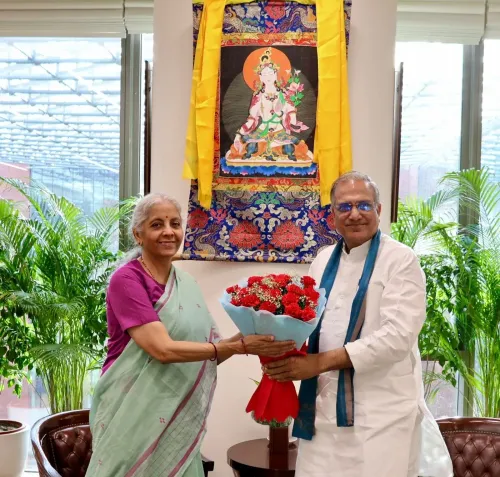
Union Finance Minister Nirmala Sitharaman received Suresh Kumar Khanna, the Minister of Finance and Parliamentary Affairs of the Government of Uttar Pradesh, at a courtesy call on Friday, 10 July 2026 in New Delhi. The meeting marks a fresh instance of direct engagement between the Union Finance Ministry and the finance department of India's most populous state.
Context
Suresh Kumar Khanna is a senior BJP legislator who has served as Uttar Pradesh's finance minister across successive state budgets, making him a key interlocutor between Lucknow and the Union government on fiscal matters. His visit to Smt Nirmala Sitharaman follows an established practice of state finance ministers consulting their Union counterpart on revenue, scheme funding and legislative coordination.
Uttar Pradesh, as the country's largest state by population, is among the biggest recipients of central tax devolution and grant transfers, giving such meetings practical significance beyond protocol.
Policy Backdrop
State-centre fiscal coordination operates through multiple formal and informal channels. The GST Council, constituted in 2017, brings together the Union Finance Minister and state counterparts to set indirect-tax rates and resolve revenue disputes — making the personal working relationship between the two levels of government especially consequential.
Since the dissolution of the Planning Commission and its replacement by NITI Aayog in 2015, the Finance Ministry has become the primary nodal point for negotiating state allocations under centrally sponsored schemes, adding further weight to bilateral consultations of this kind.
Stakeholders and Impact
The Uttar Pradesh finance department manages one of the largest state budgets in India and coordinates the implementation of dozens of centrally sponsored programmes covering infrastructure, agriculture, health and education. Any alignment reached between the two ministers on funding timelines or scheme design can have material consequences for crores of beneficiaries across the state.
Parliamentary Affairs is also within Khanna's portfolio, signalling that legislative scheduling — including potential finance-related bills in the Uttar Pradesh assembly — may have been part of the conversation.
What's Next
Observers will watch the next GST Council meeting and the forthcoming Union Budget session for any announcements that reflect outcomes of state-level consultations such as this one. The Uttar Pradesh assembly's handling of finance bills in the coming legislative session could offer further clues about the direction of state-centre fiscal discussions.
Point of View
Such meetings also reinforce intra-party coordination on budget priorities ahead of legislative sessions. The timing, close to the mid-year budget review cycle, suggests the agenda likely included scheme disbursements and GST compensation or devolution mechanics. Analysts will treat any subsequent announcements in the UP assembly or the GST Council as a read-through of what was discussed.
NationPress
9 Oct 2026
Frequently Asked Questions
Why did UP Finance Minister Suresh Kumar Khanna meet Nirmala Sitharaman?
Khanna called on Union Finance Minister Nirmala Sitharaman as part of routine state-centre fiscal coordination, which typically covers revenue sharing, centrally sponsored scheme funding and legislative matters relevant to Uttar Pradesh.
What is Suresh Kumar Khanna's role in the Uttar Pradesh government?
Suresh Kumar Khanna serves as the Minister of Finance and Parliamentary Affairs in the BJP-led Government of Uttar Pradesh, overseeing the state budget and legislative scheduling.
How does Uttar Pradesh coordinate with the Union Finance Ministry?
Coordination happens through formal bodies like the GST Council, bilateral meetings between state and Union finance ministers, and discussions on centrally sponsored scheme allocations managed through the Finance Ministry.
What is the GST Council and why does it matter for states?
The GST Council, established in 2017, brings together the Union Finance Minister and state counterparts to set indirect-tax rates and resolve revenue disputes, making it the principal forum for state-centre fiscal alignment.
What should one watch for after this meeting?
Key signals to watch include announcements at the next GST Council meeting, Union Budget session developments affecting state allocations, and finance-related bills introduced in the Uttar Pradesh assembly.