CM Yogi: UP Women Workforce Share Tops 36%
Synopsis
Uttar Pradesh Chief Minister Yogi Adityanath has stated that the state's female workforce participation has tripled from 12 percent to over 36 percent, and that a mandatory 20 percent reservation for women in the UP Police has been enforced — marking a significant claimed milestone in the state's women's inclusion drive.
Key Takeaways
The Chief Minister's Office of Uttar Pradesh cited CM Yogi Adityanath on June 12, 2026 on women's workforce gains.
Female labour force participation in Uttar Pradesh has reportedly risen from 12 percent to over 36 percent .
A mandatory 20 percent reservation for women has been instituted in the Uttar Pradesh Police force.
The workforce participation increase represents a near-tripling of the female participation rate since 2017 .
Independent verification will hinge on forthcoming Periodic Labour Force Survey data for the state.
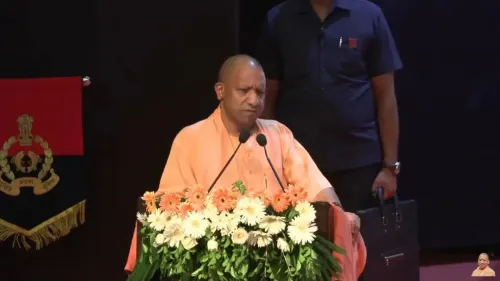
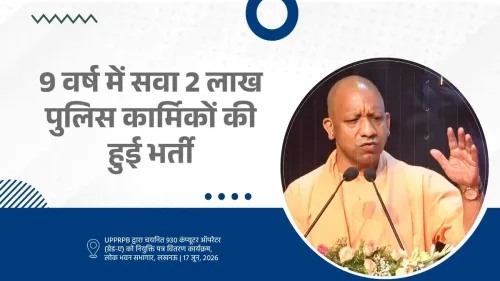
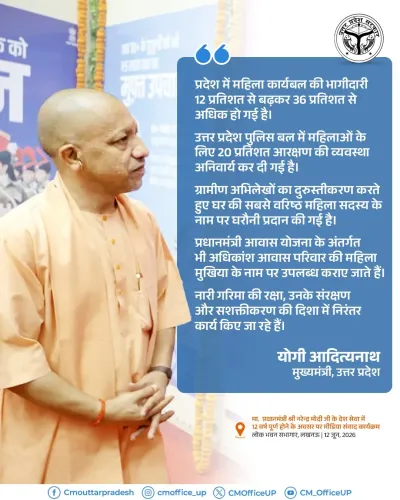
The Chief Minister's Office of Uttar Pradesh, citing Chief Minister Yogi Adityanath, announced on Friday, June 12, 2026 that the state's female labour force participation rate has risen from 12 percent to over 36 percent, and that a mandatory 20 percent reservation for women in the Uttar Pradesh Police force has been put in place.
Context
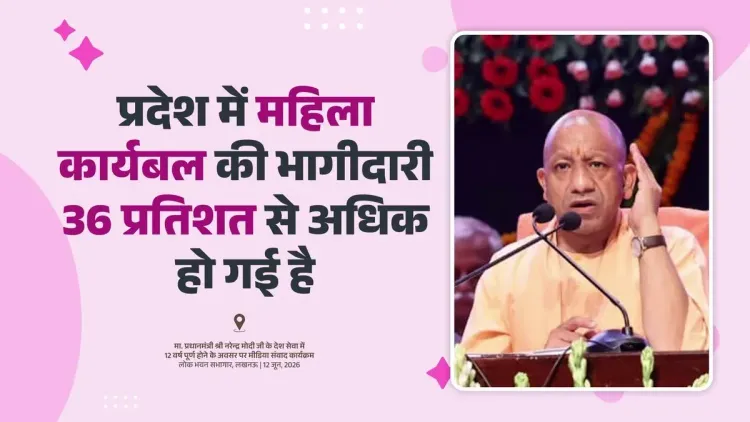
The post, shared by the official CMO account, quotes Chief Minister Yogi Adityanath directly: 'प्रदेश में महिला कार्यबल की भागीदारी 12 प्रतिशत से बढ़कर 36 प्रतिशत से अधिक हो गई है' ('The female workforce participation in the state has risen from 12 percent to more than 36 percent'). It further states: 'उत्तर प्रदेश पुलिस बल में महिलाओं के लिए 20 प्रतिशत आरक्षण की व्यवस्था अनिवार्य कर दी गई है' ('A 20 percent reservation for women in the Uttar Pradesh Police force has been made mandatory'). The figures represent one of the more emphatic claims the state government has made about women's economic inclusion since 2017.
Policy Backdrop
Uttar Pradesh, India's most populous state, had long recorded low female labour force participation relative to the national average, making a near-tripling of the rate — from 12 percent to over 36 percent — a significant claimed milestone. The state government began announcing expanded women's recruitment in police and targeted skill and self-employment schemes for women in the 2018–2020 period, laying the groundwork for the quota and workforce push cited in today's statement.
The mandatory 20 percent reservation in the Uttar Pradesh Police is part of a broader uniformed-services inclusion drive. Similar reservation provisions for women in state police forces have been adopted in several other states, reflecting a national policy direction toward increasing women's representation in law enforcement.
Stakeholders and Impact
The most direct beneficiaries are women seeking formal employment and those entering the police recruitment pipeline. A shift from 12 percent to 36 percent female workforce participation, if sustained, would translate into millions of additional women in formal or semi-formal economic activity in a state with a population exceeding 24 crore. For prospective women police recruits, the mandatory quota provides a structural guarantee in each recruitment cycle rather than a discretionary target.
Civil society groups and women's rights advocates have consistently called for both economic inclusion and safety guarantees for women in Uttar Pradesh. The police reservation, in particular, is seen as addressing both dimensions — increasing women's employment while also improving gender-sensitive policing at the grassroots level.
What's Next
Attention will now turn to the release of Periodic Labour Force Survey data for Uttar Pradesh, which will provide an independent benchmark against the government's stated 36 percent participation figure. Upcoming Uttar Pradesh Police recruitment notifications will also be watched closely to confirm the implementation of the 20 percent women's quota in practice. The state government's ability to sustain these gains — particularly in rural districts where female workforce participation has historically been lowest — will be the key test of the policy's long-term impact.
Point of View
Meanwhile, signals a move from aspirational targets to enforceable structural guarantees, a distinction that matters for accountability. Together, the two data points position the state government as an active driver of women's inclusion rather than a passive beneficiary of national trends.
NationPress
14 Sept 2026
Frequently Asked Questions
What is the current female workforce participation rate in Uttar Pradesh?
According to a statement by Chief Minister Yogi Adityanath on June 12, 2026 , the female workforce participation rate in Uttar Pradesh has risen from 12 percent to over 36 percent .
What is the women's reservation in Uttar Pradesh Police?
The Uttar Pradesh government has made a 20 percent reservation for women in the state police force mandatory, meaning each recruitment cycle must fill at least one-fifth of posts with women.
What has CM Yogi done for women's employment in UP?
CM Yogi Adityanath has overseen a reported tripling of female workforce participation in Uttar Pradesh since 2017 , alongside skill schemes and a mandatory police quota, according to the Chief Minister's Office.
How does UP's women police reservation compare to other states?
Several states across India have adopted similar reservation provisions for women in their police forces; Uttar Pradesh's mandatory 20 percent quota is consistent with this national direction toward greater women's representation in law enforcement.
Where can I find verified data on UP female labour force participation?
The Periodic Labour Force Survey conducted by the government of India provides state-level data on female workforce participation and is the standard independent benchmark for figures cited by state governments.