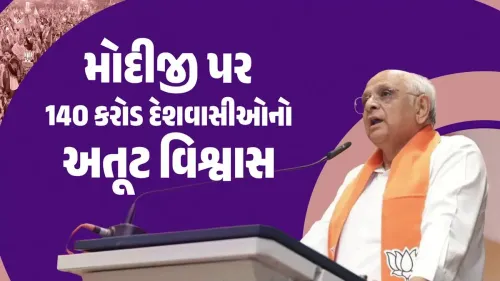
CM Bhupendra Patel: Uparkot Fort draws 17.50 lakh visitors
Synopsis
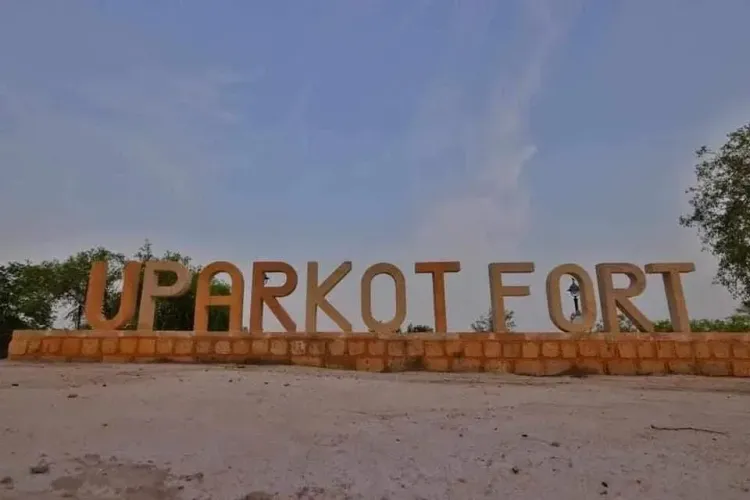
Gujarat's CMO announced that Uparkot Fort in Junagadh has welcomed over 17.50 lakh visitors in two-and-a-half years post-renovation. The milestone is attributed to PM Modi's 'Vikas Bhi, Virasat Bhi' vision, implemented at the state level by CM Bhupendra Patel, marking twelve years of the heritage-development initiative.
Key Takeaways
Uparkot Fort in Junagadh recorded more than 17.50 lakh visitor arrivals in the two-and-a-half years following its renovation.
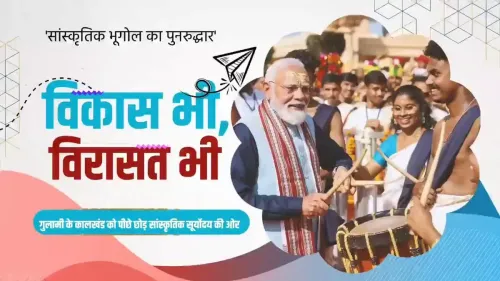
The milestone is attributed to the 'Vikas Bhi, Virasat Bhi' policy framework championed by PM Narendra Modi and implemented by CM Bhupendra Patel .
The announcement marks 12 years of the #12YearsOfVikasBhiVirasatBhi initiative linking development with heritage conservation in Gujarat.
Uparkot Fort is a multi-layered heritage site in the Saurashtra region, encompassing Buddhist caves, stepwells, and Mauryan-era structures.
The Gujarat model of treating renovated historic monuments as economic assets is being watched as a potential template for heritage tourism nationally.
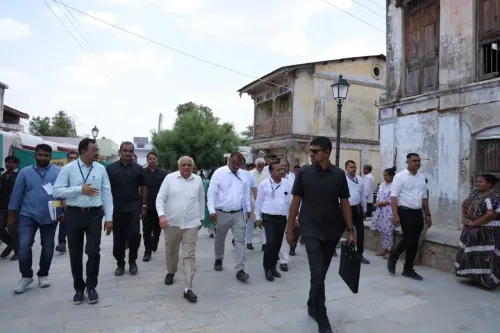
The Chief Minister's Office of Gujarat announced on Thursday, 18 June 2026 that the renovated Uparkot Fort in Junagadh has attracted more than 17.50 lakh visitors in the two-and-a-half years since its restoration, marking a significant milestone in the state's heritage tourism push.
Context
The CMO's post, written in Gujarati, states: 'Junagadhna prachin varasana pratik saman Uparkotna aitihasik killana thayel navinikaran bad chhella adhi varsma 17.50 lakhathi vadhu pravasio aa dharoharni bhavyata teemaj teena thayel jatanna sakshi banya chhe.' Translated, this reads: 'After the renovation of the historic Uparkot Fort — a symbol of Junagadh's ancient heritage — more than 17.50 lakh tourists have witnessed the grandeur of this heritage site and its conservation over the last two-and-a-half years.' The announcement coincides with the hashtag #12YearsOfVikasBhiVirasatBhi, marking twelve years of the initiative.
Policy Backdrop
The post explicitly credits the 'Vikas Bhi, Virasat Bhi' (Development Too, Heritage Too) vision articulated by Prime Minister Narendra Modi as the guiding framework. The initiative was first championed when Modi served as Chief Minister of Gujarat, establishing a policy line that treats historic monuments as economic assets rather than maintenance liabilities. Chief Minister Bhupendra Patel has continued this framework at the state level, overseeing the renovation of multiple heritage sites across Gujarat. The twelve-year anniversary underscores the continuity of the same philosophy from state governance into the national agenda.
Uparkot Fort, located in Junagadh in the Saurashtra region, is among Gujarat's most significant archaeological landmarks. The site encompasses Buddhist caves, ancient stepwells, and Mauryan-era structures, making it a layered historical canvas that draws both domestic and international visitors.
Stakeholders and Impact
The footfall figure of more than 17.50 lakh visitors over roughly two-and-a-half years signals a sustained uptick in heritage tourism for Junagadh, a city that has historically been overshadowed by Gujarat's more prominent tourist circuits. Local economies — including hospitality, transport, and artisan trades — stand to benefit from increased visitor spending at and around the fort. Heritage conservation agencies and the state tourism department are key institutional stakeholders in maintaining this momentum.
The broader Gujarat model — systematically renovating historic sites under a unified policy framework and then actively promoting them — has drawn attention as a template for adaptive reuse of monuments. The approach combines public investment in physical restoration with branding campaigns that position heritage as a contemporary experience rather than a relic.
What's Next
The #12YearsOfVikasBhiVirasatBhi marker suggests the state government is likely to roll out a series of announcements highlighting similar heritage renovation outcomes across Gujarat in the near term. Observers will watch for the state tourism department's annual footfall and revenue data, as well as potential inaugurations of additional restored sites under the same policy umbrella. Whether the Uparkot Fort model is replicated at other Saurashtra heritage sites — including those in Dwarka, Somnath, and Lothal — will be a key indicator of the programme's scalability and long-term impact on Gujarat's cultural tourism economy.
Point of View
Virasat Bhi' — a slogan that traces a direct line from Modi's Gujarat tenure to his national governance philosophy. By anchoring state-level outcomes to a PM-identified vision, the Gujarat government reinforces the ideological continuity between Gandhinagar and New Delhi. The Uparkot footfall figure, if sustained, also provides the BJP with a tangible, quantifiable counter-narrative to criticism that heritage emphasis comes at the cost of development spending. The broader pattern — using renovated monuments as proof points for governance — is now a well-established playbook across BJP-governed states.
NationPress
19 Sept 2026
Frequently Asked Questions
How many tourists visited Uparkot Fort after renovation?
According to the Chief Minister's Office of Gujarat, more than 17.50 lakh tourists visited Uparkot Fort in Junagadh in the two-and-a-half years following its renovation.
What is the 'Vikas Bhi, Virasat Bhi' initiative?
'Vikas Bhi, Virasat Bhi' — meaning 'Development Too, Heritage Too' — is a policy initiative associated with PM Narendra Modi , originally championed during his tenure as Gujarat Chief Minister, that promotes simultaneous economic development and conservation of cultural heritage sites.
Where is Uparkot Fort located?
Uparkot Fort is located in Junagadh , a city in the Saurashtra region of Gujarat , and is considered one of the state's most significant ancient heritage landmarks.
Who is overseeing heritage renovation in Gujarat?
Chief Minister Bhupendra Patel leads the state-level implementation of heritage site renovations in Gujarat under the 'Vikas Bhi, Virasat Bhi' framework.
How long has the Vikas Bhi Virasat Bhi initiative been running?
The #12YearsOfVikasBhiVirasatBhi hashtag used in the CMO's post indicates the initiative has been running for 12 years as of 2026 .