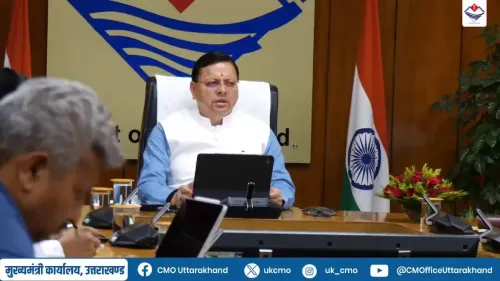
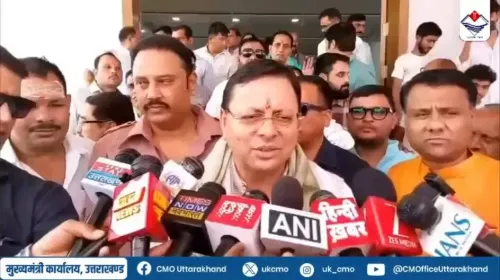
Uttarakhand CMO launches new sanitation push for Char Dham Yatra
Synopsis
The Uttarakhand Chief Minister's Office has announced a new initiative to strengthen sanitation along the Char Dham Yatra, with a focus on Kedarnath in Rudraprayag district. The push builds on Swachh Bharat Mission frameworks and seasonal task forces introduced after the 2013 Kedarnath disaster to manage rising pilgrim footfall.
Key Takeaways
The Uttarakhand CMO announced a new sanitation initiative for the Char Dham Yatra on 3 June 2026.
The post specifically highlighted Kedarnath and Rudraprayag district.
The Char Dham Yatra covers Yamunotri, Gangotri, Kedarnath and Badrinath shrines.
The effort builds on the Swachh Bharat Mission launched in 2014.
Uttarakhand has run seasonal sanitation task forces on the route since 2014-15, after the 2013 Kedarnath disaster.
Specific targets, agencies and budget were not disclosed in the post.
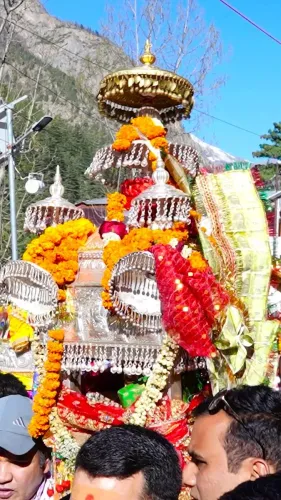
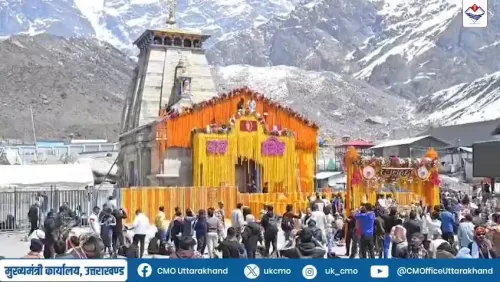
The Chief Minister's Office of Uttarakhand on 3 June 2026 announced a fresh initiative to strengthen sanitation arrangements along the ongoing Char Dham Yatra, with a particular focus on the Kedarnath route in Rudraprayag district. The post, shared with an accompanying video, signalled an expansion of cleanliness measures during one of the country's largest annual pilgrim movements.
In its message, the CMO stated that the 'राज्य सरकार ने शुरू की चारधाम यात्रा में स्वच्छता व्यवस्था बढ़ाने के लिए नई पहल' ('the state government has launched a new initiative to enhance sanitation arrangements during the Char Dham Yatra'). The post was tagged with references to Kedarnath, Rudraprayag and Uttarakhand, indicating the geographic priority for the rollout.
Context
The Char Dham Yatra is an annual Hindu pilgrimage circuit covering the shrines of Yamunotri, Gangotri, Kedarnath and Badrinath, each set deep in the Garhwal Himalayas. The season typically runs from late April or early May through October-November, depending on weather, and draws several million visitors during its peak months.
Footfall has risen sharply over the past decade as road widening under the Char Dham Pariyojana and expanded helicopter services have eased access. That growth has also strained sanitation, solid-waste and water systems in fragile high-altitude valleys.
Policy backdrop
The new initiative sits within the broader frame of the Swachh Bharat Mission, launched nationally in 2014, which carries explicit components for cleanliness at religious and tourist destinations and ties central funding to measurable outcomes at temples and ghats.
Uttarakhand has steadily layered state-level mechanisms on top. After the 2013 Kedarnath flood disaster, the state introduced seasonal sanitation task forces for the Char Dham route in 2014-15, combining temple committees, municipal staff and contracted workers during yatra months. The latest announcement appears to extend that operational template.
Stakeholders and impact
The primary beneficiaries are the pilgrims themselves, who face long queues, limited toilet capacity and waste accumulation at darshan points, transit halts and high-altitude camps. Cleaner conditions also reduce public-health risks in seasons that combine cold weather, crowding and constrained medical access.
For local residents of Rudraprayag and adjoining districts, sanitation efforts shape both livelihood streams from tourism and the long-term ecological health of catchments that feed the Mandakini and other Himalayan rivers. Temple committees, panchayats and urban local bodies are the typical implementing partners on the ground.
Specific quantitative targets, the implementing agencies and the budget envelope of the 3 June announcement were not detailed in the post itself.
What's next
Attention now turns to the operational rollout across the four shrines during the remainder of the 2026 season, including waste-collection volumes, toilet availability and any fresh coordination orders issued to temple committees or municipal bodies.
If sustained, the push could mark another step in the state's effort to align high-volume religious tourism with environmental management and disaster risk reduction along the Char Dham corridor — a balance that will only grow more consequential as annual footfall climbs.
Point of View
The political cost of visibly poor cleanliness at iconic shrines rises in tandem. Tying the initiative to the Swachh Bharat framework also keeps central co-funding pathways open. The real test, as always on the Char Dham route, will be enforcement at altitude rather than the announcement itself.
NationPress
21 Oct 2026
Frequently Asked Questions
What did the Uttarakhand government announce for the Char Dham Yatra?
The Uttarakhand CMO on 3 June 2026 announced a new initiative to enhance sanitation arrangements along the Char Dham Yatra, particularly on the Kedarnath route in Rudraprayag district.
Which shrines are part of the Char Dham Yatra?
The Char Dham Yatra in Uttarakhand covers four Himalayan shrines: Yamunotri, Gangotri, Kedarnath and Badrinath.
How is the Char Dham sanitation push linked to Swachh Bharat?
The initiative aligns with the Swachh Bharat Mission, launched in 2014, which includes specific components and central funding for cleanliness at religious and tourist sites.
Why is Rudraprayag central to Kedarnath yatra arrangements?
Rudraprayag is the Uttarakhand district that serves as the main gateway to Kedarnath and handles heavy seasonal pilgrim traffic, making it a focal point for sanitation and logistics.
What happened in Kedarnath in 2013?
Kedarnath was struck by a major flood disaster in 2013, after which Uttarakhand introduced seasonal sanitation task forces and broader reconstruction along the Char Dham route from 2014-15.