Uttarakhand CMO: Champawat Women Run Footwear Unit
Synopsis
The Uttarakhand CMO spotlighted the Saraswati Self Help Group in Champawat's Jaul Gram Panchayat, where women are independently running a chappal and crocs-style footwear manufacturing unit to generate income — a grassroots livelihood model backed by the National Rural Livelihoods Mission.
Key Takeaways
The Saraswati Self Help Group in Jaul Gram Panchayat, Champawat , is operating a footwear manufacturing unit producing chappals and crocs.
The initiative was highlighted by the Chief Minister's Office of Uttarakhand on October 17, 2026 .
The unit is run and managed by the women members of the SHG, generating direct income for them.
The National Rural Livelihoods Mission (NRLM) , launched in 2011 , provides the central policy framework supporting such women-led micro-enterprises in rural India.
Uttarakhand's hill geography makes SHG-based local manufacturing a key alternative to seasonal out-migration for income.
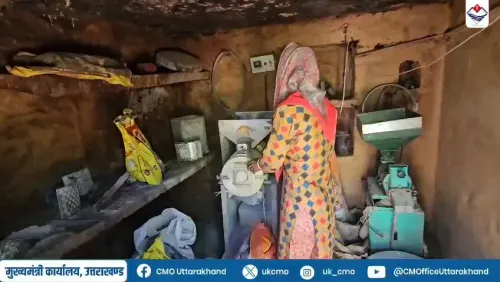
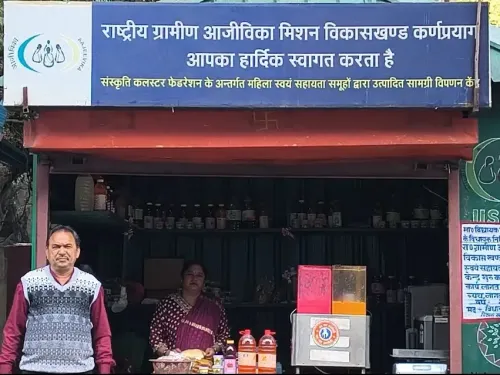
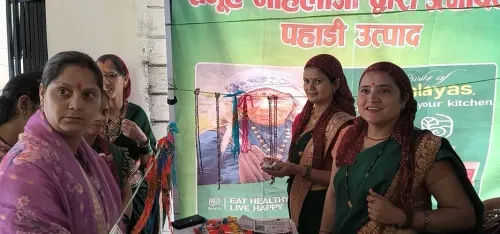
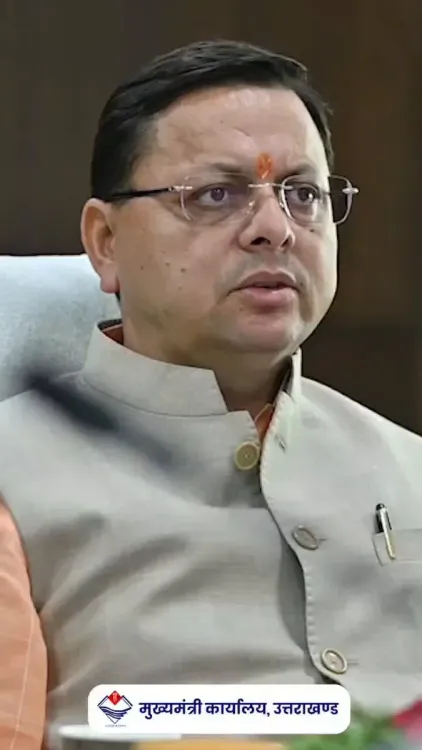
In a remote gram panchayat tucked into the hills of Champawat district, a group of rural women has turned a simple manufacturing idea into a steady income stream. The Chief Minister's Office of Uttarakhand highlighted on Saturday, October 17, 2026, how members of the Saraswati Self Help Group in Jaul Gram Panchayat are independently operating a unit that produces chappals and crocs-style footwear — and earning from it.
Posting in Hindi, the CMO noted: 'चम्पावत के ग्राम पंचायत जौल में सरस्वती स्वयं सहायता समूह की महिलाएं चप्पल और क्रॉक्स निर्माण यूनिट का संचालन कर आय अर्जित कर रही है।' — 'Women of the Saraswati Self Help Group in Jaul Gram Panchayat, Champawat, are earning income by running a chappal and crocs manufacturing unit.'From SHG to shop floor: what Jaul's women built
Self-help groups of this kind are the backbone of rural women's economic empowerment across India's hill states. The National Rural Livelihoods Mission (NRLM), launched by the central government in 2011, laid the framework — federating women into groups, linking them to credit, and seeding micro-enterprise activity in villages that formal industry rarely reaches. Uttarakhand, with its dispersed hilly terrain and limited factory employment, has leaned especially hard on this model.
The Saraswati SHG's footwear unit is a concrete expression of that framework in action. Rather than agricultural labour alone, the women are engaged in manufacturing — cutting, assembling, and finishing footwear for local markets. It is a modest enterprise by industrial standards. It is not modest at all by the standards of Jaul.
Champawat's quiet economic shift
Champawat district has seen growing state attention to community-led livelihood programmes in recent years. Small manufacturing units run by SHGs — whether producing agarbatti, handicrafts, or now footwear — represent a deliberate state strategy to anchor women's income inside their own villages, reducing dependence on seasonal migration that pulls family members out of Uttarakhand's hill districts every year.
Footwear is an interesting product choice: it addresses a daily-use need, has predictable local demand, requires relatively low capital investment, and scales with group capacity. The choice of crocs-style foam footwear — lightweight, cheap to produce, popular in rural markets — signals that the group is targeting accessible price points, not niche crafts markets.
If the Saraswati model proves replicable, it offers Uttarakhand's planners a template: find the product-market fit, anchor the unit at panchayat level, and let the group run it. The hill state has the SHG network. It now has at least one more proof of concept.
Point of View
Where conventional employment pipelines are thin. The political subtext is clear: visible micro-enterprise wins help the ruling establishment claim credit for a welfare framework largely inherited from the centre. The real test, however, is whether Champawat's model scales — or remains a showcase gram panchayat while structural gaps in credit access, market linkage, and raw material supply persist for thousands of other SHGs across Uttarakhand.
NationPress
17 Oct 2026
Frequently Asked Questions
What is the Saraswati Self Help Group in Champawat doing?
The Saraswati Self Help Group in Jaul Gram Panchayat, Champawat, is running a footwear manufacturing unit that produces chappals and crocs-style footwear, generating income for its women members.
Where is Jaul Gram Panchayat located?
Jaul Gram Panchayat is a village-level administrative unit in Champawat district, Uttarakhand, India.
What is the National Rural Livelihoods Mission (NRLM)?
The National Rural Livelihoods Mission (NRLM) is a central government scheme launched in 2011 that supports women's self-help groups and micro-enterprise activities to promote sustainable rural livelihoods across India, including Uttarakhand.
Why are self-help groups important in Uttarakhand?
Uttarakhand's hilly terrain limits large-scale industrial employment, making SHG-based local manufacturing a vital income source that helps reduce dependence on seasonal migration and supports women's economic participation.
What products does the Champawat SHG footwear unit make?
The Saraswati SHG unit in Champawat produces chappals (traditional sandals) and crocs-style foam footwear targeted at affordable local markets.